IN-DEPTH / IN-DEPTH
Chinese lifestyles increasingly gain global appeal, offer a steadier way of being
Very Chinese Time
By , Liang Rui and Li Xundian Published: Feb 05, 2026 11:18 PM

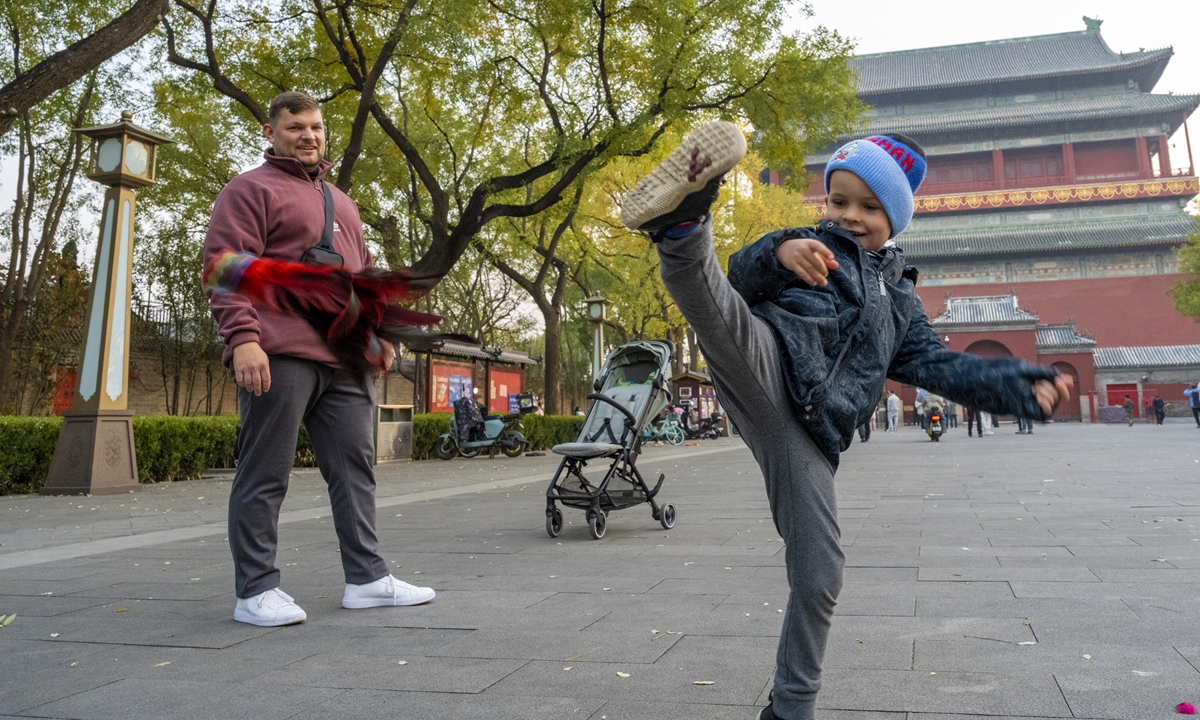
Foreign tourists experience shuttlecock kicking in Beijing on November 11, 2025. Photo: VCG
Eitor's Note:
In early 2026, the phrase "Very Chinese Time" went viral on global social media platforms. Content centered around China's everyday life has been widely viewed and discussed, bringing the Chinese experience into the international public sphere in an extremely down-to-earth way. However, this phenomenon goes beyond mere online popularity - it is unfolding amid the ongoing reshaping of the global order and the accumulation of anxiety in Western societies. A deeper transformation is emerging, as China's lifestyle, pop culture and technological practices are increasingly recognized, discussed, and used as references around the world.
This series uses "Very Chinese Time" as an observation lens to go beyond a single internet trend and systematically showcase how the Chinese experience is entering global everyday life. This is the first installment of the series.
"You met me at a very Chinese time in my life."
This meme has been trending in recent months on the global internet, with TikTok as its primary battleground. Now, with the Chinese New Year approaching, content creators are producing tip-style videos around the topic, while new Chinese adopters - perhaps clutching the red dress they just bought - are eagerly preparing for their first Spring Festival.
People are not ready to let go of this topic. On Tuesday, Vogue Singapore published an article experimenting with the essential wellness rituals of "becoming Chinese" - a cup of hot water in the morning, soups and congee, goji berries and red dates - then attempted to rationally explain them.
But it does not stop there: Why now? Why is this Chinese-style daily life being so intensely observed and imitated?
From a cross-cultural perspective, this trend does not stem from a fleeting fascination with cultural novelty. Zhu Wei, a professor at the China University of Political Science and Law, told the Global Times that the current seriousness toward Chinese lifestyles is directly related to the fatigue influenced by multiple factors emerging within the dominant Western logic of living.
In this context, the rhythm, moderation, and daily harmony intrinsic to Chinese living offer a meaningful alternative, according to Zhu.
'Becoming Chinese'
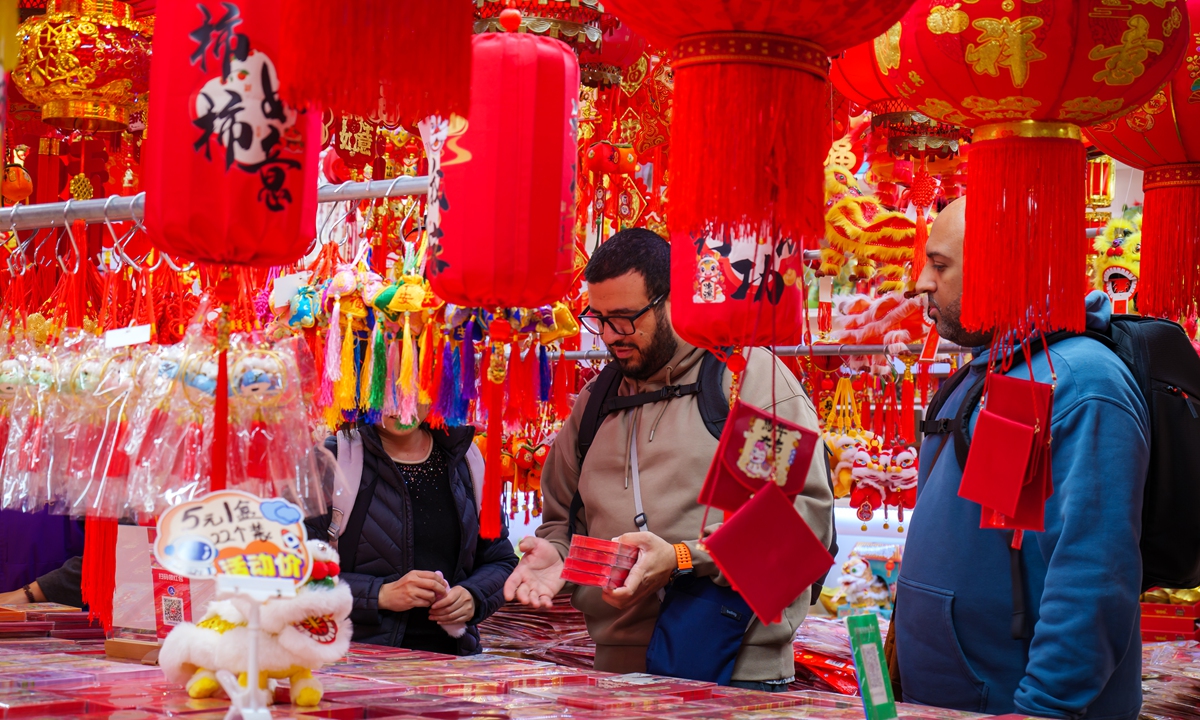
Foreigners shop for traditional Spring Festival decorations in a market in Shenzhen, South China's Guangdong Province, on February 1, 2026. Photo: VCG
What started as a spontaneous joke.In the US, Sherry often made light of her Chinese habits such as drinking hot water, wearing slippers indoors, and avoiding cold food, joking with her classmates. "If they drink hot water, wear slippers or use chopsticks, I'll tell them, 'You're basically Chinese,'" she explained in an interview with the Global Times.
In December, she turned this casual joke into short videos.
These clips finally brought her millions of views and endless comments from TikTok users around the world.
In the video, Sherry's humorous tone paired with her "mysterious" tips on Chinese daily life struck a chord with overseas viewers' curiosity.
In Sherry's view, two core factors contributed to the video's viral success. On one hand, people in multicultural societies such as those in Europe and the US have a natural curiosity about unfamiliar cultures - and her video happened to fill that gap.
On the other hand, the habits she shared come with a very low barrier to entry. "It's easy for anyone to try them," she said.
"It's the beginning of a new year, and everyone wants to be the best, healthiest version of themselves. Maybe they think the way Chinese people live is healthier than how they live," she added.
TikToker "Sara from China" has also sensed a shift in the interests of her overseas audience.
She regularly shares videos of her life, ranging from rural hometown scenes to city routines. In one video showing her village, foreign viewers left comments calling it "clean" and "peaceful," even comparing it to the European countryside.
Sara realized that what overseas viewers find most appealing is not China's towering city skylines, but the everyday lives of ordinary Chinese people - how they go to work, spend their weekends, cook meals, or travel by high-speed train.
"What they love the most is actually the daily life," Sara said. "Especially content that contrasts with their existing perceptions, which tends to spark even more discussion."
"The 'becoming Chinese' phenomenon highlights the shared needs and aspirations embedded in different cultural and social contexts," Sun Lin, a researcher at the Center for American Studies at Shanghai International Studies University, told the Global Times. The essence of Chinese culture lies in the "ordinary and everyday," he said, and the most natural way for international audiences to understand Chinese values is to experience Chinese life firsthand.
The real China, as many have come to see, is not the China they were once told about - and this sense of "reversal" has become a key driver of content engagement.
"There are so many strong stereotypes about China," Sara said. "But we ordinary Chinese people live peaceful lives. Most of us do not eat dog meat. We're not a bunch of robots. We have freedom and happiness."
Logic behind Chinese lifestyles
From the Huang Di Nei Jing (Yellow Emperor's Inner Canon), a book compiled during the Qin and Han times (221 BC-AD 220) and offered systematic discourses on human physiology, pathology, on the symptoms of illness, preventative treatment, and the principles and methods of treatment, onward, traditional Chinese medicine has belonged to the realm of Chinese philosophy, Zhu introduced to the Global Times.
"For example, the Chinese habit of drinking hot water - the word 'hot' here refers not only to temperature, but also to the intrinsic properties of food, such as 'cold' or 'warm,' concepts rooted in the theory of Yin Yang and Five Elements, which explains natural harmony through opposing yet complementary forces (Yin Yang) and cyclical interactions among five fundamental phases (Wood, Fire, Earth, Metal, Water). These everyday practices are deeply embedded in China's cultural traditions and medical philosophy, and are fundamentally different from Western lifestyles," Zhu added.
These aspects were also noted by Vogue Singapore. In traditional Chinese medicine, cold is thought to cause stagnation in blood and Qi (all the vital substances), leading to discomfort, while warmth supports healthy circulation. Keeping warm, then, comes down to a series of conscious everyday choices, said the article.
"These habits can also have surprisingly practical effects. A warm drink in the morning does indeed wake you up gently, soups and congee are soothing and easy on the stomach and layering up in socks and slippers keeps the chill at bay. Even the more unusual rituals, like armpit slaps and lymphatic exercises, encourage movement, and circulation, offering a mix of gentle physical activity, and a structured start to the day. Whether it's physiological benefit, mental comfort or simply the satisfaction of checking off a mini ritual, these practices offer a sense of tender care and control over one's body," the article wrote.
Looking back at how Chinese lifestyles have circulated in Western societies, practices such as Tai Chi Chuan and qigong had already gained popularity decades ago, reflecting a broader Western interest in "mind-body cultivation." According to a 2010 academic article titled "Eastern Movement Forms as Body-Self Transforming Cultural Practices in the West: Towards a Sociological Perspective" on Sage Journals, these practices were often introduced and adapted within Western wellness frameworks, rather than being understood through their original philosophical foundations.
With the rise of social media, specific Chinese wellness practices have periodically gone viral on Western platforms. A 2021 Teen Vogue article highlighted how gua sha, a traditional therapeutic technique, became a TikTok trend and was widely discussed and shared as an alternative health and beauty practice.
This time, however, the trend differs from earlier moments when such practices were often stripped down and reframed as exotic life hacks. Experts and contextual resources provided greater depth to the current wave.
Why Chinese experience resonates now
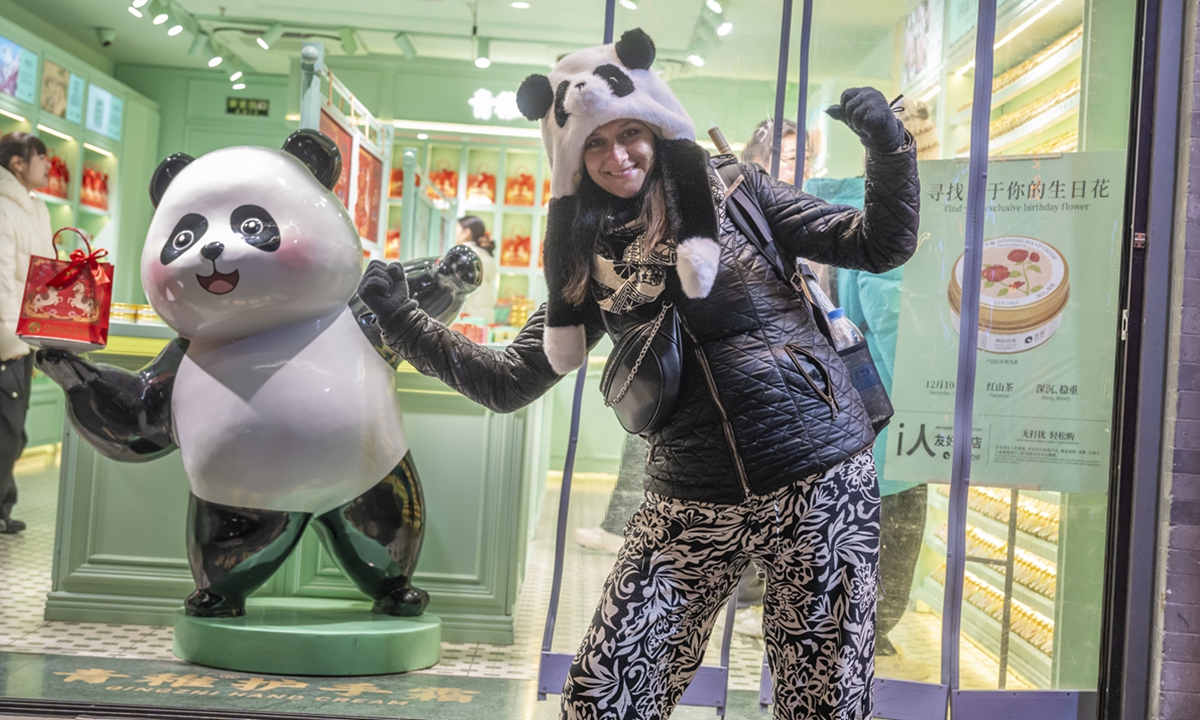
A foreign tourist takes photos with a panda model while visiting Qianmen Street in Beijing on January 30, 2026. Photo: VCG
From a cross-cultural perspective, the reason Chinese-style wellness lifestyles are being taken seriously in Western societies today is not due to fleeting cultural curiosity, but rather to a growing sense of exhaustion with the prevailing Western paradigm of living, Zhu said.According to Zhu, western societies have long exhibited a high degree of medicalization in health matters. Lifestyle models centered on rigorous self-management have continuously placed pressure on individuals, drawing both the body and emotions into a constant cycle of optimization. As this efficiency-driven logic approaches physiological and psychological limits, people are increasingly realizing that the problem is not a lack of personal discipline, but rather a system that leaves little room for buffering or recovery. Against this backdrop, the characteristics embodied in Chinese lifestyles have emerged as a meaningful point of contrast.
China's growing soft power has further amplified this resonance. According to the Global Soft Power Index 2025 released by Brand Finance, a consultancy headquartered in London, China now ranks second worldwide. The report highlights improvements in multiple soft power attributes related to friendliness, cultural appeal, and perceptions of lifestyle, signaling broader recognition of China's societal and cultural presence globally.
Meanwhile, the New York Post article linked the "Very Chinese Time" phenomenon to "Gen Z's desperation to shed their American identity." Citing a June 2025 poll, the article noted that just 41 percent of Gen Z say they're proud to be Americans, and only 26 percent say the US is the best nation on the planet.
Recent surveys also show warming sentiment toward China, particularly in the developing world and among youth, according to the Wall Street Journal on January 30.
"Amid rising uncertainty in Western societies, China's culture, values, and pragmatic approach are drawing increasing international attention," Li Haidong, a professor at China Foreign Affairs University, told the Global Times.
"Cultural phenomena can function as symptoms or secondary indicators of geopolitical change, offering insights into broader global dynamics," Li said. "More countries are beginning to view China as an anchor of stability, peace, prosperity, and development."
Zhu emphasized that this does not mean Chinese lifestyles are advancing through ideological confrontation or institutional critique. On the contrary, they enter individual lives through modest, low-threshold, everyday practices.
For many young people in the West, adopting elements of Chinese lifestyles does not require abandoning their existing value systems. Instead, it offers a way to loosen the grip of highly goal-oriented and quantified modes of living. It is precisely through this basic-level buffering and restoration that "Very Chinese Time" acquires practical significance beyond a mere cultural label, Zhu said.
The greatest significance of trends like "Very Chinese Time" lies in how they offer international audiences a sustained and tangible window into realities in China, Sara noted.
RELATED ARTICLES