China stresses Taiwan at 'core of core interests' after Xi-Trump call; Room for 'relying on US for independence' illusion will only shrink further: expert
By Published: Feb 05, 2026 11:52 PM

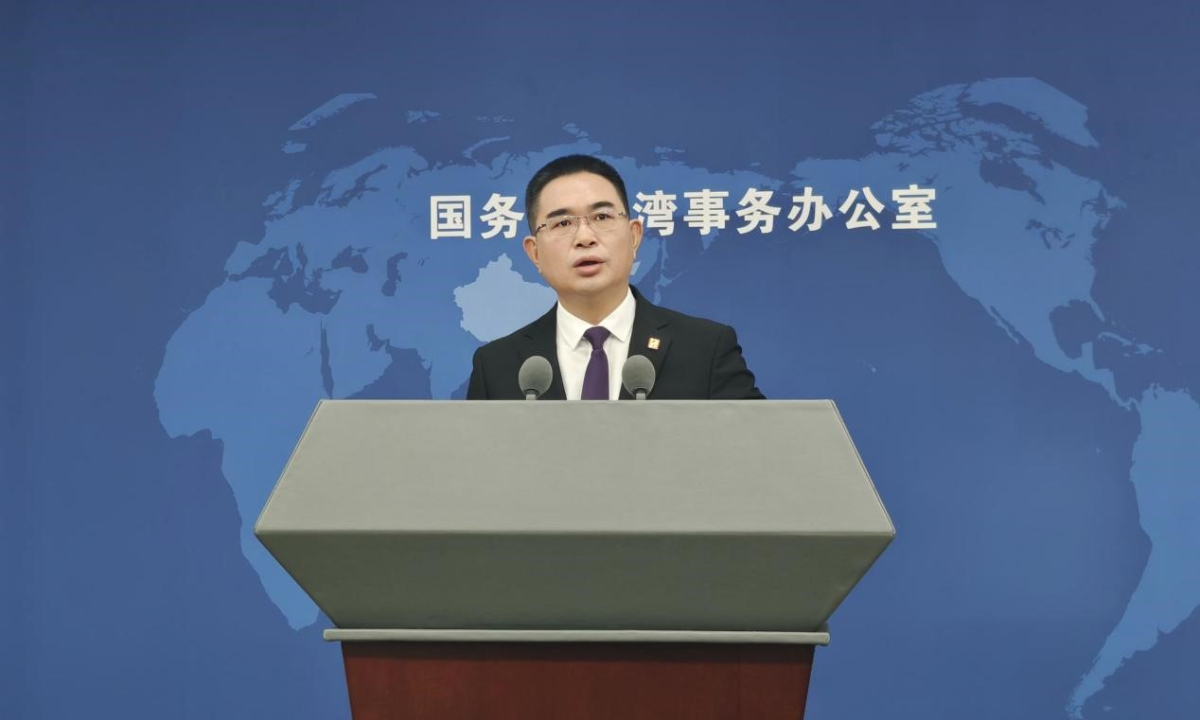
Chen Binhua, the spokesperson from the Taiwan Affairs Office of the State Council.
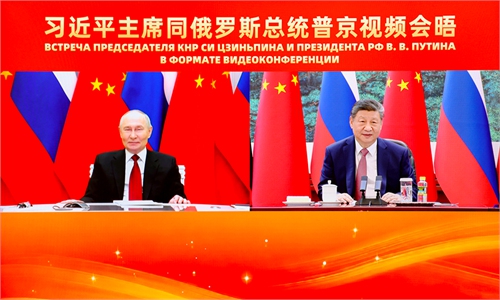
Regarding Chinese President Xi Jinping's phone call with US President Donald Trump, in which the Chinese leader emphasized that the Taiwan question is "the most important issue in China-US relations," a Taiwan Affairs Office spokesperson said on Thursday that the Taiwan question is at the core of China's core interests, and the first red line that cannot be crossed in China-US relations.
During his talks with Trump over the phone on Wednesday night, President Xi emphasized that the Taiwan question is the most important issue in China-US relations. Taiwan is China's territory, and China must safeguard its own sovereignty and territorial integrity, and will never allow Taiwan to be separated, he said, according to Xinhua News Agency.
The US must handle the issue of arms sales to Taiwan with prudence, Xi said.
According to Xinhua, Trump said that he understands how China feels about the Taiwan question. In a post on Truth Social afterwards, Trump said the call was an "excellent" discussion, listing the Taiwan question among other topics without giving further details.
On Thursday, Chen Binhua, a spokesperson for the State Council Taiwan Affairs Office, said at a press briefing that President Xi's important remarks elaborated on China's solemn position on the Taiwan question and provided fundamental guidance for our work on Taiwan.
Chen slammed the Democratic Progressive Party (DPP) authorities for repeatedly attempting to "seek independence through external support" or "seek independence by force." He also urged the US to adhere to the one-China principle and the three China-US joint communiqués, and handle the Taiwan question with utmost prudence.
Major mainstream media outlets in both the US and Taiwan region have closely followed and analyzed the leaders' references to the Taiwan question. Some reports have focused on the potential implications for future US arms sales to the island, while others have explored the possible effects on the DPP authorities. A number of reports have also weighed the prominence the Taiwan question is likely to assume during a possible leaders' summit in April.
When asked about Trump's claims that the Chinese leader would visit the White House before the end of this year following the two leaders' phone call, Lin Jian, spokesperson of the Chinese Ministry of Foreign Affairs, said on Thursday that the heads of state of China and the US maintain communication and interaction, adding he had no information to provide at the moment regarding the specific issue mentioned.
Bloomberg noted that the last phone call between Chinese and US leaders in November 2025 was dominated by tensions between Beijing and Tokyo over Taiwan. Citing an analyst, Bloomberg said the emphasis on Taiwan may reflect the Chinese side's "displeasure" toward the Trump administration's recent approval of a large arms-sale package for the island in December 2025.
A New York Times report said that the description from Chinese state media suggested that the Taiwan question was "front and center" in the two leaders' latest phone call.
China appears to be reminding Washington "where the red lines are" by stressing the importance of the Taiwan question, CNBC quoted practice head for China at Eurasia Group David Meale as saying.
Zheng Jian, a professor at the Taiwan Research Institute of Xiamen University, told the Global Times on Wednesday that Beijing has demonstrated its consistent and resolute determination to oppose "Taiwan independence" separatist activities. On the issue of US arms sales to Taiwan, it has also put forward specific demands.
The signal from China is very clear: how the US handles the Taiwan question is directly linked to the overall stability of China-US relations, Zheng said, "If the Taiwan question is not managed properly, there can be no talk of sound and steady development in bilateral ties."
"On the other hand, the more positive the US becomes in its words and deeds on the Taiwan question, the greater the scope for meaningful cooperation between Beijing and Washington may become," Zheng said.
Citing comments from analyst Dennis Weng, the pro-KMT China Times on the island of Taiwan reported that it cannot be ruled out that the US will adopt a more cautious and restrained tone in its future statements regarding Taiwan, or that even the process of arms sales to the island could be affected as a result. It added that the island has already been "incorporated into the framework of great-power negotiations."
Similarly, according to the DPP-aligned ltn.com, Taiwan People's Party chair Huang Kuo-chang remarked during a Thursday morning radio interview on the island that the US prioritizes its own economic interests above all else. He emphasized that the island must steer clear of being a bargain chip.
In contrast to the "doubts about US" sentiments expressed by Taiwan media, the DPP authorities' "external affairs department" said on Thursday that it is closely following the latest interactions and continues to maintain "positive and effective" communication with the US, per island-based media.
There is no doubt that the room for Taiwan secessionist advocates to cling to illusions of "relying on the US for independence" will only continue to shrink in the years ahead, said Zheng.
He added that unlike the mainland, the US has never placed the Taiwan question at the top tier of its core national interests.
"To Washington, Taiwan is merely a pawn on the chessboard, never the player holding the pieces," Zheng said, "But for the Chinese mainland, reunification is simply a matter of time, not a question of whether it can happen or whether it should happen."
RELATED ARTICLES