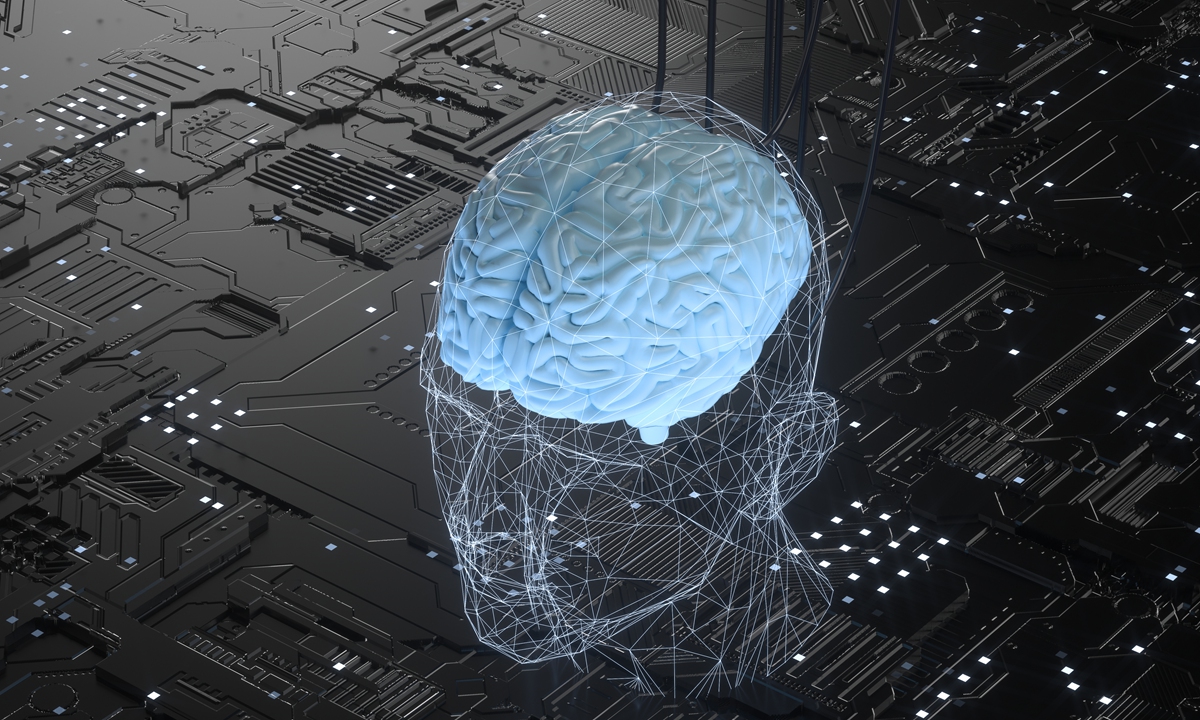
Brain-computer interface Photo: VCG
A research team from Northwestern Polytechnical University (NPU) in Xi'an, Northwest China's Shaanxi Province, has completed the world's first in-orbit verification of a wireless implantable brain-computer interface (BCI) device, marking a major breakthrough in global space neuroscience and neurotechnology, the Global Times learned from the research team on Monday.
Developed by a research team led by Chang Honglong and Ji Bowen, the BCI device was launched into space aboard a space experiment platform in December. Operating under extreme space conditions, the device continuously and stably collected electroencephalogram signals in a simulated body-fluid environment, generating key data on noise levels and long-term operational stability. The experiment filled a critical international technological gap in the in-orbit validation of implantable BCI systems, according to the research team.
The results also provided first-hand data for assessing the long-term in-orbit performance of implantable electrodes and are expected to help scientists precisely analyze how microgravity affects astronauts' neural activity. The findings will offer important technical support for safeguarding astronauts' "brain health" during long-duration space missions, according to a social media post from the NPU.
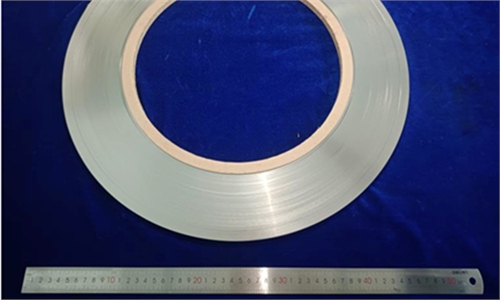
Addressing long-standing challenges associated with conventional minimally invasive cortical electrodes, such as insufficient flexibility, poor contact with brain tissue, and corrosion or degradation of metal materials during long-term implantation, the newly developed flexible electrode array of the BCI device can closely conform to the brain's soft and curved surface. This enables the acquisition of high-fidelity neural signals without damaging the cerebral cortex, the post noted.
Animal experiments showed that the electrode delivers significantly more stable signal acquisition, with key performance indicators improving by several hundred times compared with traditional metal electrodes. The system also supports long-term, safe neural stimulation and modulation and can be safely used under ultra-high-field magnetic resonance imaging conditions. The research result won the Outstanding Student Paper Presentation Award at the 39th International Conference on Micro Electro Mechanical Systems.
China has put great emphasis on the BCI sector. The Recommendations of the Central Committee of the Communist Party of China for Formulating the 15th Five-Year Plan for National Economic and Social Development listed BCI as one of the six "industries of the future," which will be vigorously developed over the next five years.
On August 7, 2025, China's Ministry of Industry and Information Technology, together with six other departments, jointly issued an implementation guideline to promote innovation in the BCI industry. The policy aims to accelerate the application of BCI products in the industrial manufacturing, healthcare, and consumer sectors by 2027, and to build a secure and reliable industrial ecosystem by 2030, fostering two or three globally influential leading enterprises alongside a group of specialized and sophisticated small and medium-sized enterprises.
RELATED ARTICLES