IN-DEPTH / IN-DEPTH
Scholars' Perspectives: Understanding five defining characteristics of Chinese civilization through Spring Festival: senior culture scholar
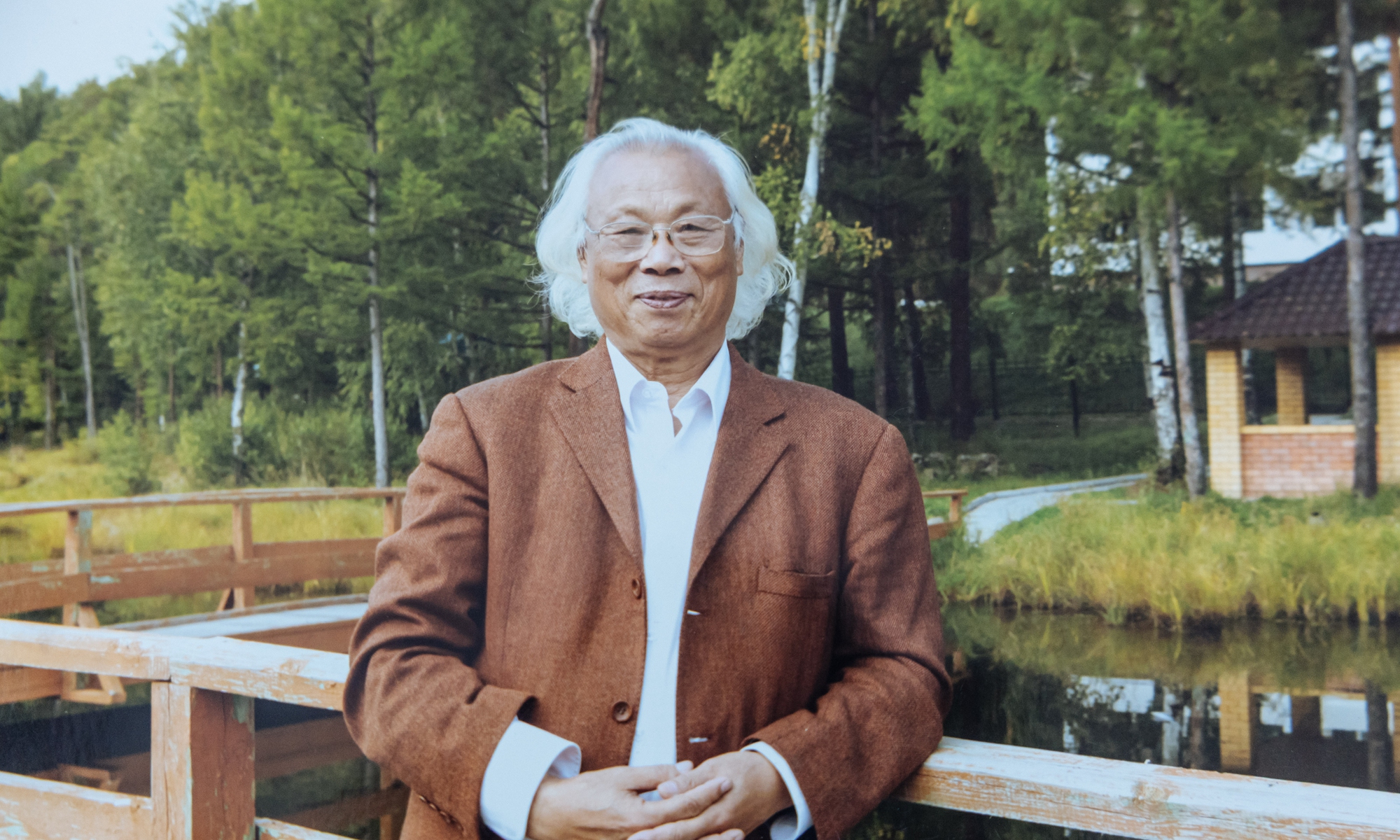
Liu Kuili, Honorary Member of the Academic Division of the Chinese Academy of Social Sciences and Honorary President of the Chinese Folklore Society Photo: Courtesy of Liu
Editor's Note:
The Spring Festival, the most important traditional holiday of the Chinese nation, embodies the Chinese people's cherished values of family reunion and bidding farewell to the old while welcoming the new. In December 2024, the successful inscription of the "Spring Festival" on the UNESCO intangible cultural heritage list highlights that it is not only a Chinese celebration but also a cultural treasure shared by all of humanity.
"The Spring Festival is a wonderful moment to bid farewell to the old and welcome the new, always bringing new hope to the people." This statement by Chinese President Xi Jinping captures the essence of Spring Festival culture. Xi has always attached great importance to traditional Chinese festivals and their cultural implications. On occasions such as the Spring Festival gathering, he has elaborated on the significance of Chinese culture, including the culture of the Spring Festival, and breathed new life into its meaning.
Since the 18th National Congress of the Communist Party of China (CPC), Xi, also general secretary of the Communist Party of China Central Committee and chairman of the Central Military Commission, has emphasized the historical influence and significance of fine traditional Chinese culture, endowing it with contemporary relevance and promoting its creative transformation and innovative development.
In the article "Expand Research into the History of Chinese Civilization and Build a Stronger Sense of History and Cultural Confidence," included in the fifth volume of the book series Xi Jinping: The Governance of China, Xi pointed out: "China's long, extensive and profound civilization is one of the distinctive qualities of the Chinese nation. It underpins contemporary Chinese culture and creates a spiritual bond among all people of Chinese descent across the globe. It provides valuable resources and inspiration for China's cultural innovation."
Xi has also emphasized the need to "encourage exchanges and mutual learning among civilizations, and promote the building of a community with a shared future for humanity."
Under the guidance of Xi Jinping Thought on Culture, the heritage of Chinese culture is shining with renewed brilliance as it is carried forward.
In the 21st installment of the special series "Decoding the Book Xi Jinping: The Governance of China," the Global Times, along with the People's Daily Overseas Edition, focuses on the values embedded in the Spring Festival, the most important traditional festival of the Chinese nation. We continue to invite Chinese and foreign scholars, translators of Xi's works, practitioners with firsthand experience, and international readers to delve into how the historical evolution and cultural essence of the Spring Festival reflect the continuity, innovation, unity, inclusiveness, and peacefulness of Chinese civilization.
In the 19th article of the "Scholars' Perspectives" column, Liu Kuili, Honorary Member of the Academic Division of the Chinese Academy of Social Sciences and Honorary President of the Chinese Folklore Society, elaborates on the cultural implications of the Spring Festival and how it embodies the five defining characteristics of Chinese civilization summarized by President Xi.
President Xi Jinping, also general secretary of the Communist Party of China Central Committee, has long attached great importance to traditional Chinese festivals and their cultural significance, and the Spring Festival is the grandest and most solemn of all Chinese festivals.
With its profound historical legacy, rich and intricate rituals, expansive cultural connotations, and its role as a spiritual anchor for hundreds of millions of Chinese people, the Spring Festival itself vividly embodies the five defining characteristics of Chinese civilization - namely continuity, creativity, unity, inclusiveness, and peacefulness - summarized by General Secretary Xi in Volume V of Xi Jinping: The Governance of China.
From the perspective of continuity, the concept of "nian," or year, has a long and venerable history. Its origins can be traced back to sacrificial rites in ancient times aimed at praying for a good harvest, and it was closely linked to early astronomical observations and the traditional calendrical system based on the Heavenly Stems and Earthly Branches.
Although China's calendrical systems have undergone changes over the course of history, and modern Chinese society has largely adopted the Gregorian calendar, the core meaning of the Spring Festival as "celebrating the New Year" - that is, entering a new natural cycle - has remained unchanged. The tradition of "celebrating the New Year," sustained across several millennia, is itself a vivid manifestation of the continuity of Chinese civilization.
Whether in the extended New Year period - from the saying "after Laba (the eighth day of the twelfth lunar month) comes the New Year" to the Lantern Festival on the fifteenth day of the first lunar month - or in the elaborate and symbolically rich rituals such as house cleaning, offering sacrifices to the Kitchen God, and staying up on Chinese New Year's Eve, the Spring Festival is imbued with profound cultural meanings and strong spiritual resonance, making it a truly unique civilizational phenomenon.
From the perspective of creativity, the Spring Festival itself embodies the core idea of bidding farewell to the old and welcoming the new, symbolizing the renewal of all things and the entry of both nature and society into a new cycle of operation. In traditional customs, practices such as thorough house cleaning in the twelfth lunar month, bathing and changing clothes, discarding the old and ushering in the new, as well as preparing the Chinese New Year's Eve dinner and seasonal festive foods, all reflect the intention to greet the New Year in a refreshed state.
In contemporary society, as family structures, living arrangements, and the pace of life have changed, the concrete forms of New Year customs continue to adapt: reunion dinners are increasingly held in restaurants, ways of paying New Year visits have become more flexible, and new practices such as collective holiday gatherings organized by work units have emerged. Rather than weakening tradition, these changes demonstrate the creative transformation and sustained development of the Spring Festival within a modern context.
From the perspective of unity, the Spring Festival has always sustained a shared emotional bond among the Chinese nation. General Secretary Xi has noted that "During Spring Festival, when members of a family get together, we feel that reunion is happiness and unity is strength."
As a festival celebrated jointly by people of all ethnic groups across the country, the Spring Festival sees diverse ethnic communities welcoming the New Year together. During the festival, cultural elements from different regions and ethnic groups converge, interact, and are mutually appreciated, further strengthening a strong sense of community for the Chinese nation.
From the perspective of inclusiveness, regardless of differences in region, occupation, or social roles, "celebrating the New Year" is a cultural experience shared by all. At this particular moment, relationships among family members, friends, colleagues, and even strangers are renewed and elevated, and the social atmosphere becomes more harmonious and tolerant.
At the same time, people often use the Spring Festival as an occasion to reflect on their words and actions, to sum up gains and losses, and to develop a heightened inner awareness of moral self-cultivation and personal growth. In this sense, the festival serves as an important opportunity for individual self-improvement and the renewal of social ethics.
From the perspective of peacefulness, the Spring Festival embodies values of following the rhythms of nature, revering the natural world, and seeking harmony and concord. These ideas have profoundly shaped the way Chinese people approach relationships between humanity and nature, as well as among people within society. In the construction of kinship structures, social relations, ethnic identity, and a shared sense of family-nation bonds, the Spring Festival plays an irreplaceable role in fostering cohesion and unity.
Overall, the Spring Festival not only reflects the Chinese people's distinctive and well-developed understanding of time and helps harmonize relationships between humanity and nature as well as among individuals, but also, as a form of civilizational practice deeply embedded in everyday life, it performs fundamental functions in family life, interpersonal interactions, and social structures. In particular, it vividly embodies core values such as reunion, harmony, and inclusiveness.
Precisely because the Spring Festival embodies the Chinese people's ethical bonds, familial ties, and devotion to one's country and family, General Secretary Xi, before each Chinese New Year, has visited grassroots communities and spent time among the people—observing real conditions, listening to people's concerns, asking about their well-being, and extending holiday greetings.
"At the very beginning of the New Year, what concerns me the most is those who are still in straitened circumstances. The deepest concern of my heart is how they fare and whether they will have a good New Year and a good Spring Festival," General Secretary Xi stressed in his 2017 New Year address. For more than a decade, his pre-Spring Festival visits have taken him across the country, from north to south, with the well-being of the people remaining his constant concern.
During the Spring Festival inspections, General Secretary Xi often joins local people in celebrating the Spring Festival in accordance with local customs and traditions. He joined local villagers in making ciba in East China's Jiangxi Province, frying rice cake in North China's Hebei Province, and cooking fried meat and making tofu pudding in Southwest China's Sichuan Province. He had also joined residents in Beijing's hutongs, pasting New Year "Fu" posters, making dumplings and cooking fried "ge zha," a traditional Beijing snack made from a paste of mixed beans… Customs may vary, but they all exude a strong festive atmosphere and embody the same heartfelt blessings.
General Secretary Xi attaches great importance to the protection and inheritance of cultural heritage. During Spring Festival inspections, he visited key historical and cultural sites including Xi'an Museum, the East Qianmen Area in Beijing, and the Ancient City of Pingyao in Shanxi Province. During inspection visits, he has repeatedly stressed the necessity to effectively protect and pass on cultural heritage.
For tangible cultural heritage, Xi pointed out that "A city's historical relics, cultural relics, and humanistic heritage are part of the city's very life. Once its cultural heritage is destroyed, a city will lack vitality no matter how new or well‑built it is." In regard to intangible cultural heritage, Xi stressed that "As an invaluable asset of the Chinese nation, folk arts are vital to sustaining historical legacy and building a socialist country with great cultural strength."
In the article "Build China into a cultural powerhouse" in Volume V of Xi Jinping: The Governance of China, General Secretary Xi proposed to "promote cultural sustainability through creative transformation and innovative development of the best of traditional Chinese culture" and to "delve into the roots of our traditional culture and encapsulate its essence." Traditional Chinese festivals, represented by the Spring Festival, are a natural bond that strengthens people's sense of identity and belonging. We should, centering on traditional national festivals such as the Spring Festival, promote more value symbols and cultural products that embody Chinese culture and the Chinese spirit.
Cultural inheritance must be carried out while maintaining its subjectivity, and should also evolve in step with the changes of the times and practical needs. For example, wedding ceremonies have evolved from sedan chairs to bicycles and then to cars, and wedding attire has evolved from Hanfu to Western-style wedding dresses and back to traditional forms. While these forms have changed, the kinship, social order and family values behind them remain unchanged. The same is true of the Spring Festival reunion dinner: it can be held either in a restaurant or at home, but the core ideals of reunion, harmony, respect and kinship are always preserved.
Creative transformation and innovative development are also reflected in exchanges and mutual learning of civilizations. For example, the Spring Festival, a traditional Chinese festival, embodies the values of reunion, harmony and inclusiveness, which are now understood and embraced by more and more countries and the broader international community. To date, nearly 20 countries have listed the Spring Festival as a statutory public holiday; about one-fifth of the world's population celebrates the Spring Festival in various forms, and Spring Festival folk customs have spread to nearly 200 countries and regions. The successful inscription of the Spring Festival on the UNESCO intangible cultural heritage list on December 4, 2024, demonstrates international recognition of this cultural expression and embodies China's cultural confidence.
The globalization of the Spring Festival has also served as a bridge for cultural exchange. Starting from participation in celebrations organized by Chinese communities, people from other countries gradually come to understand and identify with the cultural traditions and values behind the festival, which is a vivid example of mutual learning among civilizations. Cultural symbols such as the 12 Chinese zodiac signs and the 24 solar terms are also gaining increasing international recognition. For instance, the Winter Solstice not only reflects the Chinese people's observation of natural laws but also shares cultural commonalities with ancient winter solstice celebrations in the West, making it an entry point for mutual learning between civilizations.
Practice has shown that no culture is inherently superior or inferior; what exists is only a process of mutual learning, exchange and integration. As General Secretary Xi pointed out in "Create an Asian community of shared future through mutual learning" in Volume III of Xi Jinping: The Governance of China, "we need to uphold the beauty of each civilization and the diversity of civilizations around the world. Each civilization is the crystallization of human creation, and each is beautiful in its own way." Upholding the beauty of each civilization is conducive to the cultural development of every nation and the advancement of human civilization as a whole; upholding the diversity of civilizations around the world is cultivating a splendid and colorful garden for the development of the cultures of humanity.
RELATED ARTICLES