Takaichi claims 'strategic relationship of mutual benefit' with China unchanged; What Japanese PM should do is to truly reflect on mistakes: Chinese expert
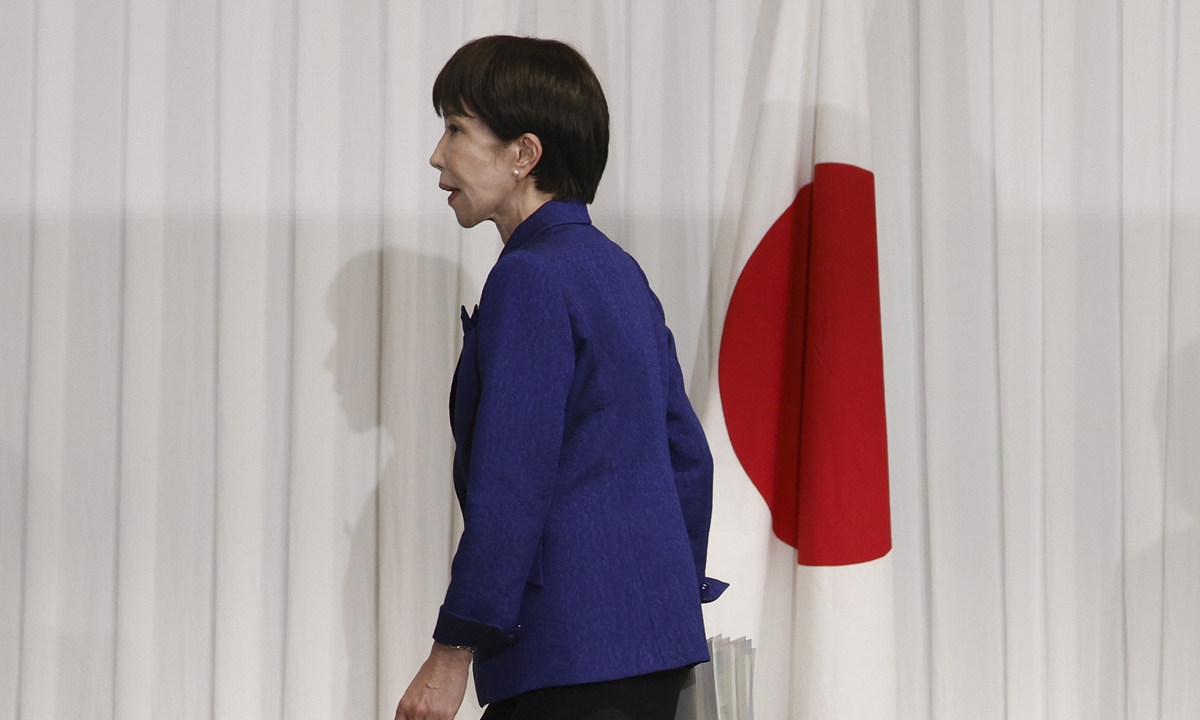
Japan's Prime Minister Sanae Takaichi, leader of the ruling Liberal Democratic Party (LDP), leaves after speaking during a press conference at the LDP headquarters in Tokyo, Japan, on February 9, 2026. Photo: VCG
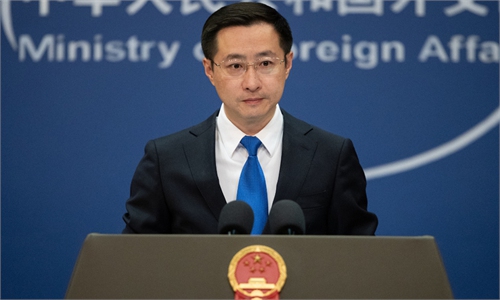
If anyone just talks about the need for dialogue while keeping themselves busy stoking confrontation, then this so-called "dialogue" is apparently unacceptable, Chinese Foreign Ministry spokesperson Lin Jian said at a regular press briefing on Tuesday, when asked to comment on claims made by Japanese Prime Minister Sanae Takaichi a day earlier that she is open to dialogue with China and that the countries will continue to exchange views.
Lin said China has made clear its just position on this issue more than once, adding that true dialogue is built on the basis of respecting each other and honoring the agreements made.
If the Japanese side truly wants to develop the strategic relationship of mutual benefit with China, what needs to do is simple and clear, that is, retract Takaichi's erroneous remarks on Taiwan, abide by the four political documents between China and Japan and its own political commitments, and take concrete actions to demonstrate its sincerity for dialogue, Lin said.
Takaichi claimed on Monday that Japan's policy of promoting a "strategic relationship of mutual benefit" with China remains unchanged, adding that the government will "respond calmly and appropriately from the perspective of national interests," Kyodo News reported.
A Chinese expert said on Tuesday that Takaichi's remarks was merely rehashing the same old rhetoric, stressing that what she should do is to truly reflect on her mistakes rather than speaking of so-called "calm responses." The expert added that Takaichi's fundamental approach to China will still be marked by superficial gestures of easing while maintaining substantive containment.
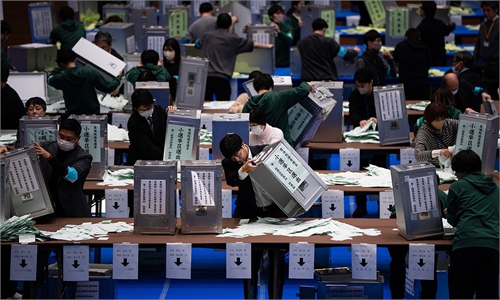
Takaichi's remarks came after the ruling LDP's landslide victory in Japan's House of Representatives election.
On Monday afternoon, Takaichi held a press conference at the LDP headquarters following the election victory. She claimed, "We will take on the challenge of constitutional revision." Also, she claimed that she is intended to advance policies strongly marked by the "Takaichi color," including "responsible proactive fiscal measures," Jiji Press reported.
Xiang Haoyu, a distinguished research fellow at the China Institute of International Studies, told the Global Times on Tuesday that Takaichi was just "repeating the same old line." What is truly needed for her is to correct mistakes rather than merely "respond calmly."
After Takaichi's election victory, her basic approach toward China would remain essentially unchanged, continuing to display a "superficial easing but substantive containment" duality, Xiang predicted.
On the one hand, Takaichi faced strong countermeasures from China following her erroneous Taiwan-related remarks, and Japan's public opinion and economic sectors have also come under immense pressure. As a result, she needs to seek a degree of stabilization in bilateral relations and attempt to mitigate the negative impact, which means she will calculate carefully in handling China-Japan relations, according to the expert.
On the other hand, however, as a right-wing conservative politician, her underlying perception of China is rooted in a confrontational mindset. She may still make new provocative moves on sensitive China-related issues, Xiang analyzed.
Shortly after the election concluded on Sunday evening, Takaichi claimed during a TV program that she will first seek "understanding" from Japan's ally the US and neighbors, noting that she has been "trying to prepare an environment" before she makes any visit to the infamous Yasukuni Shrine, Kyodo News reported.
The Chinese expert said Takaichi has not abandoned her intention to visit the notorious Yasukuni Shrine. Despite knowing full well that neighboring countries would strongly oppose it, she has tried to "argue" that she is merely seeking to "create a favorable environment" for such a visit.
However, Xiang also pointed out that her rhetoric on the notorious Yasukuni Shrine this time differed from her previous statements, as she introduced a new precondition that she must obtain the understanding of allied and neighboring countries. "It appears more like a way to give herself an excuse — or an exit — for potentially not paying a visit," Xiang believed.
In response to the remarks, spokesperson Lin Jian said on Monday's routine press briefing that "the nature of the issue concerning the Yasukuni war shrine is whether Japan is able to rightly perceive and deeply reflect on its history of militarist aggression. The issue bears on human conscience, the political foundation of China-Japan relations and the credibility of Japan as a nation,'' Lin said, adding that amnesia of history means betrayal, and denial of responsibility spells relapse.
The concerns over whether Japan can continue to uphold its stance as a peaceful nation and reflect on history have also intensified among the international community. Kwon Ki-sik, head of the Korea-China City Friendship Association, who once visited the former site of the Japanese Army's Unit 731 in Harbin, said that "the crimes against humanity committed by the Japanese invaders are irrefutable and undeniable. Even today, Japanese right-wing forces are still trying to deny, downplay, or whitewash these acts of aggression. Asian countries should strongly condemn and jointly respond to this. If we forget the past, we cannot learn from it, and such tragic history may repeat itself," according to a report by People's Daily on Tuesday.
RELATED ARTICLES