Chinese AI models seize Spring Festival opportunity
One year on, tools evolve from ‘chatbots’ to ‘everyday helpers:’ expert

Conceptual diagram of AI Photo: VCG
Chinese artificial intelligence (AI) large-language models made a good showing during the Spring Festival holiday from February 15 to 23, with several companies betting on the festive season's opportunity of high user engagement. One example came on Monday from Ant Group, which announced that Alipay's "AI Pay" users exceeded 100 million during the nine-day holiday, while its health chatbot, the Ant Afu app, also reached more than 100 million users at the same time.
Ant Group said on its WeChat account that following the milestone of more than 120 million payment transactions on February 12, Alipay's "AI Pay" surpassed 100 million users during the Spring Festival period. This made it the world's first AI-native payment product to achieve both more than 100 million transactions and more than 100 million users, it said.
The company attributed the advancements to its deep commitment to artificial general intelligence research. Recently, it open-sourced the Ling 2.5 model series, featuring flagship models such as the trillion-parameter thinking model Ring-2.5-1T, according to the company.
"Alipay's performance isn't merely a new numerical milestone; it shows even greater potential for AI models to genuinely become part of daily life and benefit ordinary people," Wang Peng, an associate research fellow at the Beijing Academy of Social Sciences, told the Global Times on Monday.
According to data from multiple platforms, the usage rate of AI large models continued to rise during this year's Spring Festival, CCTV reported on Sunday. From February 16 to 19, the cumulative number of interactions with major AI large-language models exceeded 10 billion.
Among them, 130 million people used AI to assist with ordering for the first time, nearly 4 million users were aged 60 and above, and more than 40 percent of users belonged to post-00 generation, said the report.
Wang noted that the figures represented proof of the successful commercialization of AI models. "AI is no longer an esoteric piece of code; it has turned into a practical 'digital assistant' woven into daily life," the expert said, adding that the enormous volume of authentic, high-frequency interaction data will continuously refine the models, giving Chinese AI its distinctive "scenario advantage."
In addition to the strong performance on the demand side, several tech companies rolled out updates or new releases of AI models for the Spring Festival.
Chinese domestic AI start-up Zhipu on Sunday released a tech report on its next-generation flagship foundation model GLM-5, which integrates DeepSeek Sparse Attention, significantly reducing deployment cost while preserving long-context capacity. In addition, GLM-5 demonstrates strong capabilities in real-world programming tasks, surpassing all previous open-source baselines in handling end-to-end software engineering challenges, it said.
On February 16, Alibaba open-sourced its new-generation large model, Qwen 3.5-Plus. This version achieved a 60 percent reduction in deployment video random access memory usage while maintaining performance and significantly optimizing both speed and cost, according to chinanews.com.cn.
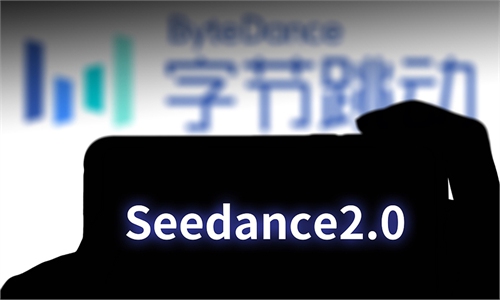
Even before the Spring Festival holiday began, Chinese tech firms were rolling out new models at a rapid pace. For example, iFlyTek launched the domestically trained Spark X2 large-language model, while MiniMax introduced the M2.5 model, notable for its superior decision maturity on complex tasks. ByteDance's latest AI video-generation model, Seedance 2.0, also drew massive global attention for its multimodal creativity and native cinematic camera work, said the report.
AI giants also ramped up competition for users with pre-Spring Festival digital red envelope campaigns. In addition to Alibaba's AI assistant Qwen, other Chinese AI companies including Baidu, Tencent and ByteDance rolled out digital red envelope initiatives, with a total estimated value of more than 4.5 billion yuan ($651.4 million).
Wang noted that with DeepSeek's explosive rise to fame during last year's Spring Festival, releasing major AI models during the holiday has become a popular trend.
"On the one hand, Chinese AI firms want to cultivate user habits capitalizing on the holiday's leisure time and heightened demand; on the other hand, new model launches aim to capture attention from capital markets," Pan Helin, a member of the expert committee of the Ministry of Industry and Information Technology, told the Global Times on Monday.
Compared with a year ago when DeepSeek first burst onto the scene, China's AI ecosystem has changed considerably, Wang said.
"Back then, large-language models were largely limited to basic text processing; today, their reasoning abilities have seen massive leaps forward with fallen costs, helping the large-scale commercial use of AI to become realistic," he noted.
Moreover, the AI models of this year are no longer mere "chatbots" - they have matured into genuinely practical, everyday helpers, Wang said.
RELATED ARTICLES