ARTS / CULTURE & LEISURE
Yunnan author’s new book depicts Dulong ethnic group’s leap guided by devoted border guardians
From darkness to light
By Published: Feb 25, 2026 11:08 PM


A village nestled along the Dulong River in Southwest China's Yunnan Province Photo: VCG
The mist clings to the towering Gaoligong Mountains as dawn breaks over Dulongjiang township. In this remote corner of Southwest China's Yunnan Province, tucked against the China-Myanmar border, a boy watches soldiers arrive. To him, they are not strangers but saviors, and "those who bring light," as his people's shamans would say.
This scene, captured in Chinese author Duan Aisong's latest work Shan Liang De Xing He, known in English as The Sparkling Stars, has moved readers across China since its debut at the 2026 Beijing Book Fair.
The novel, told through the eyes of a young Dulong shaman-in-training known as "Nanmusa," chronicles one of the most remarkable transformations in modern Chinese history: How a Stone-Age society leapfrogged into the 21st century, guided by generations of the Chinese People's Liberation Army (PLA) soldiers, doctors, teachers, and officials who came, and sometimes never left.
"My motivation for writing The Shining Stars stems from my reverence for the borderland and admiration for the heroes who dedicated themselves to it," Duan told the Global Times in an exclusive interview.
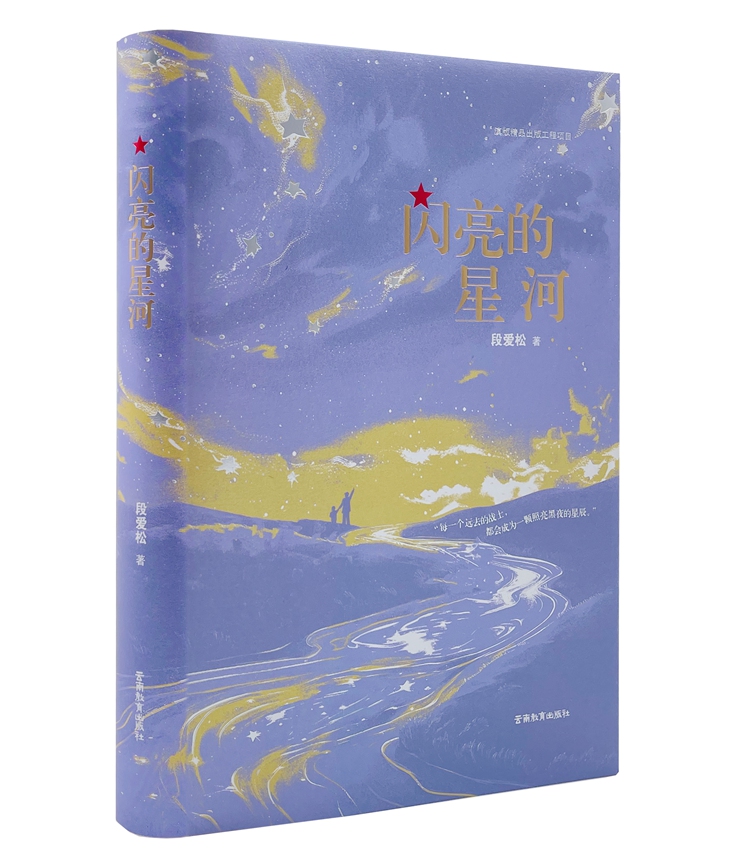
Duan Aisong's new book The Sparkling Stars Photo: Courtesy of Duan
Journey to modernity
To understand the power of Duan's storytelling, one should first understand the Dulong people.
Abutting the border between China's Yunnan Province with Myanmar, Dulongjiang township is the Dulong ethnic minority's ancestral home. Numbering just over 7,000 people in the whole nation, they are one of China's smallest ethnic minorities.
Having long endured extreme poverty in the isolated area, it wasn't until the founding of the People's Republic of China in 1949 that the Dulong people embarked on a journey to modernity in a socialist society.
China's fast-paced development has been embraced by the Dulong ethnic group, and thanks to its intensive poverty alleviation efforts, this ethnic minority has also been dubbed "a group that crossed the millennium in one step."
"When I first went there, I felt like I'd traveled back in time," Duan recalled.
The 49-year-old author from Kunming, capital city of Yunnan Province, has published over a dozen works and won lots of literary awards, including the prestigious China Literature Good Book Award and Bing Xin Prose Award. However, nothing prepared him for what he discovered during three grueling expeditions to the places near the Dulong River.
It took Duan years to piece together the full story. He interviewed elders whose faces bore traditional tattoos, a dying custom once meant to make women less attractive to slave traders from neighboring tribes. He tracked down archival materials, including a 1950s People's Daily editorial and a Yunnan Daily proclamation that took months to locate.
"When I finally read those documents, I felt something profound. The connection between nation, ethnicity, and individuals… it was so deeply moving," he recalled.
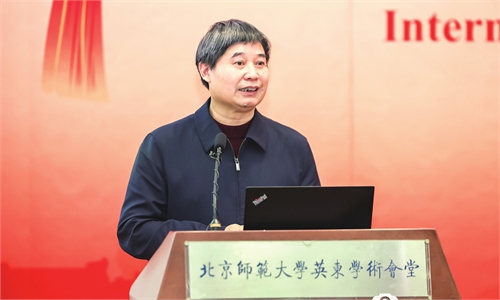
Chinese author Duan Aisong Photo: Courtesy of Duan
Community with a shared futureDuan's novel draws from dozens of real-life accounts, but some still haunt him.
PLA soldiers from all over China, some only in their teens or 20s, trekked to the isolated Dulongjiang township, facing untold dangers in a region with no roads, wild beasts and landslides to defend the border and help the Dulong people improve their lives.
A particularly touching story involves a young student from Minzu University of China, who fell into the Dulong River and lost his life while conducting ethnic identification surveys.
"Unlike today's tourists who are fully prepared and have GPS, those researchers had nothing. They risked their lives out of a sense of mission," Duan said.
The Dulong people's gratitude to these helpers is deeply rooted and passed down from generation to generation.
"From the elderly to the young, they regard those who helped them as 'bringers of light,' which is similar to the 'Nanmusa,' the wise men they worship in their traditional beliefs," Duan explained.
This mutual dedication and gratitude lie at the heart of China's vision for a community with a shared future for all ethnic groups. The Dulong people's leap from a primitive society to a socialist society and into modern civilization is a vivid practice of this concept.
Notably, the name "Dulong" was personally given by late Chinese Premier Zhou Enlai in the 1950s. Replacing the derogatory term previously used for the group, it embodies the country's commitment to ethnic equality.
For Duan, the implications extend beyond China's borders. "From an ethnic perspective, this is about the shared future of all ethnic groups. Remove that lens, and you are talking about the shared future of humanity itself," he said. "My book asks how destinies changed and what deeper forces made it possible? The answer lies in these stories, these characters, this spirit of dedication and sacrifice."
Border regions like Dulongjiang township highlight both disparities and common ground. "Material gaps exist in wealth, culture, education, and perception. That is normal. What matters is how we achieve meaningful connection and mutual respect despite these differences."
Through his writing, Duan hopes to excavate "the most unadorned, shining parts of human nature" from history's depths.
"Literature may not redirect grand historical currents or stop wars, but it can heal hearts. It can awaken deep memories of the past. Through those memories, people can contemplate deeper truths."
The metaphor of his novel - "Every fallen soldier becomes a star illuminating the night" - resonates across generations. Those who died remain, their spirits woven into the fabric of a community transformed.
As dusk falls over Dulongjiang township today, children attend modern schools, families live in sturdy homes with electricity and 5G coverage, and elderly women weave rainbow-colored Dulong blankets that have traveled to Chinese fashion weeks. Above them, the first stars appear - each one, perhaps, watching over a people who stepped out of darkness and into the light.
RELATED ARTICLES