Japanese entities are placed under export controls; they have no reason to complain: Global Times editorial
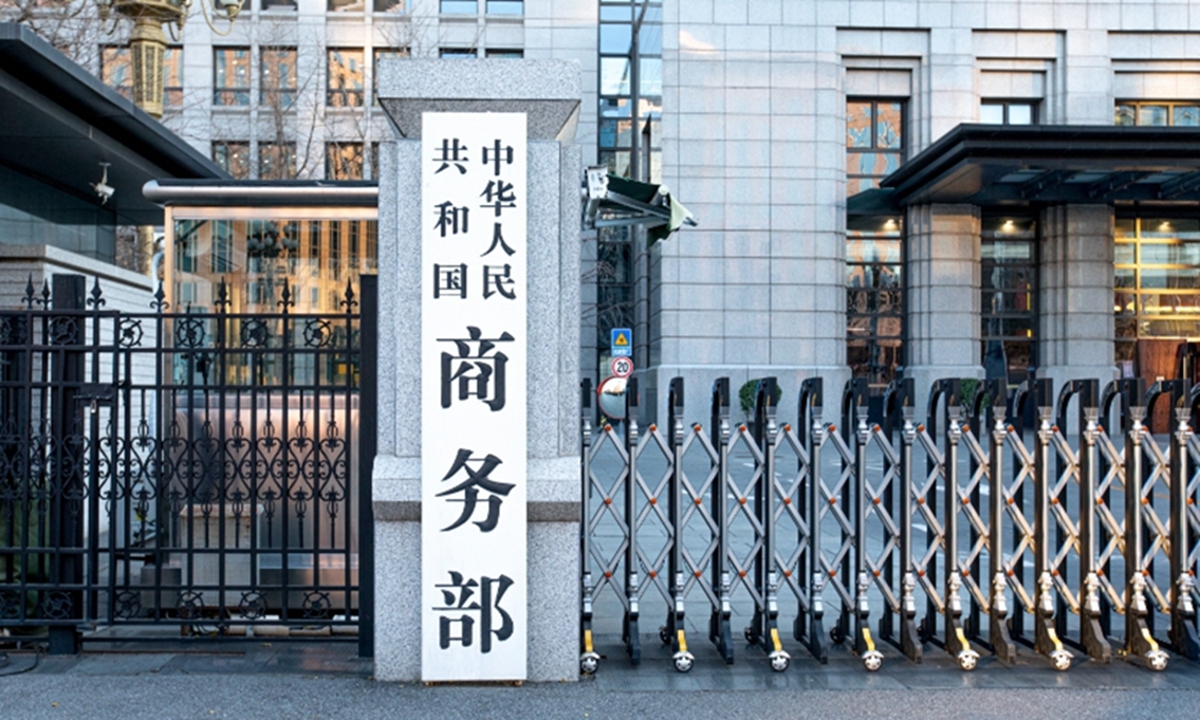
The Ministry of Commerce of China File photo: VCG
Just after the Spring Festival holiday, China's Ministry of Commerce issued two announcements: one adding 20 entities involved in enhancing Japan's military capabilities to an export control list, and the other adding 20 Japanese entities whose end-users and end-uses of dual-use items could not be verified to a watch list. These countermeasures directly target the Achilles' heel of Japan's "remilitarization," a move that has shocked Japan. While the business community is busy assessing the potential impact and losses, Japanese officials are putting on a show of calm and making complaints.
The inclusion of these Japanese entities on the export control list is justified. China's measures directly target the Achilles' heel of Japan's "remilitarization" ambitions. The so-called big three defense contractors - Mitsubishi, Kawasaki, and IHI - are all on the list, covering key support points of Japan's modern military capabilities, from shipbuilding and aero engines to military radar and submarine sonar. These controlled entities lead the research, development and upgrading of Japan's main combat equipment, posing a direct threat to peace and stability in East Asia and even the entire world. China's move not only fully complies with the export control laws and Regulations on Export Control of Dual-use Items regarding threats to national security, but is also a just action by a responsible major power to defend the postwar international order and maintain regional peace and stability.
In response to the Japanese leader's erroneous remarks regarding Taiwan, China's series of measures were reasonable, well-founded, and measured. Regrettably, faced with the warning signals sent by China through its countermeasures, the top levels of the Japanese cabinet not only failed to reflect on their actions but also adopted a victim-like posture.
Deputy Chief Cabinet Secretary Kei Sato said China's move is "absolutely intolerable and extremely regrettable," and a senior official from Japan's Ministry of Foreign Affairs lodged a protest with China. This stubbornness in "feigning ignorance" attempts to mislead the international community and will only push Japan into an even more dangerous situation.
Japan should understand that China's move is aimed at its radical "remilitarization" and its attempts to acquire nuclear weapons. Japan's militarism waged aggressive wars in the last century, bringing deep suffering to the peoples of various Asian countries. Japan should learn from history and adhere to the path of peaceful development.
However, in recent years, the Japanese government has accelerated its unprecedented military buildup since World War II, gradually circumventing its pacifist constitution, overturning its "exclusively defensive defense" policy, significantly increasing its defense budget, and aggressively developing offensive weaponry, even openly challenging the postwar nuclear restrictions imposed on it. These actions, coupled with Japan's long-standing failure to deeply reflect on its history of aggression, are enough to arouse global vigilance toward the resurgence of Japanese militarism.
What is particularly infuriating is that some Japanese politicians have disregarded the series of political documents and consensuses reached since the normalization of China-Japan diplomatic relations, openly pursuing a beggar-thy-neighbor policy toward China. They have been eager to fabricate and hype up the so-called "China threat" narrative, actively positioning themselves at the forefront of anti-China agitation. Under such circumstances, no one with sound judgment could agree to export raw materials to Japan that could be used for military production.
Sadly, alongside political provocations toward China, a kind of blind arrogance has permeated parts of Japan's political arena and society. In response to the sharp decline in the number of Chinese tourists visiting Japan, some politicians and well-known media hosts have even clamored that "it doesn't matter if Chinese tourists don't come" and that they were "never welcome in the first place." Facts speak louder than sophistry. The steep drop in passenger traffic at Kansai International Airport and the halving of duty-free sales at department stores have already become unavoidable pains for the Japanese culture and tourism markets. Behind the economic costs lie political costs. As Japan's right-wing forces continue to push the limits of the "Peace Constitution" and certain politicians repeatedly pay visits to the Yasukuni Shrine over historical issues, peace-loving people have little choice but to keep their distance from the country.
What warrants vigilance is not only the remarks of certain Japanese politicians, but also the underlying social currents reflected in those remarks. Following the general election for the House of Representatives, Japan's right-wing forces have consolidated their grip on power, leaving the Takaichi administration's aggressive military expansion agenda with virtually no internal checks. By hyping up a so-called "survival-threatening situation," some politicians are inflaming nationalism and xenophobia, suppressing domestic anti-war and pro-peace voices, and labeling advocates of China-Japan friendship as "unpatriotic" or even "traitors." Such practices bear an unsettling resemblance to Japanese society before World War II, and the trajectory they suggest is deeply troubling.
After China's export control measures took effect, Japanese Prime Minister Sanae Takaichi stated that maintaining communication with China is important and expressed a willingness to engage in dialogue. We are open to communication and dialogue, but the prerequisite is that the Japanese side retract its erroneous remarks, correct its course through concrete actions, and uphold the political foundation of China-Japan relations. Attempting to provoke China's core interests and tread on the red lines of the postwar international order while hoping to muddle through will not lead to good outcomes. Certain forces in Japan are advised to pull back before it is too late and to avoid straying further down the wrong path.
RELATED ARTICLES