Illustration: Tang Tengfei/GT
In Taicang, East China's Jiangsu Province, a stretch known as Rothenburg Street resembles a small German town, giving it a distinctly European character. Why has such an ambience taken shape here? The answer lies less in architectural style than in economics. Over the past three decades, Taicang has become a base for German manufacturers. According to media reports, the city hosts more than 560 German-funded enterprises, with cumulative investment exceeding $6 billion and annual industrial output above 67 billion yuan ($9.8 billion).Part of the reason for this concentration is the scale and potential of the Chinese market. The story goes back at least to 1993. According to the People's Daily, when Volkswagen Group opened a plant in Shanghai, a German manufacturer holding an important share of the global market for automotive seatbelt springs leased a workshop of 400 square meters in Taicang to begin operations in the Chinese market.
Kern-Liebers was one of the first German businesses that settled in Taicang. In the decades that followed, an increasing number of German companies established a presence in the city. In December 2025, Taicang welcomed its 500th German-funded enterprise, a global supplier of internal logistics systems, which began production that month.
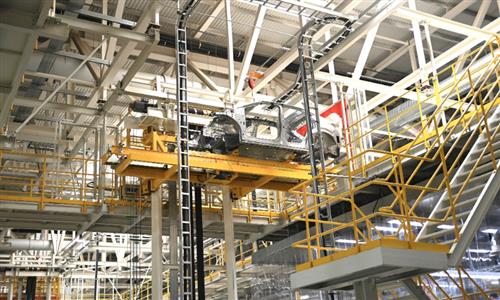
According to the People's Daily, six of Germany's 10 largest machine tool manufacturers and nine well-known family-owned firms now have bases in Taicang, and more than 90 percent of the early entrants have increased investment and expanded production.
Taicang offers a lens on German investment in China. Its proximity to Shanghai and well-connected transport links allow companies to integrate efficiently into regional supply chains and tap into both industrial and consumer demand across the Yangtze River Delta. The presence of this market opportunity has been an important factor sustaining German investment in the city.
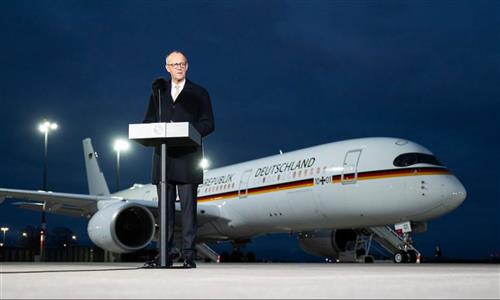
Taicang's experience is far from unique. More broadly, China's appeal to German companies continues to grow. The Xinhua News Agency reported that data from the German Economic Institute shows new German direct investment in China reached roughly 7 billion euros ($8.26 billion) in 2025, well above about 4.5 billion euros a year earlier.
Juergen Matthes, an expert at the institute, was quoted as saying that German companies are not only expanding their presence in China but also accelerating the pace of investment.
The drivers of German investment in China are multiple and interconnected. Among these factors is the market itself: industrial demand provides a platform for manufacturers to integrate with established supply chains and clusters, while the expanding consumer base offers opportunities across a wide range of goods and services. Together, these elements create tangible commercial incentives for firms seeking to scale and diversify their operations.
Equally important is the openness of the Chinese market. In contrast to protectionist policies in some Western economies, China has maintained an open approach to foreign companies, including German firms, provided they compete on fair terms. This combination of market opportunity and a welcoming business environment helps make China an attractive destination for German investment.
German investment in China has become an important channel for companies to engage with the market beyond trade. By establishing operations locally, German firms can access industrial and consumer demand more directly, integrate more closely with regional supply chains, and respond more quickly to shifts in the market. This proximity enhances their competitiveness and allows them to take advantage of opportunities the Chinese market presents.
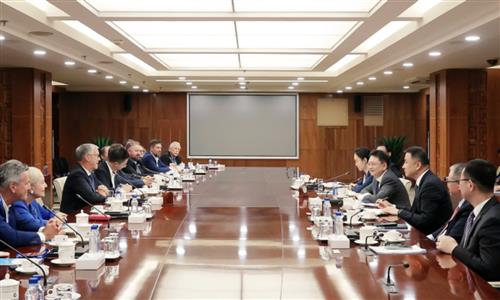
Trade remains an important element of Chinese-German economic exchange, but it does not tell the full story. As commercial ties deepen, investment and other forms of engagement are diversifying the ways the two economies connect, expanding the scope of bilateral economic activity beyond simple flows of goods.
In this context, traditional measures such as trade surpluses or deficits offer a limited perspective. Emerging business models, including new business models enabled by artificial intelligence and digital technologies, are increasingly important for multinational firms seeking to stay close to demand and engage with opportunities in the Chinese market.
Of course, competition in China is intense, but opportunities remain substantial and accessible to multinational companies, including German firms, that operate on fair terms. The experience of a spring manufacturer in Taicang offers a microcosm of this potential. Beyond the discussion of trade balances, it illustrates how tangible economic opportunities can be explored on the ground, providing a clear perspective on multinational companies' engagement with China's evolving market landscape.
The author is a reporter with the Global Times. bizopinion@globaltimes.com.cn
RELATED ARTICLES