China announces adjustment to anti-discrimination measures against Canada, to halt tariffs on certain imports
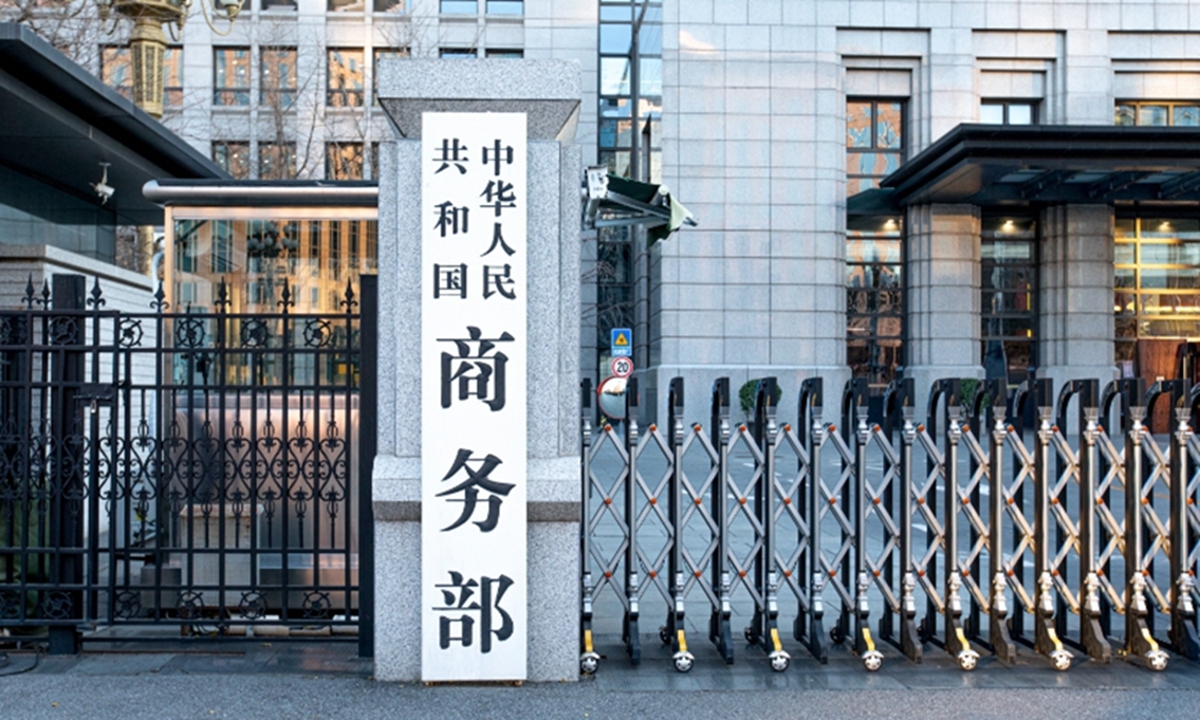
The Ministry of Commerce of China File photo: VCG
China's Ministry of Commerce (MOFCOM) announced on Friday that it will adjust its anti-discrimination measures on certain Canadian products from March 1 to December 31, 2026, after Canada recently announced partial adjustments to its restrictive measures, including additional tariffs, imposed on steel and aluminum products imported from China, according to a statement on the MOFCOM website.
Chinese experts said on Friday that the latest moves from both sides represent an important step toward enhancing mutual trust in economic and trade ties. They called on the Canadian side to continue to pursue trade autonomy from the US and to boost complementary cooperation with China in various fields including energy, agriculture and the green economy.
In accordance with the relevant provisions of the Foreign Trade Law, MOFCOM initiated an anti-discrimination investigation on September 26, 2024, into the relevant restrictive measures imposed by Canada on China. It then issued a ruling on March 8, 2025, announcing the adoption of anti-discrimination measures involving additional tariffs against Canada.
To implement the important consensus reached by the leaders of the two countries, China and Canada have made arrangements to properly resolve economic and trade issues in areas such as electric vehicles, steel and aluminum products, and agricultural and aquatic products. Recently, the Canadian government officially announced partial adjustments to its additional tariff measures imposed on Chinese steel and aluminum products, among others, a spokesperson for MOFCOM said on Friday.
This is consistent with the circumstances under which China will adjust its anti-discrimination measures. China has decided that, during the period from March 1, 2026 to December 31, 2026, it will not impose tariffs related to anti-discrimination measures on some imported goods originating in Canada, the spokesperson said.
Over the period, China will not impose the 100 percent additional tariffs on oil cakes and peas originating in Canada, nor the 25 percent additional tariffs on lobsters and crabs originating in Canada, according to the statement released by the Customs Tariff Commission of the State Council on Friday.
According to a statement on the Canadian government website on February 17, Canada will extend to the end of 2026 previous remission measures for certain Chinese steel and aluminum products that are in short supply in Canada, covering 66 lines of product-specific remissions, and 49 tariff lines of company-specific remissions. Canada will also expand remissions coverage to seven steel, two aluminum, and four steel derivative products. This expansion will enter into force by March 1, 2026, and will be retroactive to January 1, 2026.
"This indicates that Canada is pursuing more independent foreign trade decisions, and sends a positive signal in the restoration of China-Canada economic and trade relations," Li Yong, an executive council member of the China Society for WTO Studies, told the Global Times on Friday.
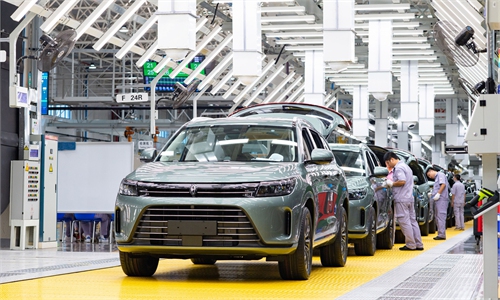
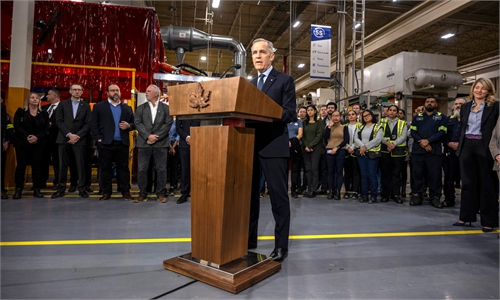
In addition, Canada also announced new trade agreements for electric vehicles exported from China during Canadian Prime Minister Mark Carney's recent visit to China. According to the adjusted arrangements, Canada will grant China an annual quota of 49,000 EVs.
"The easing of trade frictions between China and Canada represents a gradual return to rationality. The primary driving force behind this is economic interests. The Carney administration, in particular, is keen to achieve trade diversification to reduce reliance on a single market - primarily the US," Liu Dan, a research fellow at the Center for Regional and Country Studies at Guangdong University of Foreign Studies, told the Global Times Friday.
Meanwhile, as the world's second-largest economy, China boasts a vast market and strong industrial chain advantages. For years, the two sides have had natural complementary needs in areas such as energy, agricultural products, and the green economy. This serves as a solid foundation for the warming of bilateral relations, Liu said.
"China is willing to work with the Canadian side, guided by the important consensus of the leaders of the two countries, to promote the healthy, stable, and sustainable development of China-Canada economic and trade relations," the MOFCOM spokesperson said.
"Looking ahead, if the Canadian government continues to stick to trade autonomy, and independent and win-win foreign policies with China, we believe that the two sides will move forward along the current trajectory to develop more complementary cooperation," Li said.
RELATED ARTICLES