Chinese and Japanese civil groups call for return of Tang Honglu Well Stele to China
Lost treasure’s long journey home
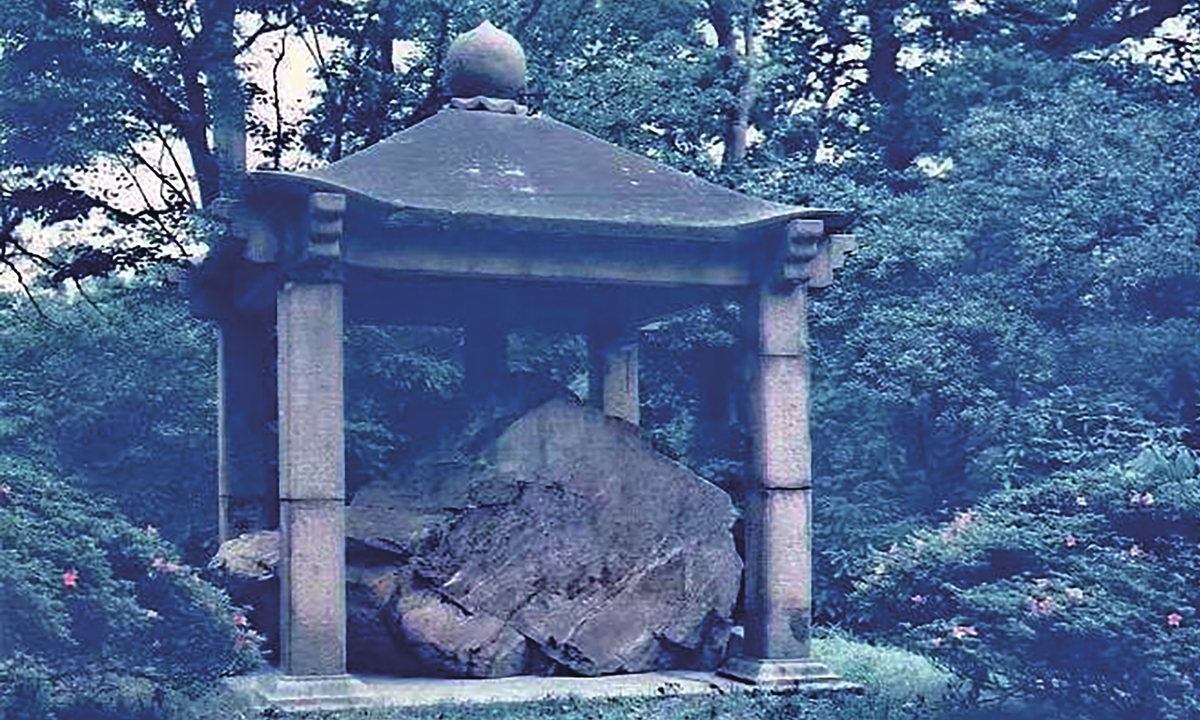
A close-up photo of the Tang Honglu Well Stele and its pavilion in Kenanfu, Tokyo Imperial Palace, released by the Imperial Household Agency of Japan Photo: Courtesy of Honglu Library
The Archives Collection of Tang Honglu Well Stele of the Tang Dynasty (618-907) was recently released in Shanghai, offering a comprehensive account of the stele's century-long journey from its erection and preservation in China to its plunder by and secret concealment in Japan, and establishing a solid, indisputable chain of evidence.
However, after extensive investigations and interviews, Global Times reporters found that the path to restoring looted Chinese cultural relics remains fraught with challenges, seemingly trapped in a maze of silence and evasion due to Japan's persistent evasiveness over the years.
Yet, these lost national treasures continue to yearn for return. This century-spanning journey home carries the hopes of countless people - that all looted relics will be returned to where they belong.
A stele's long ordeal
Originally located in Lüshun, Dalian, Northeast China's Liaoning Province, the Tang Honglu Well Stele was erected in 714 AD. It serves as crucial historical evidence of the Tang Dynasty central government's envoy being dispatched to confer titles on leaders of the ancient Mohe people in Northeast China, thereby affirming the region's affiliation with the Tang Dynasty.
In April 1908, Japanese military forces illegally dismantled the stele and its pavilion under the pretext of "spoils of war" in the Russo-Japanese War (1904-05), shipped them to Japan, and presented them to the Japanese emperor. To this day, they remain stored in the Kenanfu repository, one of the storage facilities of the Japanese Imperial Palace. They are regarded by many scholars as China's "top lost national treasure."
To restore the cultural relics looted by Japan, Chinese scholars and Japanese advocates have worked together for years, gathering evidence, engaging with Japanese authorities, and urging the lawful restitution to China.
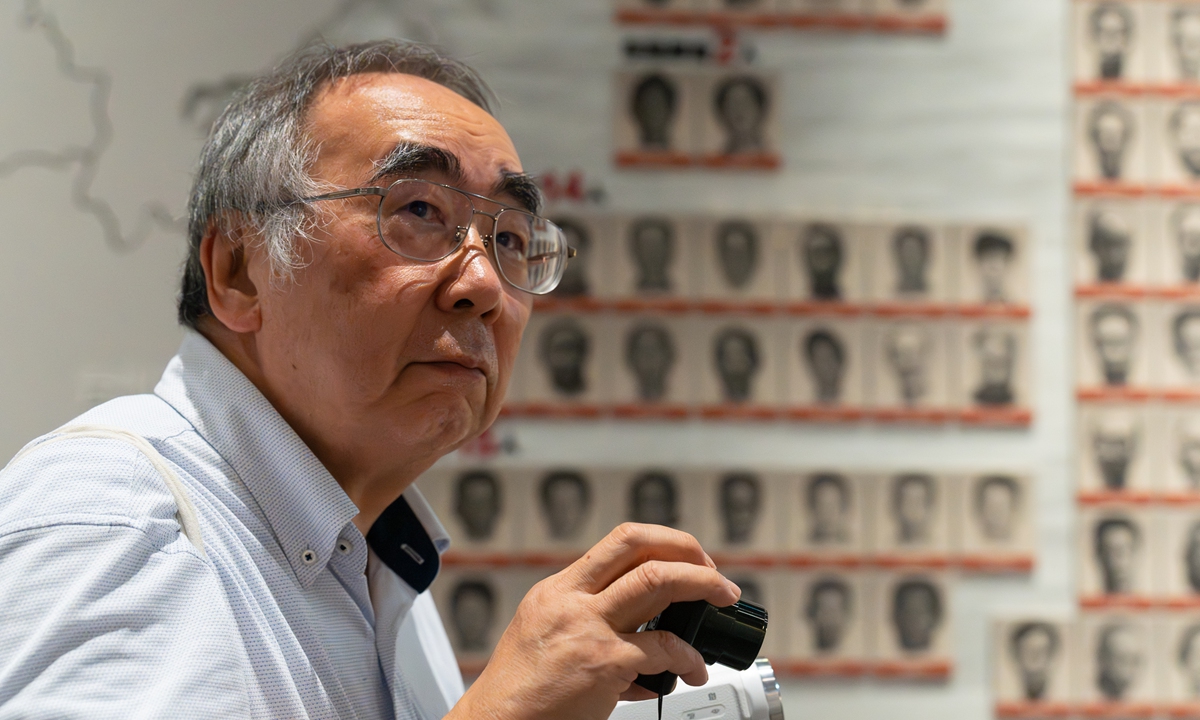
Keiichiro Ichinose visits the exhibition hall displaying evidence of germ-warfare crimes committed by the Japanese Imperial Army in Yiwu, East China's Zhejiang Province, on July 8, 2025. Photo: VCG
Keiichiro Ichinose, founder of Japanese civic group "China Cultural Relics Return Movement Association," revealed in an exclusive interview with the Global Times that even before the Collection's official publication, scholars from Shanghai University made a special trip to Japan on October 2025 to urge the return of the stele in accordance with the law, delivering a draft of the work. On October 16, 2025, accompanied by a Japanese Diet member, the Shanghai scholars and the association members exchanged views with officials from Japan's Ministry of Foreign Affairs (MOFA) regarding the return of looted Chinese cultural relics."Not only did we hand the draft of the Collection to MOFA, but we also requested it be forwarded to the Imperial Household Agency," Ichinose said.
Regarding MOFA's reaction, Ichinose noted: "From our perspective, Japanese authorities seemed to recognize that this upcoming publication had the endorsement of the Chinese government. Thus, they treated it more seriously and cautiously than before, stating only that they 'needed to consult their superiors' without providing any concrete response."
However, whether Japan's MOFA forwarded the draft to the Imperial Household Agency remains unclear. In an exclusive response to the Global Times, the agency's public relations officer stated, "We have not seen such materials."
Ichinose told the Global Times that the group plans to submit the newly published Collection soon. When asked whether the Imperial Household Agency would meet with civic groups and accept this latest evidence, the officer replied in Japanese, "It's hard to say, as we have not yet received any related application and cannot provide an answer at this time."
Ichinose emphasized that Japan's MOFA plays the key role in decisions regarding the return of Chinese cultural relics. The Global Times contacted MOFA for comment, but was told that "to ensure accuracy, a written inquiry must be submitted." The Global Times then promptly sent an email as requested, but had received no reply by the time of publication.
"The Collection represents the research achievements of generations of scholars, with decades spent merely collecting materials," Chen Wenping, deputy director of the China Overseas Cultural Relics Research Center at Shanghai University, told the Global Times. "The biggest obstacle in restoring the stele lies with the Japanese side, as the Japanese government continues to evade the issue of illegally looted cultural relics."
In his view, Japan's obstruction manifests in two main ways: first, deliberately withholding information related to provenance research on the Tang Honglu Well Stele; and second, rejecting Chinese restitution claims by citing the stele's designation as Japanese "state property," while also arguing that returning such property requires parliamentary approval. When Chinese side engages with Japan's Diet, they are told the matter requires the Japanese emperor's consent, resulting in the delay.
Huo Zhengxin, a law professor at the China University of Political Science and Law, told the Global Times that although the loss of the Tang Honglu Well Stele occurred more than one century ago, when the international legal system was less developed, Japan's act of plundering Chinese cultural relics under the guise of "spoils of war" and designating them as "state property" is unquestionably illegal and immoral, even in the absence of directly applicable international treaties. Litigation is one avenue for restoring cultural relics, but disputes are more often resolved through international law enforcement cooperation, negotiations and consultations.
As Ichinose said: "The most central and most severe issue between Japan and China remains the war. Returning Chinese cultural relics looted during the wartime is a crucial part of settling Japan's historical responsibilities."
Unyielding pursuit
The recovery journey has not been smooth. In 2017, Tong Zeng, then president of the China Federation of Civil Claims Against Japan, conceived a bold idea: Could Japanese advocates help us restore the national treasures? He thought of Ichinose, the Japanese lawyer who had long represented victims in lawsuits related to the Japanese Imperial Army's Unit 731 germ warfare and the Chongqing bombings that the Japanese military launched against Chongqing from February 18, 1938 to August 23, 1943. Chongqing was the wartime capital of China in the 1940s.
At the time, volunteer Cui Baojuan had just joined the federation headed by Tong. She vividly recalls that on New Year's Day of 2018, in a meeting room in Chongqing, she and Meng Huizhong, vice president of the federation, nervously proposed to Ichinose the idea of pursuing legal action in Japan to demand the return of the stele. Ichinose simply responded, "I'll do it."
While academic recovery efforts achieved breakthroughs, the Chinese government's actions also progressed steadily. After leading the release of The Dunhuang Declaration on the Protection and Repatriation of Illegally Exported and Looted Cultural Heritage in 2014, China, along with 18 other countries of origin, jointly issued the The Qingdao Recommendations for the Protection and Return of Cultural Objects Removed from Colonial Contexts or Acquired by Other Unjustifiable or Unethical Means (Qingdao Recommendations) in 2024, creating a favorable international environment for the protection and return of historically lost cultural relics.
However, some who stood alongside this cause did not live to see the results of their efforts. Tong Zeng passed away in 2025.
Over the years of reporting on the restoration of Chinese cultural relics looted by Japan, Tong repeatedly told the Global Times, "Demanding the Japanese government to return cultural relics is extremely difficult. I wish I could see the Chinese relics restored in my lifetime."
When news of Tong's illness and passing away came out in October 2025, it stirred complex emotions - Tong had dedicated his life to this cause, but regrettably he did not have a chance to witness the relics' return.
"Before his death, Tong repeatedly urged me: 'Cui, you must never give up. We have the responsibility to recover the cultural relics that belong to China,'" Cui recalled.
Cui's words are filled with endless remembrance. She said, "Our wish is that all looted cultural relics return home."
RELATED ARTICLES