Looking at changes in global high-tech development through Huawei's breakthroughs
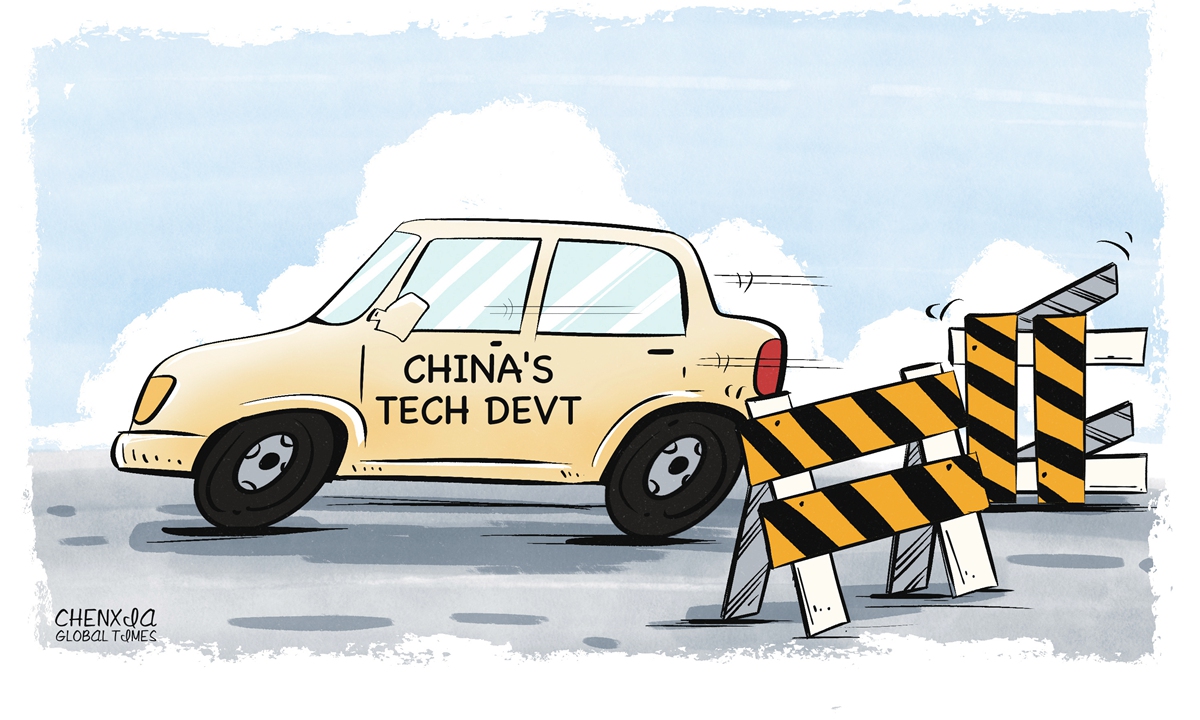
Illustration: Chen Xia/GT
Recently, ahead of the Mobile World Congress, Huawei held a major product launch in Madrid, during which the spotlight shone on the Mate 80 Pro smartphone - powered by China's self-developed Kirin 9030 Pro chip and a custom operating system - alongside new smartwatches and wireless earbuds. At MWC Barcelona 2026, Huawei debuts its latest SuperPoD product Atlas 950 SuperPoD, TaiShan 950 SuperPoD and a series of computing solutions to the global market, according to a press release from the company.
The profound significance of this move goes far beyond merely "challenging Nvidia," as described by some Western media outlet. It is a bold declaration to the global supply chain: Huawei's AI computing power is not only viable, but exportable. Where the US used sanctions to build a wall, Huawei has chosen to build a bridge with its products.
The true focal point is not whether Huawei can instantly dethrone Nvidia, but its undeniable "technological presence." Huawei is redrawing its coordinates on the global AI map, offering not just a replacement, but a complete, parallel choice for the world.
Reaching this point, however, was fraught with immense difficulties. Rewind a few years, and Huawei was facing unprecedented, systemic strangulation. Through US-led export controls and the forced removal of Google Mobile Services, Washington and its allies attempted to drop an impenetrable iron curtain across the Chinese tech giant's path to globalization.
Initially, the impact was devastating. Cut off from advanced semiconductors and the Google ecosystem, Huawei's overseas smartphone market share plummeted. Even today, market data indicates that more than 90 percent of Huawei's smartphone shipments still rely on its domestic Chinese market.
In the script written by Western policymakers, the story should have ended there. Stripped of its place in the global supply chain, the company was supposed to wither away. Yet, the reality unfolded quite differently. Huawei survived by executing a rapid strategic pivot. As smartphone sales stumbled, it aggressively expanded into less restricted areas.
Facing severe constraints on semiconductor manufacturing, Huawei prioritized its limited advanced process capacity for its Ascend AI accelerators in data centers, choosing to fight for the computing foundation that will determine the future tech landscape.
Why did an all-out blockade fail to stop Huawei? The answer lies in a critical strategic miscalculation by the West, rooted in a misunderstanding of technological ecosystems.
For decades, the global tech industry thrived on a delicate balance: The West controlled the underlying standards and chip architectures, while Chinese firms excelled in applications.
The US sanctions shattered this equilibrium. By employing extreme exclusion, Washington effectively told Huawei it had no way out but to rebuild its entire hardware and software foundation from the silicon up.
The West inadvertently forced the creation of a super-competitor with full-stack, self-reliant capabilities.
Previously, Washington could constrain Huawei by controlling a few American suppliers; today, facing devices powered by domestic Kirin chips and independent ecosystems, the West has largely lost its leverage.
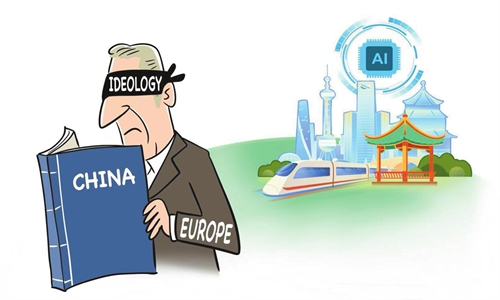
Europe's approach to Huawei is contradictory. While EU politicians pursue sanctions and legal means to exclude Huawei from telecom networks, Huawei actively participates in 16 EU-funded Horizon Europe research projects, including cloud and 5G/6G telecommunication networks.
Why do top European universities and tech firms continue to partner with a heavily sanctioned entity? Because true innovation requires tangible investment and real technological accumulation, not political rhetoric.
In telecommunications and foundational AI, Huawei's R&D prowess is simply unavoidable. European institutions realize that arbitrarily severing these ties does not make Europe safer; instead, it cuts off their own access to top-tier technological expertise, delaying Europe's own progress in next-generation development.
Shielded and nourished by a massive domestic market, Huawei endured the initial shockwaves. Now, as it steps back onto the global stage with its proprietary silicon and a parallel AI ecosystem, the West faces a formidable competitor.
History's irony: Suppression fueled resilience. The Huawei blockade failed to maintain Western dominance. Instead, it accelerated global tech multipolarity, a pivotal 21st-century shift with profound political, economic and security implications.
RELATED ARTICLES