Illustration: Chen Xia/GT
The global conversation about China is undergoing a significant shift. While international perceptions of China are still clouded by negative narratives and entrenched biases, a more authentic story, grounded in real and lived experience, is cutting through the information fog. Since last year, a cultural wave from the East has swept across social media platforms, from the boom in "China travel" and the viral spread of Chinese short dramas to vibrant online discussions about public safety and medical tourism in the country.
This growing fascination has even sparked such trends as "becoming Chinese" and "Chinamaxxing," reflecting how Chinese culture resonates deeply with people around the world, particularly the younger generations. Some may wonder how and why China is being rediscovered today.
While the rise of China's global appeal may seem sudden, it is, in fact, a historical inevitability. Just as the economic base shapes its superstructure, hard power underpins the soft power. As China's strength grows, so does its cultural reach. When people around the world use Chinese technology, wear Chinese designs and follow Chinese trends, "becoming Chinese" evolves from an online meme to an offline adoption and genuine appreciation of the Chinese way of life.
Culturally, China is simply reclaiming its historical place. With a continuous civilization spanning thousands of years, the Chinese style has always been trendy and cool. In recent years, the Chinese people have shown remarkable cultural confidence. We are not merely preserving traditions but reinvigorating them through innovation. From the "Digital Forbidden City" to the "New Trio" of cultural exports - online literature, web series and video games - China presents a unique blend of heritage and modern cool, capturing the imagination of a global audience and inspiring them to experience the country firsthand.
Some Western countries, acting against the tide of progress, have somehow accelerated the eastward swing of the "historical pendulum." When hegemony overrides fairness, the world naturally turns its eyes toward China, a country that champions harmony and humanity. A telling example is the coercive crackdown on TikTok. It triggered a wave of "digital refugees" flocking to Chinese platforms, sparking a genuine, people-to-people dialogue across the Pacific - often starting with a "comparing of notes" about daily life. This shift is not accidental - it signals a growing global rejection of an outdated, rigid and oppressive worldview.
There was a time when some Chinese people believed that "the moon is rounder abroad." Now, the tables have turned, and it is foreigners who envy the leisurely comfort and the profound sense of security in China.
The popularity of "Chinese style" on overseas platforms thrives on contrast - the allure of "something available in China but not elsewhere," or the surprise of "thinking China doesn't have it, only to find it actually does," which naturally arouses curiosity and drives engagement.
For years, Western mainstream media have portrayed China through a gloomy filtered lens, painting it as closed and threatening. Today, raw vlogs and uncut livestreams are shattering these stereotypes piece by piece.
After visiting China, many foreign tourists who were once skeptics have become fans. In numerous short videos they share, the opening line is frequently: "I've been lied to by Western media for decades." This is why the best way to help the world understand that China is to open the door wider. It is also one of the key reasons behind China's continuous easing of entry policies.
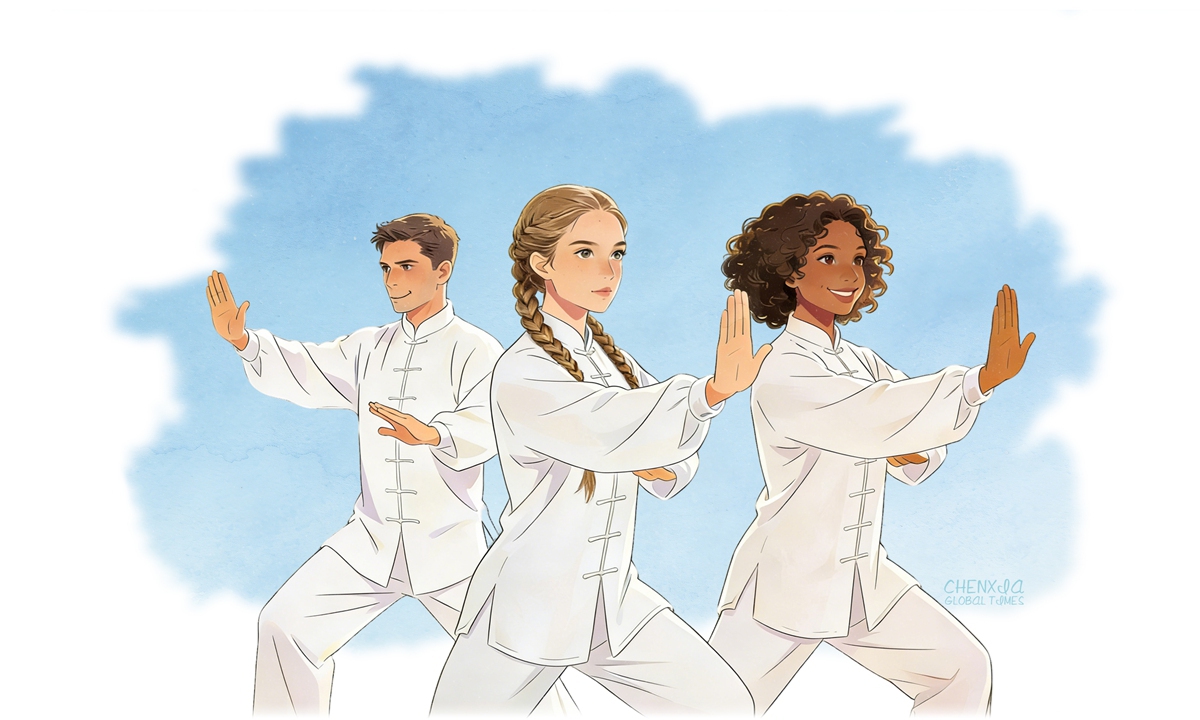
As the trend of "becoming Chinese" gains popularity, some worry that Chinese culture might be reduced to stereotypes or mere symbols. It is true that symbols are the starting point for cultural exchange, but they should not be the end goal. Over time, those genuinely interested in Chinese culture will look beyond drinking warm water or practicing Tai Chi to appreciate the philosophy behind them.
The vitality of a culture lies precisely in its ability to integrate into the practices of everyday life and renew itself through people-to-people interaction. The current "China fever" represents a reciprocal engagement built on mutual respect and goodwill. This phenomenon reminds us that beyond conflict and competition, civilizations can inspire and enrich one another.
Why are Chinese short dramas taking the world by storm? They avoid lofty preaching and tap into universal emotions, tailored with local nuance. Their success proves a vital lesson: cultural transmission is not just about "sending out," but ensuring the message is "received." Even US media acknowledges that these short dramas are subtly reshaping international perspectives of China and altering the landscape of global communication.
Critics often dismiss this genre as "cultural fast food." Indeed, its early stage of unregulated expansion did result in repetitive and formulaic content. But writing off the entire medium would be short-sighted. Much like early cinema, which was once mocked as "lowbrow entertainment," short dramas are still evolving toward maturity. The industry is now shifting toward "boutique-style production," retaining its signature "instant gratification" while adding logical and cultural depth.
Now, we are in the Year of the Horse, a year in which the world looks East with even greater resolve. China must remain grounded, building strength while standing on the right side of history. When we truly become our best selves, there will be no shortage of eloquent voices to champion our cause.
The author is a commentator on international affairs, writing regularly for Xinhua News, Global Times, China Daily, CGTN and so on. opinion@globaltimes.com.cn
RELATED ARTICLES