
Illustration: Liu Rui/GT
Editor's Note:
The 15th Five-Year Plan (2026-30) marks a pivotal phase in China's medium- to long-term development, set to inject momentum and certainty into global development amid profound global shifts. In its "New Blueprint, New Opportunities" series, the Global Times (GT) invites Nobel laureates in economics, former central bank governors, core decision-makers of international organizations and renowned economists from countries with diverse civilizations, different economic systems and stages of development, to deeply analyze how the 15th Five-Year Plan will reshape the underlying logic of China's interaction with the world and to explore the "anchor of certainty" and "new paradigm of development" this plan offers for a turbulent world.
In the third installment of the series, GT reporter Wang Wenwen talked to Louis-Vincent Gave (Gave), founding partner and CEO of Gavekal Group, a research and financial services firm based in Hong Kong. Gave shared his insights into the importance of five-year plans for the Chinese economy.
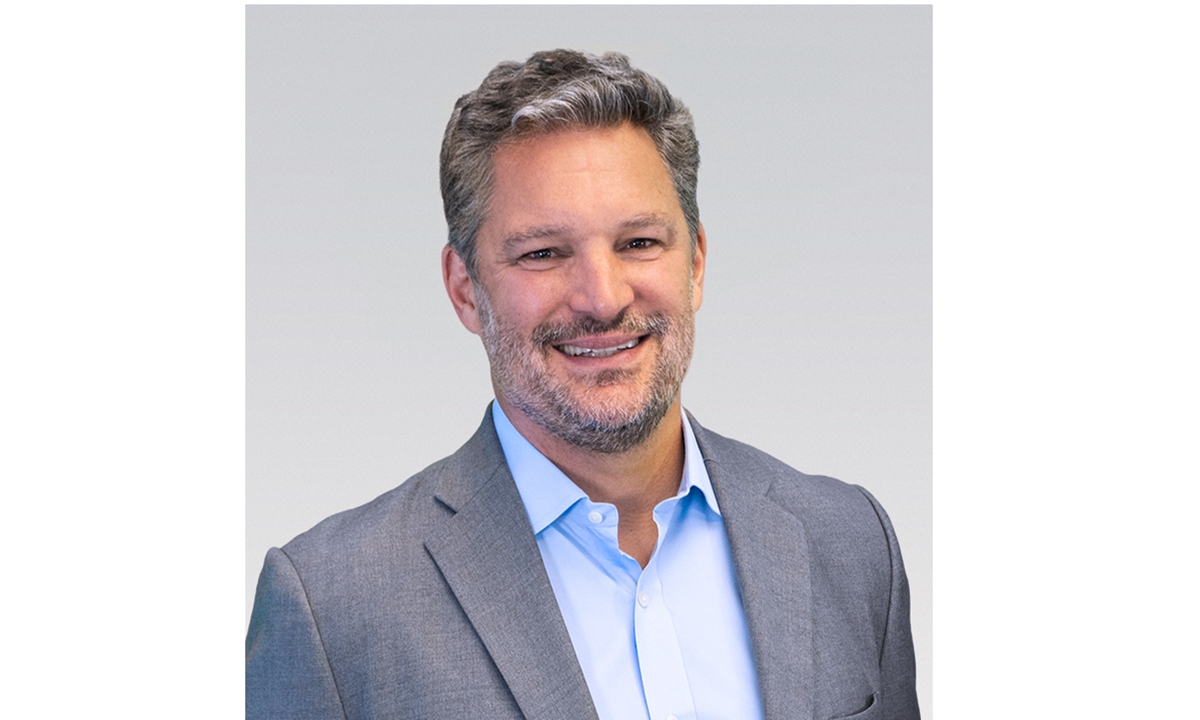
Louis-Vincent Gave Photo: gavekal.com
GT: This year marks the beginning of China's 15th Five-Year Plan period (2026-30). As an investor, how do you assess the significance of five-year plans for the trajectory of the Chinese economy?
Gave: I think five-year plans are very important in China. China is an economy that is very dynamic with lots of private enterprises. But the overall trajectory driven by the government still matters a lot. To illustrate this, let's talk briefly about the 14th Five-Year Plan. Against the backdrop of US semiconductor embargo, it was about China building self-sustainability and independence. I think what seems likely to me in the 15th Five-Year plan is more of a shift toward helping more domestic growth and repairing consumer confidence.
GT: According to the Recommendations of the Central Committee of the Communist Party of China for Formulating the 15th Five-Year Plan for National Economic and Social Development, China aims to expand two-way investment cooperation, including fostering new strengths in attracting foreign investment, during the next five years. How do you see the investment potential of China in the short and long term?
Gave: I'm very bullish on Chinese equities. As I just mentioned, electricity, capital and labor are all cheap in China. These are significant advantages on a global scale and we're seeing these benefits reflected in the Chinese trade balance. Over time, I think this will lead to a stronger renminbi and stronger Chinese asset prices. I do think China is a good place to deploy capital. In 2024, the Chinese stock market was one of the better-performing stock markets in the world. In 2025, Chinese equities, especially those in Hong Kong, did well, and they're off to a good start this year.
When I look at any potential investment, I consider it through four prisms. The first is fundamentals - does the story make sense? In terms of China, the three above-mentioned advantages certainly make sense. Then, I look at the momentum. Currently, the momentum for Chinese equities is positive. Then I look at investor positioning - does everybody already own this? Is the trade overcrowded? The reality today in China is that it's not. Finally, I look at the valuations, and I don't think they are stretched yet. So when I look around the world, China stands out as one of the few markets that looks good on all four fronts - fundamentals, momentum, investor positioning and valuations.
GT: How do you feel about the certainty China injects into the world?
Gave: Today, we don't know what the US president is going to say next. The certainty of policy, which we used to expect from the US, is no longer there. Meanwhile, what China is trying to achieve is becoming more visible. In terms of certainty, this is where the 15th Five-Year Plan will be instrumental. The plan obviously sets policy guidelines for the next five years. If the leadership is very clear about what these policy guidelines are, where they are going and how they are going to get there, I think the market will respond very favorably.
GT: Many observers point to China's "strategic resolve" when analyzing the country's long-term plans. If you look at areas that require long-term investment, such as infrastructure or industrial policy, what do you think are the key differences between the actual effects of China's "strategic resolve" and the policy models commonly seen in the West?
Gave: At this stage, China has a few comparative advantages when it comes to the rollout of infrastructure. The first is the ability to project one's vision further in time. This ability is often lacking in the Western world, partly because of the electoral cycle. The second comparative advantage that China now has is its lowest cost of capital in the world. This means that if you're looking at some of the big infrastructure projects overseas, it is very difficult to compete with China. The third is the human capital comparative advantage, which is a new development that wasn't the case 10 or 20 years ago, which will remain for a generation. If the Western world wants to compete, it's going to have to produce more engineers.
GT: In a recent interview, you noted that China no longer has to worry about the US trying to trip it up, and in spite of all the restrictions, China can still compete. Can you elaborate further?
Gave: Let's go back in time a little bit. In 2018, the US claimed it would block China from having access to high-end semiconductors. One of the key drivers of this decision was the hope to contain China's development in the AI sector. So the most important development for me last year was DeepSeek. When DeepSeek came out and took everyone by surprise, it showed that in spite of the restrictions, China could compete in AI and find workarounds through open-source software solutions.
Interestingly, while US companies, such as Anthropic and OpenAI, were building closed-end solutions trying to build fortresses, China had no choice but to adopt open-ended solutions, which incidentally ended up making them more attractive to a lot of corporate users. A few months ago, Andreessen Horowitz, one of the biggest venture capital firms in Silicon Valley, said that 80 percent of young startups pitching to them for funding are using Chinese open-source models, because these models are either free or much cheaper, and because they are open source and can thus be tailored to their needs. I thought this was fascinating. And it led me to believe that if the US wasn't able to trip up China on AI, which was the stated goal, then essentially, the trade and tech war was done.
It's no good for the world when the No.1 economy is trying to trip up the No.2 economy. It's much better if they get along with each other. This is where we are fast approaching.
RELATED ARTICLES