ARTS / CULTURE & LEISURE
First ‘underground relic’ guidelines to preserve unearthed heritage
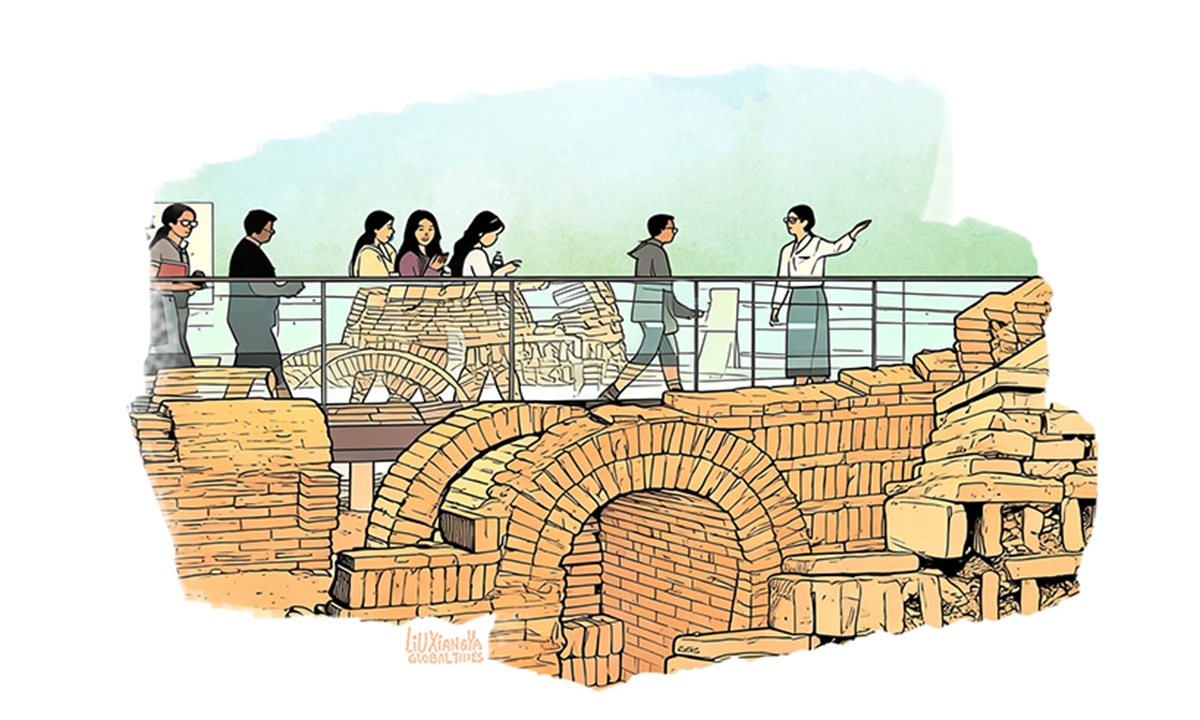
Illustration: Liu Xiangya/GT
Led by China's National Cultural Heritage Administration and the Ministry of Natural Resources, new guidelines with a particular focus on the zoning of "underground relic burial areas" have recently been released.
What is the definition of an "underground cultural relic burial area"? First, the area must contain "abundant and relatively concentrated" underground relics. Second, these relics must be of significant value, warranting a site's designation as a protected zone.
As a country with rich historical heritages, China has consistently engaged in the archaeological excavation of its underground remains. Meanwhile, iconic underground relics like the Terracotta Warriors have already been the focus of conservation. So, what is the importance of planning protected zones at this point?
The answer lies in a simple fact: protecting underground heritage isn't just about saving any individual artifact - it requires a holistic view. Area-based protection can ensure modern social and urban construction do not threaten underground relics. Zoning underground remains can also allow scattered relics to form a complete and consistent narrative.
Both numerous and coming in a variety of shapes and sizes, underground relics are scattered around China. As the guidelines note, they can be found in sparsely populated agricultural and pastoral areas, but also within towns and cities.
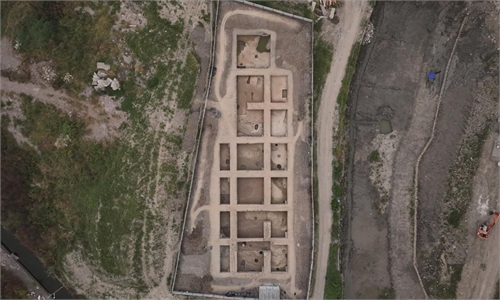
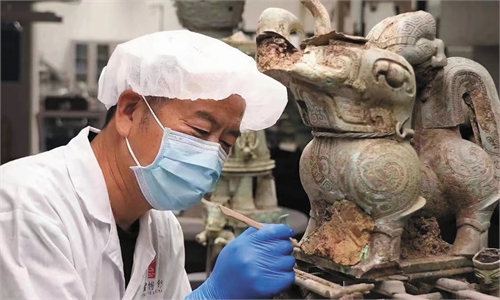
When they are in urban areas, they may take the form of ancient architectural ruins, perhaps a unique artifact, or even overlapping layers of relics left by multiple dynasties. Take the Xuzhou Underground City Site in Jiangsu Province as an example. This site contains remains from the Ming (1368-1644) and Han (206BC-AD220) dynasties more than 10 meters below the ground. Meanwhile, a unique artifact, a Ming "zhenshui shou" (a beat-shaped sculpture meant to suppress floods), was once unearthed near Zhengyangmen Gate along Beijing's Central Axis.
Once a burial area is identified in an urban area, archaeology must happen before any construction and land transfer occurs. Long has the protection of underground cultural relics been regarded as an "obstacle" to urban development. The introduction of the guidelines marks a shift in perception: underground heritage is not a hindrance to construction, but a resource for development.
For instance, underground relics can actually serve as a source of inspiration for a city's cultural tourism. A city can turn an underground burial area into spots like museums or archaeological and cultural parks. Unlike those generic internet-famous attractions that are popping up everywhere, underground heritage gives cities and towns a competitive edge in escaping tourism homogenization.
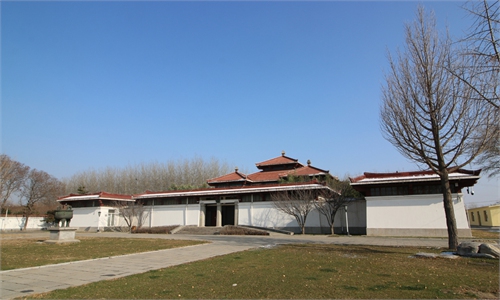
A case to exemplify this is the Qiuci Wei and Jin ancient tomb site museum in Northwest China's Xinjiang Uygur Autonomous Region. This underground museum tells a locally unique story of the Central Plains' close ties with the Qiuci State, one of the 36 states in the Western Regions dating back to the Han Dynasty. Since its opening in August, the museum has already attracted nearly 300,000 visitors.
The insights of these new guidelines also lie in how they reflect the diverse development of China's early civilizations through the categorization of the nation's underground resources.
Among the guidelines' 12 articles, articles 4, 5, and 6 define the three spatial categories in which China's underground heritage exists: urban, agricultural, and ecological spaces.
These seemingly different categories are actually connected by a hidden logic. Using the Hualongdong site as an example. Since the remains were discovered in an underground cave, the site falls under the category of "ecological space." It is within ecological spaces like this that underground heritage most densely preserves traces of early human activity, revealing the earliest origins of Chinese civilization.
Moving to the agricultural category, underground heritages within it reveal how China's ancestors created civilization and cities by developing farming cultures across different regions. For example, the Liangzhu site in Hangzhou, Zhejiang Province, is one of China's oldest known capital prototypes with a sophisticated water management system.
What follows are underground sites like the aforementioned Qiuci Wei and Jin ancient tomb site, which belongs to the urban category and reveals the multicultural exchanges that emerged after ancient Chinese established their capitals.
In other words, although underground heritage lies buried in darkness, they still reveal the consistency of Chinese civilization's development. In the future, through collaborative research that connects underground remains across these three spaces, we may piece together a more complete picture of cultural history.
As the nation's first regulations of its kind, the new guidelines mark a significant step toward more refined and systematic cultural heritage protection in China. Meanwhile, it also demonstrates how China's cultural heritage conservation is being integrated into the national territorial planning system.
The author is a reporter with the Global Times. life@globaltimes.com.cn
RELATED ARTICLES