Illustration: Liu Xidan/GT
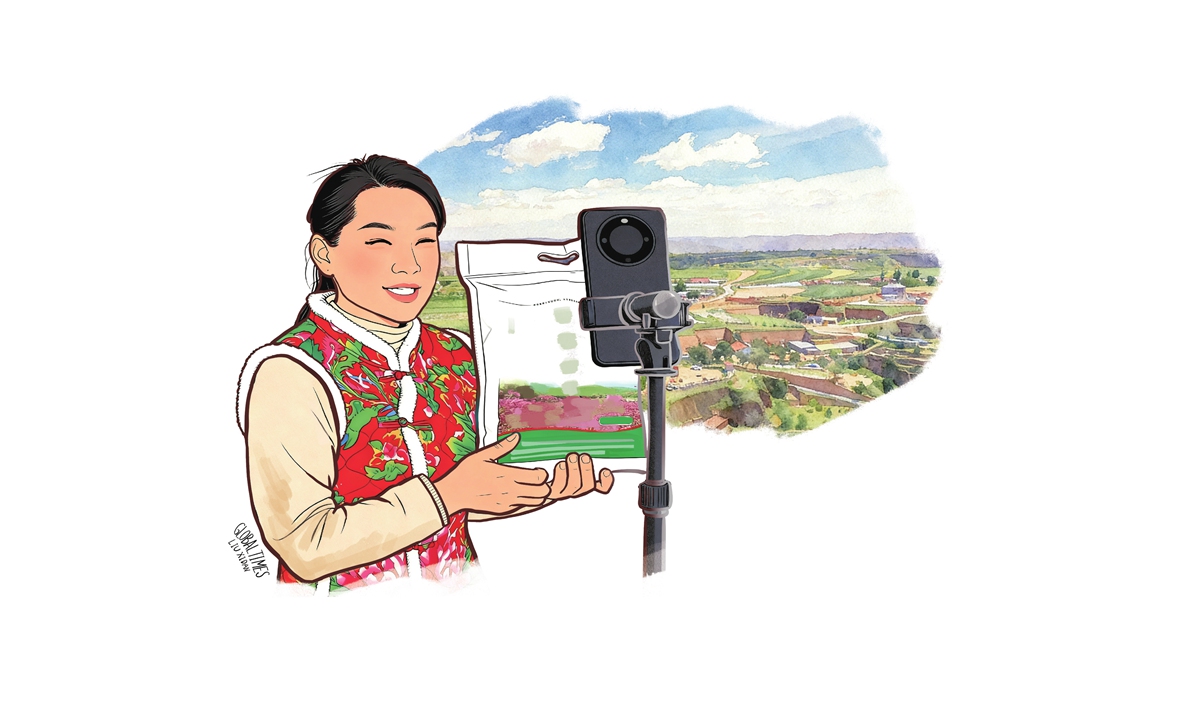
About 30 kilometers from the county seat of Huanxian in Northwest China's Gansu Province lies Zhuangzimao, a small settlement of just over 20 households. Villagers make soy-based condiments, brew liquor and produce tofu, and now they also livestream. With the 2026 Spring Festival holidays barely over, livestreams are already back online from family courtyards, where local specialties are showcased to viewers and parcels packed for buyers across China.According to a report by China National Radio on Thursday, livestreaming has helped lift the annual household income in Zhuangzimao to more than 100,000 yuan ($14,510), while the per capita annual income has surpassed 22,000 yuan.
Unduly pessimistic assessments of China's economy occasionally resurface in Western commentary, sometimes from observers with little firsthand experience. In Zhuangzimao's livestream rooms, however, there is no trace of pessimism. Hosts enthusiastically present local products, parcels are packed, and order numbers tick steadily upward. These micro-level activities do not by themselves determine the trajectory of a vast economy, but they offer a window into how new forms of commerce and consumption are taking hold, and what they reveal about the evolving dynamics of China's domestic market.
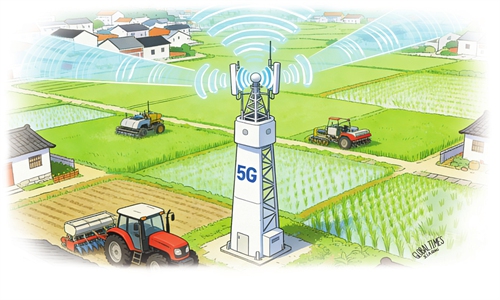
In recent years, as the nation's digital infrastructure has steadily improved, the digital economy has continued to grow. Internet services, e-commerce, and livestreaming have increasingly extended into counties and rural areas, providing new opportunities for commerce and household income.
Turning back to Zhuangzimao, the livestreaming buzz offers just a glimpse of a wider trend in Huanxian. Increasingly, local residents are using the internet to bring products from mountain courtyards to city tables. A January report by the People's Daily noted that 17 villages had taken up livestreaming. In 2025, rural e-commerce sales across the county surpassed 360 million yuan, reflecting the growing reach of digital platforms in areas once largely disconnected from urban markets.
Huanxian's experience is far from unique. Across rural China, e-commerce and livestreaming are increasingly used to sell agricultural products, support local entrepreneurship, create employment opportunities, and supplement household incomes. China's online retail sales of agricultural products reached 783.31 billion yuan in 2025, up 9.9 percent year-on-year, according to data from the Ministry of Commerce.
Sometimes, all it takes is a single internet connection to open new economic opportunities. In rural China, digital access allows households to sell products and supplement their incomes through livestreaming and e-commerce. In 2025, the per capita disposable income of rural residents reached 24,456 yuan, up 6 percent in real terms year-on-year, according to the People's Daily.
These efforts are helping to drive consumption upgrades in China's lower-tier markets, including smaller cities and rural areas. In 2025, total retail sales in rural areas reached 6.82 trillion yuan, up 4.1 percent year-on-year - higher than the 3.7 percent growth rate nationwide and 3.6 percent growth in urban areas - further reflecting the rising consumption power of China's lower-tier markets.
Rising consumption in lower-tier markets is becoming a trend worth watching. A self-reinforcing cycle is taking shape: new business models generate additional income, which in turn unlocks further consumer demand. In some cases, the cycle begins with something as simple as a single internet connection powering livestreaming, yet its impact extends far beyond basic necessities, shaping purchases from homes and cars to a range of services.
The "New-Energy Vehicles to the Countryside" campaign in 2025, for example, expanded the vehicle catalog to 124 models, according to China Automotive News. Sales under this program reportedly jumped from 397,000 units in 2020 to 3.21 million units in 2023.
China's lower-tier markets are vast. As rural regions modernize and connect to broader markets, they offer substantial room for consumption to expand, representing one of multiple sources of economic momentum and forming a dynamic, evolving part of the country's domestic landscape.
Yet some Western commentary continues to cast China's economy in an overly pessimistic light. A closer look at the realities on the ground tells a different story: new business models, innovative consumption patterns, and emerging market activities are steadily generating income and expanding consumer spending, revealing both resilience and sustained dynamism.
China is immense, and countless communities like Zhuangzimao are developing rapidly. These concrete examples provide a window into the underlying drivers of the domestic economy. The economic activity sparked by a single internet connection offers a small but vivid lens on the layers of resilience and opportunity that continue to shape China's domestic market.
The author is a reporter with the Global Times. bizopinion@globaltimes.com.cn
RELATED ARTICLES