ARTS / CULTURE & LEISURE
Relics on display at China’s only gold, silver artifacts museum
Vivid methods help see cultural connotations
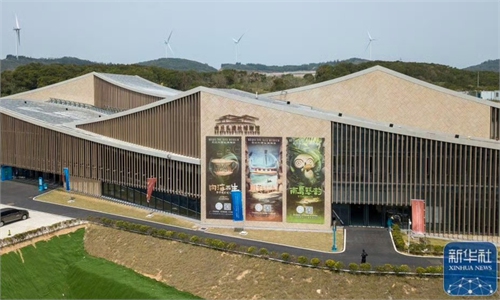
Jiangkou Chenyin Museum in Pengshan district, Meishan, Southwest China's Sichuan Province. Photo: VCG
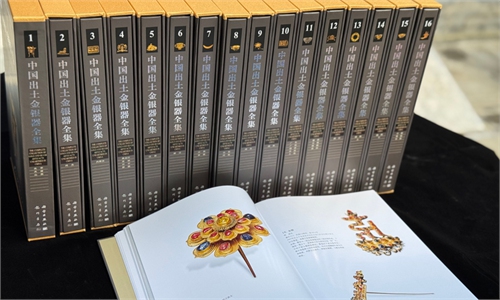
Including more than 500 Ming Dynasty (1368-1644) silver ingots, around 7,000 ancient artifacts, mostly made of gold and silver, were recently put on display at the Jiangkou Chenyin Museum in Pengshan district, Meishan, Southwest China's Sichuan Province. Although the museum has not yet officially opened, it is expected to be China's only museum dedicated to gold and silver artifacts.
The museum's name, "Jiangkou Chenyin" refers to "the gold and silver treasures lost beneath the waters at the river's mouth." It is dedicated to the local late Ming archaeological site known as the Jiangkou Battlefield. Located within the local Minjiang River channel, the site bore witness to a historical event: In the final years of the Ming Dynasty, peasant uprising leader Zhang Xianzhong was ambushed while transporting his treasury along the Minjiang River. A vast amount of gold, silver, and other valuables sank into the river.
This historical origin inspired the "narrative logic" behind the design of the museum's exhibition halls, Zhao Lixian, a member of the museum's curatorial team, told the Global Times.
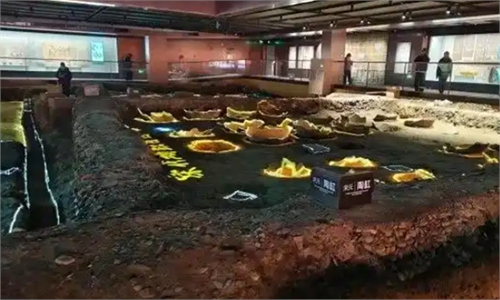
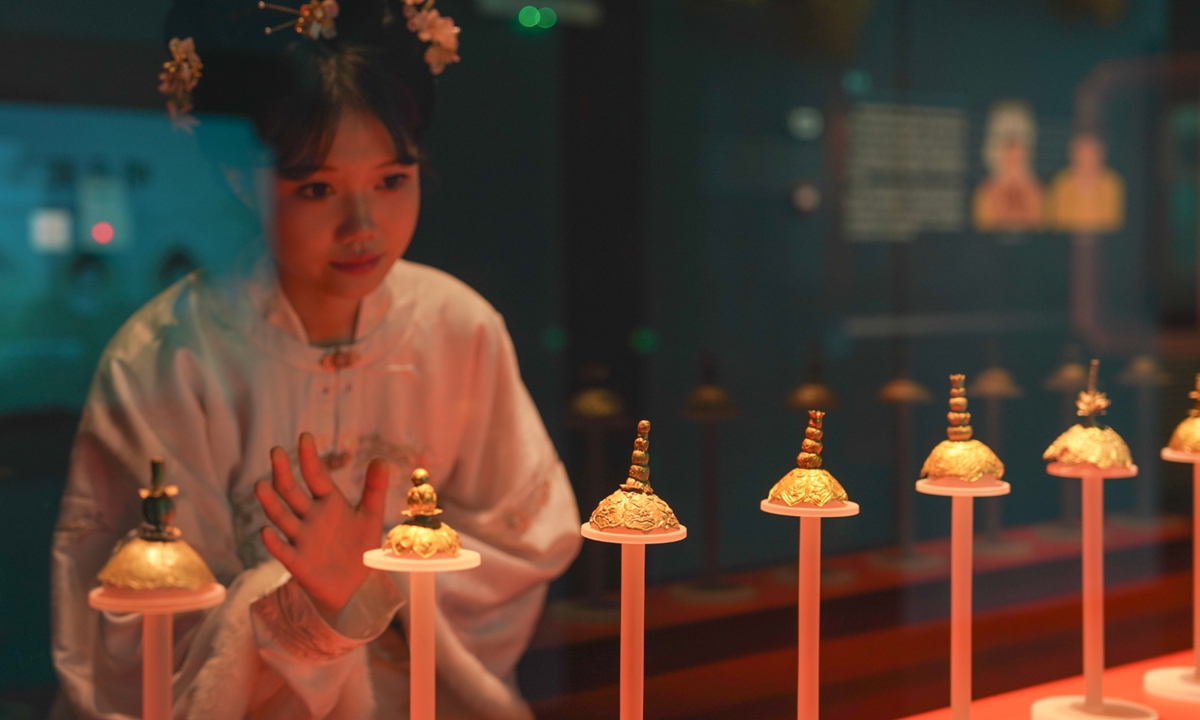
The first hall displays a large number of scattered coins, recreating the scene when the Jiangkou Battlefield site was first discovered. Titled "Deciphering the Sunken Silver," the second hall is a comprehensive showcase of the museum's treasured collection, Zhao said. The exhibition of artifacts such as gold and silver rings, gold hat finials, and gold and silver buttons are on display, showing the advanced level of ancient China's craftsmanship.
The hall also houses several of the museum's most precious treasures. One of them is a gold seal engraved with the six characters "Yongchang Da Yuanshuai Yin," which roughly translate to the "seal of the great marshal of Yongchang." Decorated with a tiger sculpture on the top, the gold seal is believed to have once belonged to the peasant leader himself.
"The seal has a gold content of around 60 to 70 percent. It is very likely that its raw materials came from gold and silver artifacts looted by Zhang Xianzhong and were then recast, which explains its relatively low purity," Lu Zhaojun, an archaeologist specialized in ancient metal relics, told the Global Times.
Displayed close to the piece, is an even more stellar gold seal. Weighing approximately 16 jin, or roughly 8 kilograms, it has a gold content of nearly 95 percent. This seal belonged to the heir of the Prince of Shu and symbolizes his status and prestige. Before it was restored, it was initially found broken into five pieces.
Zhao said that while these artifacts are already very impressive, the museum attempts to take things to a high level by using "vivid methods to help visitors see the cultural connotations behind these relics and the value of the archaeological site." To this end, the third hall features interactive experiences such as a VR space, scripted role-playing games, and escape rooms, allowing visitors to step into the archaeological site themselves.
Since 2017, the Jiangkou Battlefield archaeological site has undergone six rounds of excavations, yielding a total of more than 76,000 artifacts. Due to its unique geographical location, Chinese archaeologists pioneered the cofferdam archaeological technique. The technique involves constructing dikes to divert the river and pump out the water, which transformed the turbulent Minjiang River into a controllable excavation site, allowing artifacts long buried beneath the river to safely see the light of day.
In addition to precious artifacts such as gold seals, the site has also yielded ancient weapons, providing physical evidence that this section of the Minjiang River once served as a battlefield in the late Ming Dynasty.
Dedicated to this archaeological site, the Jiangkou Chenyin Museum began planning and construction in 2020. "Establishing this museum is essentially about transforming the historical stories and artifacts of the site into a new cultural tourism IP for the local area," museum expert Li Liyang told the Global Times.
"In the future, the museum can also collaborate with other museums in the province, such as the Sanxingdui Museum [in Guanghan], to create interconnected cultural tourism routes," Li remarked.
On Sunday, it will open reservation-based visits with a daily limit of 1,000 visitors in preparation for its official opening. "This arrangement aims to solicit public feedback, carry out further testing and optimization, and prepare for its grand opening," Zhao explained. According to another insider surnamed Cheng, the museum is scheduled to open in mid-March.
RELATED ARTICLES