The fourth session of the 14th National People's Congress (NPC) and the fourth session of the 14th National Committee of the Chinese People's Political Consultative Conference (CPPCC) kicked off in Beijing on March 5 and March 4, respectively. As an annual major political event, the national "two sessions" serve as an important platform for national lawmakers and political advisors to build consensus and deliberate on development plans, and a key window for the world to observe whole-process people's democracy in China.
The report to the 20th National Congress of the Communist Party of China clearly states that "primary-level democracy is an important manifestation of whole-process people's democracy." Against this backdrop, the Global Times launched a special series for this year's national two sessions titled "Their Stories with Chinese Democracy," focusing on vivid practices of primary-level democracy. From foreign experts to ethnic minority grassroots officials, from urban communities to rural fields, practitioners of whole-process people's democracy at primary level listen closely to public concerns and carefully sort through and refine suggestions. They translate ordinary people's aspirations and grassroots development demands into proposals and suggestions, which are then brought to the national "two sessions." There, NPC deputies and CPPCC National Committee members conduct in-depth deliberations and promote the formulation and implementation of relevant laws, regulations and policies. This complete cycle of fulfilling duties vividly demonstrates to the world the efficient operation and strong practical capacity of China's whole-process people's democracy.
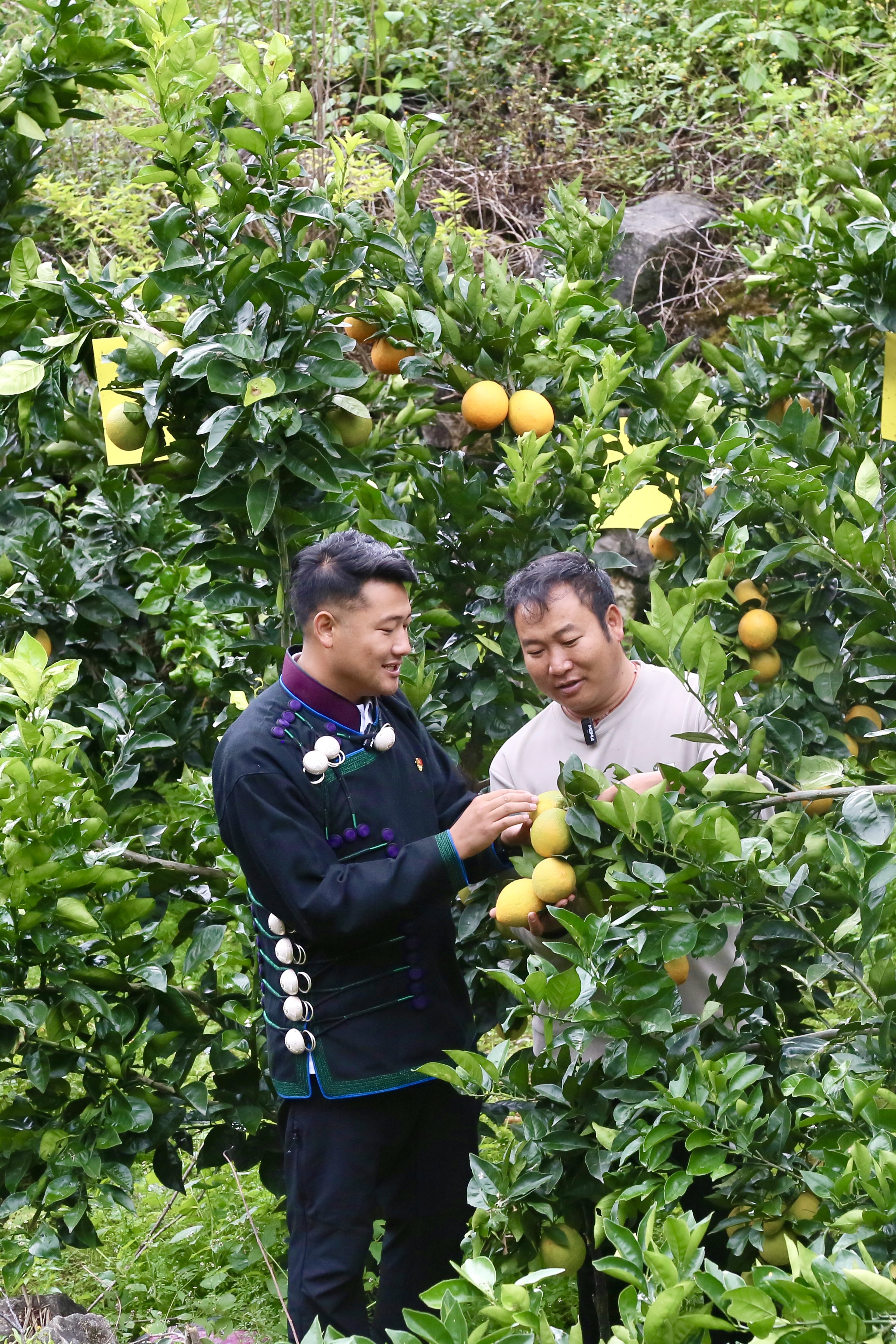
Jilie Ziri (left) and a navel orange farmer discuss the growth conditions of navel oranges in a local orchard in the Abuluoha village. Photo: Courtesy of Jilie Ziri
"Many people told me that when they exit the tunnel at the end of the road leading to Abuluoha village, they are amazed by the village's brand-new look. It is like a paradise beyond the mortal world," said Jilie Ziri, a post-1995 NPC deputy, with a smile when the Global Times reporters met him in Xichang, capital of Liangshan Yi Autonomous Prefecture in Southwest China's Sichuan Province, in late February, days before he left for Beijing to attend the 2026 national "two sessions."
Abuluoha is Jilie's home village. It is also where Jilie had served as secretary of the CPC village branch for about eight years. In the language of Yi ethnic group, Abuluoha means a place rarely visited by people. True to its name, for decades, the Abuluoha village deep in Daliang Mountains had no road connecting it to the outside world.
What Jilie said is quite right. After nearly five hours of driving on rugged mountain roads, the Global Times reporters felt carsick and dizzy. But the moment a spacious square and rows of beautiful white houses adorned with ethnic style paintings came into view, all discomfort vanished. It was hard to believe this was a village that had been isolated from the outside world for decades.
Yet every resident of Abuluoha remembers how difficult it was to build that road.
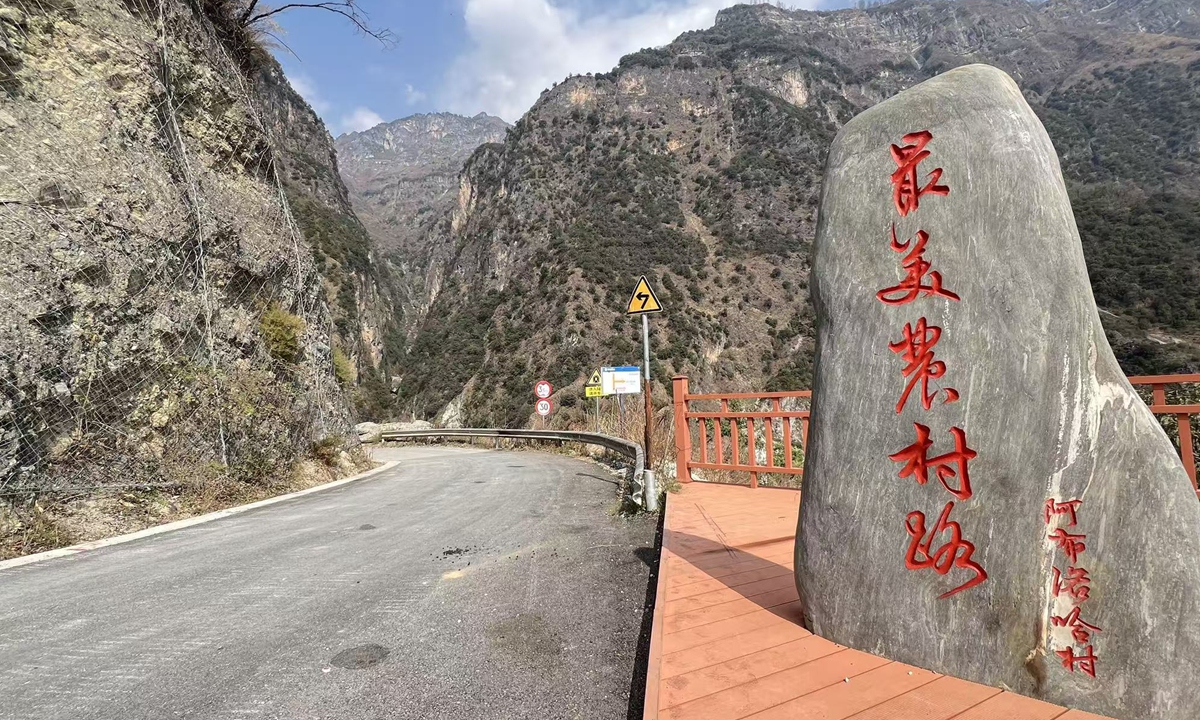
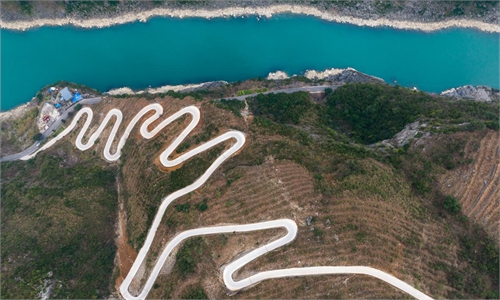
A stone inscribed with Chinese characters reading "The Most Beautiful Rural Road - Abuluoha" stands at the start of the road linking the Abuluoha village to the outside world in Liangshan Yi Autonomous Prefecture, Southwest China's Sichuan Province, on February 26, 2026. Photo: Leng Shumei/GT
No household is left behind
Abuluoha village was surrounded by mountains on three sides and marshland on the other, with the Xixi River, a tributary of the Jinsha River, running below the hills.
It is very difficult to build a road in such conditions, Jilie said.
Jilie was the first college graduate from the Abuluoha village. In 2017, amid the earnest expectations of local villagers and strong support from his father, Jilie quit his stable job in Xichang and returned to this home village.
One year later, he was elected Party secretary of the village with the promise to "make the village different in 10 years."
Road is the biggest bottleneck to the village's development.
To secure support for road construction, Jilie made at least six round-trips between the village and the township every week at that time, visiting relevant department and lobbying for policies and resources for road building in the village.
Finally kicking off in 2019, the road construction thrilled everyone in the village.
When the projected to a halt at the last kilometer because of constant rock collapse, the central government dispatched a Mi-26 heavy transport helicopters and eight excavators and rock breakers to assist the construction.
In June 2020, Abuluoha became the last administrative village to be connected to the national road system.
Jier Liuri, a villager from Abuluoha, still keeps a photo of him taking selfie with a helicopter.
When the Global Times reporters visited his home, three copies of the photo were seen hanging on the wall alongside family portraits and merit certificates his grandchildren had won at school.
Before telling the reporters about the story of the photo, Jier gently wiped one of the copies clean with a towel.
"In 2019, a helicopter delivered supplies here, and afterwards, the road was built. The photo was taken at that time. In the past, we couldn't do any business. Now that we have a road, buyers come directly to our door to purchase our livestock," Jier told the Global Times shyly in Yi language.
For Jilie, the transformation of the Aboluoha village from an isolated village to a paradise beyond the mortal world serves as a vivid example practice of China's people-centered whole-process people's democracy.
"The greatest significance of whole-process people's democracy lies in forming a mechanism through which people's needs can be conveyed, discussed, and addressed at the national level through sound policies and concrete actions, and ultimately enabling people to live better lives," he told the Global Times.
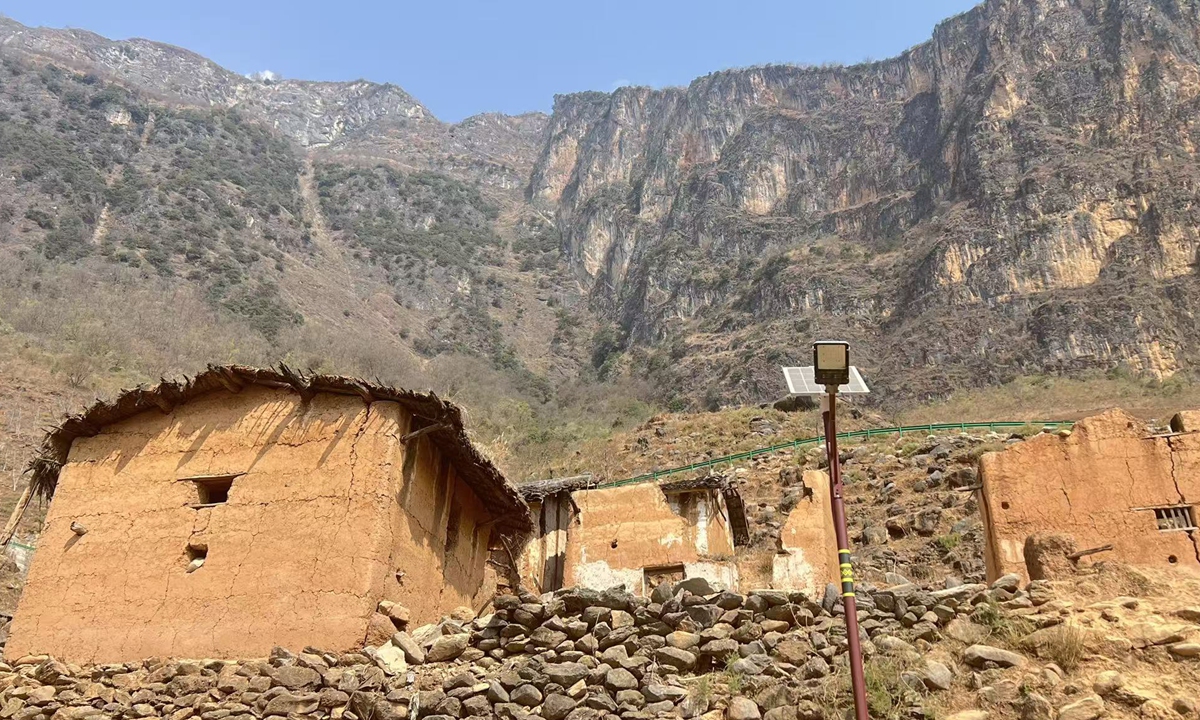
Abandoned adobe houses in the Abuluoha village, Southwest China's Liangshan region Photo: Leng Shumei/GT
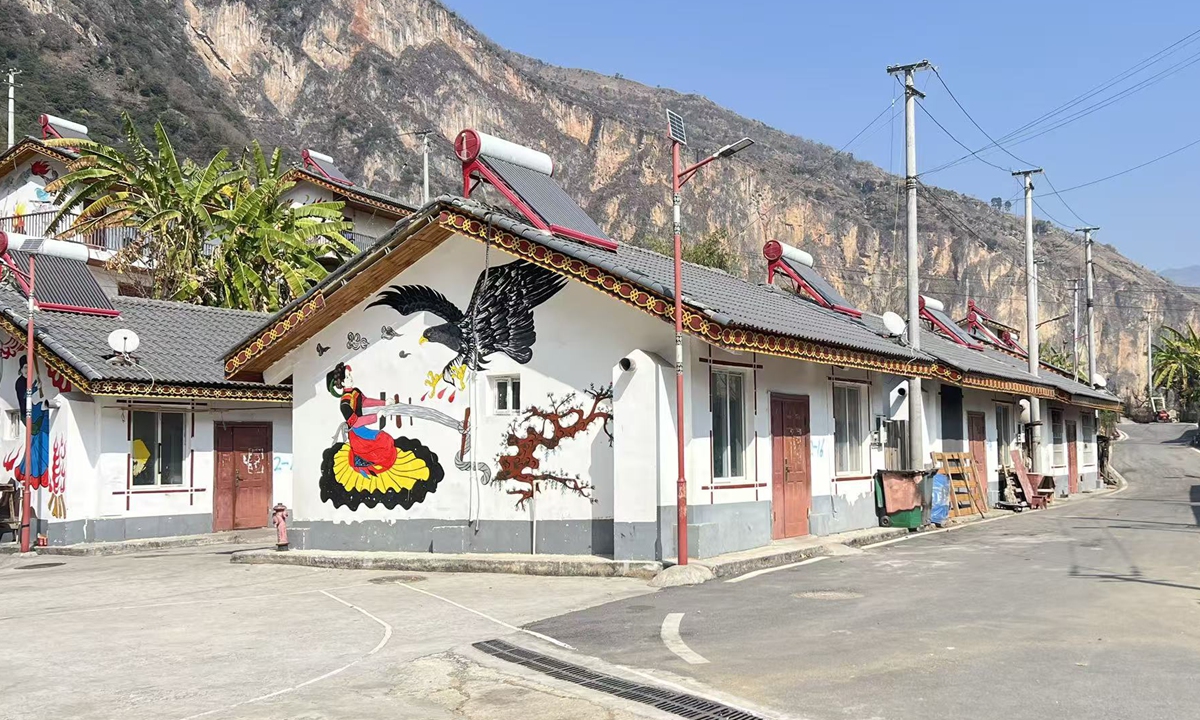
New residential buildings in the Abuluoha village, Southwest China's Liangshan region Photos: Leng Shumei/GT
All efforts are worthwhile
As a college graduate from a remote mountainous area, Jilie deeply believed that education is of vital importance for children living deep in the mountains. Since becoming a deputy to the NPC, he continued to call for greater attention and increased investment in education in border and mountainous regions.
According to the Sichuan Daily, Abuluoha village did not built its first primary school until 2005.
In the early days, villagers lacked the belief that "knowledge changes fate." According to Jilie, at that time, many children attended school mainly for meals. For parents who refused to send their children to school, he took them to Xichang under the pretext of "city tours." During their one-day stay in Xichang, the parents struggled greatly with basic tasks such as finding restrooms and telling men's from women's, facing constant inconvenience.
Taking the chance, Jilie talked with them, encouraging them to reflect: Did you want their children to live a life limited by illiteracy, just as you had?
This experience made parents truly realize the importance of education and completely changed their minds. "Our villagers once competed over food and clothing, they now compete their children's academic performance and school rankings. Children in the village also cherish schooling more than ever," Jilie said.
In 2025, six out of the seven students from Abuluoha who took the national college entrance examinations have reached the undergraduate admission threshold. This means the once-isolated village is about to welcome its first batch of locally educated college students.
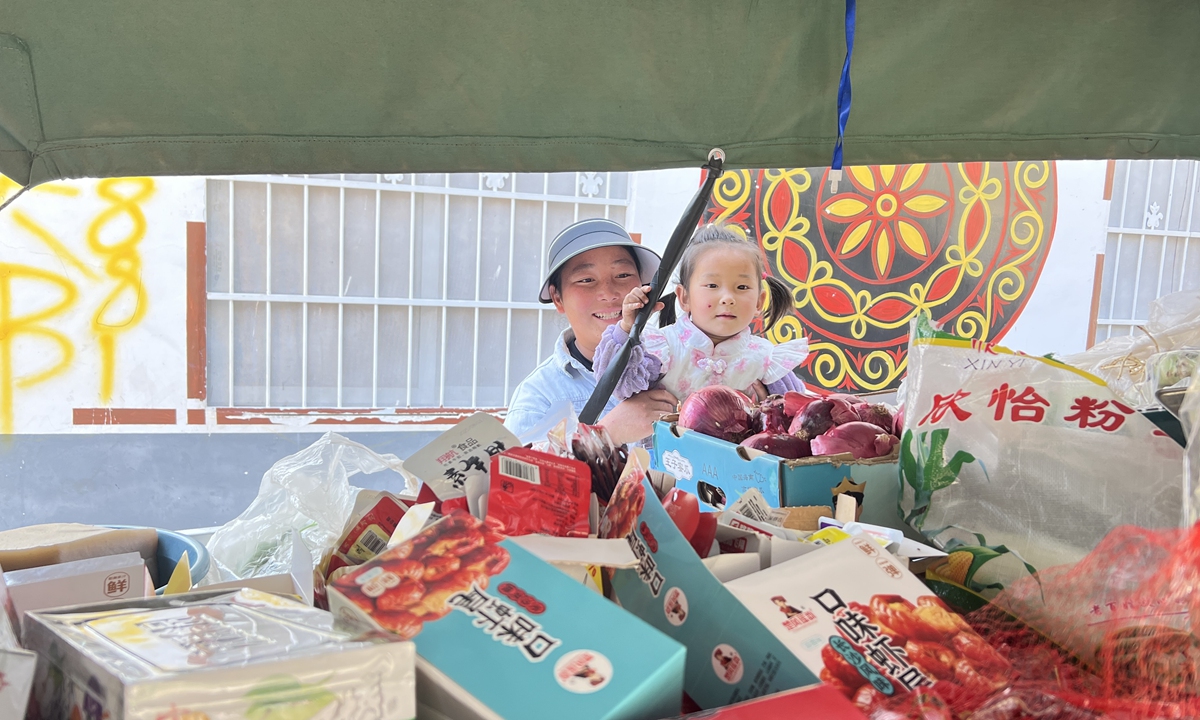
A mother and her daughter choose snacks in the peddler's cart in Abuluoha village on February 26, 2026. Photo: Leng Shumei/GT
Continuous journey
On the day the Global Times reporters visited Abuluoha village, a peddler driving a cart loaded with daily necessities - vegetables, meat, fruits, and snacks - pulled into the village. The moment he parked near the village entrance, children rushed over.
An about two-year-old boy refused to leave the cart until his mother bought him a large, whole watermelon. When the reporters asked the peddler about the price, he replied in a casual tone "5 yuan per jin, that's 47 yuan total."
This scene struck the reporters. Even someone earning over 10,000 yuan per month in Beijing might hesitate to spend 47 yuan on a single watermelon. It was in this moment that the reporters truly believed Abuluoha was no longer an outdated and isolated place. Jilie is really keeping his promise to lead his fellow villagers' to a better life.
From the first college graduate form Abuluoha village, to Party secretary of the village, to NPC deputy, Jilie said that his identity had been changing, but what remained is his original aspiration to serve the people and help to promote the village's development.
"As an NPC deputy at the grassroots level, I am most proud to have conveyed the voices of the people, seen our suggestions adopted, and witnessed more policies benefiting farmers and rural residents," he said.
As the annual "two sessions" began, Jilie continued to bring voices and aspirations of Abuluoha people to the national platform.
Now we are developing our local industries like navel oranges, raw honey, and black goat. One of my focus this year is the development of rural logistics to ensure villagers' local products can be transported out smoothly, Jilie told the Global Times.
"The most important thing for me is to truly turn the crops grown in the fields into real money in the villagers' pockets," he said, a promise he is carrying as he was about set to Beijing.