Witnesses of Struggle: Retracing Yunnan-Myanmar Road to witness how only international land-based lifeline during WWII became China’s critical artery of supplies, survival
By Published: Dec 31, 2025 12:53 AM


The Yunnan-Myanmar Road ruins in Southwest China's Yunnan Province Photo: VCG
Editor's Note:
This year marks the 80th anniversary of the victory of the Chinese People's War of Resistance against Japanese Aggression (1931-1945) and the World Anti-Fascist War. Winning the war is a great victory of the national spirit with patriotism at its core, a great victory achieved with the Communist Party of China (CPC) fighting as the central pillar, a great victory fought by the whole nation through solidarity and bravery, and a great victory for the Chinese people, anti-fascist allies and people around the world who fought shoulder-to-shoulder.
To commemorate this historic milestone and its lasting impact, the Global Times has launched a themed series revisiting the great significance of the victory through three lenses: The "Guardians of Memory," the "Witnesses of Struggle," and the "Practitioners of Peace." It underscores the importance of "learning from history to build together a brighter future."
This is the second installment under the theme of "Witnesses of Struggle." In this installment, the Global Times reporter retraced the Yunnan-Myanmar Road, the only international corridor of World War II, to witness how this path, forged with the blood and lives of Nanyang Volunteer Drivers and Mechanics and the ethnic minority peoples of China's borderlands, became a vital artery for supplies and a lifeline for survival.
Along the Yunnan-Myanmar Road in Kunming, nestled in the southwest of China's Yunnan Province, stands a solemn monument - the "Zero Kilometer" marker of the Yunnan-Myanmar Road. A thousand miles away, in Yunnan's border city of Ruili, the Wanding Bridge marks the end of the road's domestic stretch. The distance between them: 959.4 kilometers. This was the length of the Yunnan-Myanmar Road within China during the Chinese People's War of Resistance Against Japanese Aggression (1931-1945), a distance that symbolized a nation's desperate race against life and death.
Back to the war-torn years over eight decades ago, after the full-scale outbreak of the War of Resistance, as coastal regions fell one after another, Japanese forces cut off China's transportation links with the international community, trying to turn the country into an isolated island.
Supplies were nearly depleted, and the gunfire on the front lines never ceased. In this moment of crisis, to open a lifeline for the war effort, a team of engineers and people from almost all ethnic groups in Yunnan resolutely assembled in different parts in early 1938 to begin the work on construction of the entire Yunnan-Myanmar Road.
Few of them knew that the road they were building would become the vital lifeline connecting China to the world during the war. It was an unimaginable feat.
Historical records show that the Yunnan-Myanmar Road stretched approximately 1,146 kilometers. Its domestic section crossed towering mountains and surging rivers like the Lancang River and Nujiang River, navigating treacherous terrain and posing an enormous engineering challenge. From late 1937 to August 1938, over 200,000 people from Yunnan's ethnic groups - men and women, young and old - took part. With primitive tools, they carried earth on shoulder poles, dug with hoes, chiseled rocks and hacked through mountains, carving this lifeline out of the highlands and valleys, according to the Xinhua News Agency.
The Yunnan-Myanmar Road was China's first and only international highway - a cross-border route connecting the war's rear areas to the front lines, serving as the longest-serving and largest-volume transportation artery during the War of Resistance. Born amid the flames of war, people call it the "blood transfusion line" and "lifeline of resistance."
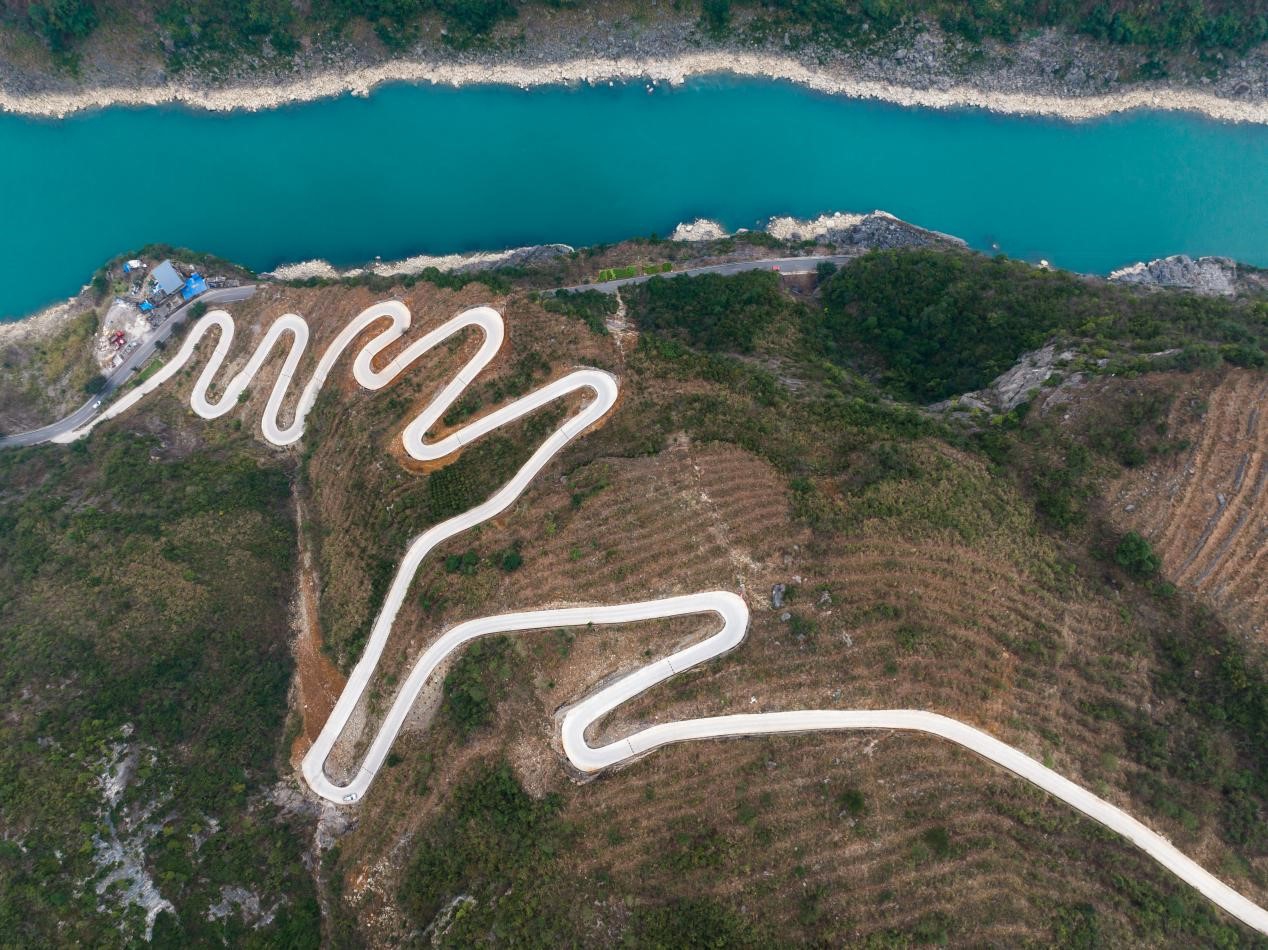
The Yunnan-Myanmar Road along the Wujiang River, Yunnan Province Photo: VCG
'Lifeline of resistance' forged in blood and flesh
At a museum in Baoshan, a crucial stop on the Yunnan-Myanmar Road, old photographs and well-preserved construction tools - stone rollers, drills and the like - bring this history back to life.
On August 31, 1938, after nine months of arduous struggle, the road was completed and opened to traffic ahead of schedule. Meanwhile, the section in Myanmar was finished as planned, connecting the road to the Lashio-Yangon Railway. By the end of 1938, the first batch of military supplies arrived in Kunming via the Yunan-Myanmar Road, the Global Times learned from Ruili's government.
Known as "the road carved with fingers," its construction difficulty was staggering, and its progress astonishing.
Museum records show that at the time, most of Yunnan's young and middle-aged men had gone to the front lines. Lacking proper construction equipment and technical support, they worked miracles with the most primitive tools: without explosives, they heated rocks red-hot and doused them with water to "blast" them apart; without road rollers, they dragged large stone cylinders by hand to level the pavement. Danger lurked everywhere - a misstep on the cliffside construction sites could send them plummeting into deep valleys. They took shelter under rocks and in caves, enduring bitter cold in winter and the threat of malaria and other infectious diseases in summer.
Public statistics indicate that from January to August 1938, during the peak construction period, an average of over 50,000 people worked on the road every day, with the number reaching 200,000 at its highest. The people of western Yunnan paid a heavy price - no fewer than 2,000 to 3,000 died from explosions, falls, drowning, landslides and malaria during construction, a mortality rate of about 15 per thousand. Hence, the Yunnan-Myanmar Road became known as the "blood transfusion line," as reported by Yunnan Daily.
Another group of people played a crucial role on the road construction. When they learned that their motherland was in urgent need of vehicles and drivers, patriotic overseas Chinese donated cars generously and formed the "Nanyang Volunteer Drivers and Mechanics" to return to China and join the resistance. The group arrived in Kunming in nine batches, receiving a warm welcome from compatriots at home.
From then on, the Yunnan-Myanmar Road became the main battlefield for the volunteer group, with transporting military supplies as their primary mission. They drove to Lashio, Myanmar, to load military goods, entered China via Wanding, and traveled through high mountains and canyons.
Pictures in the Yunnan Highway Museum shows that facing numerous hardships, these overseas Chinese mechanics never complained, resolutely dedicating themselves to the transport work under harsh conditions.
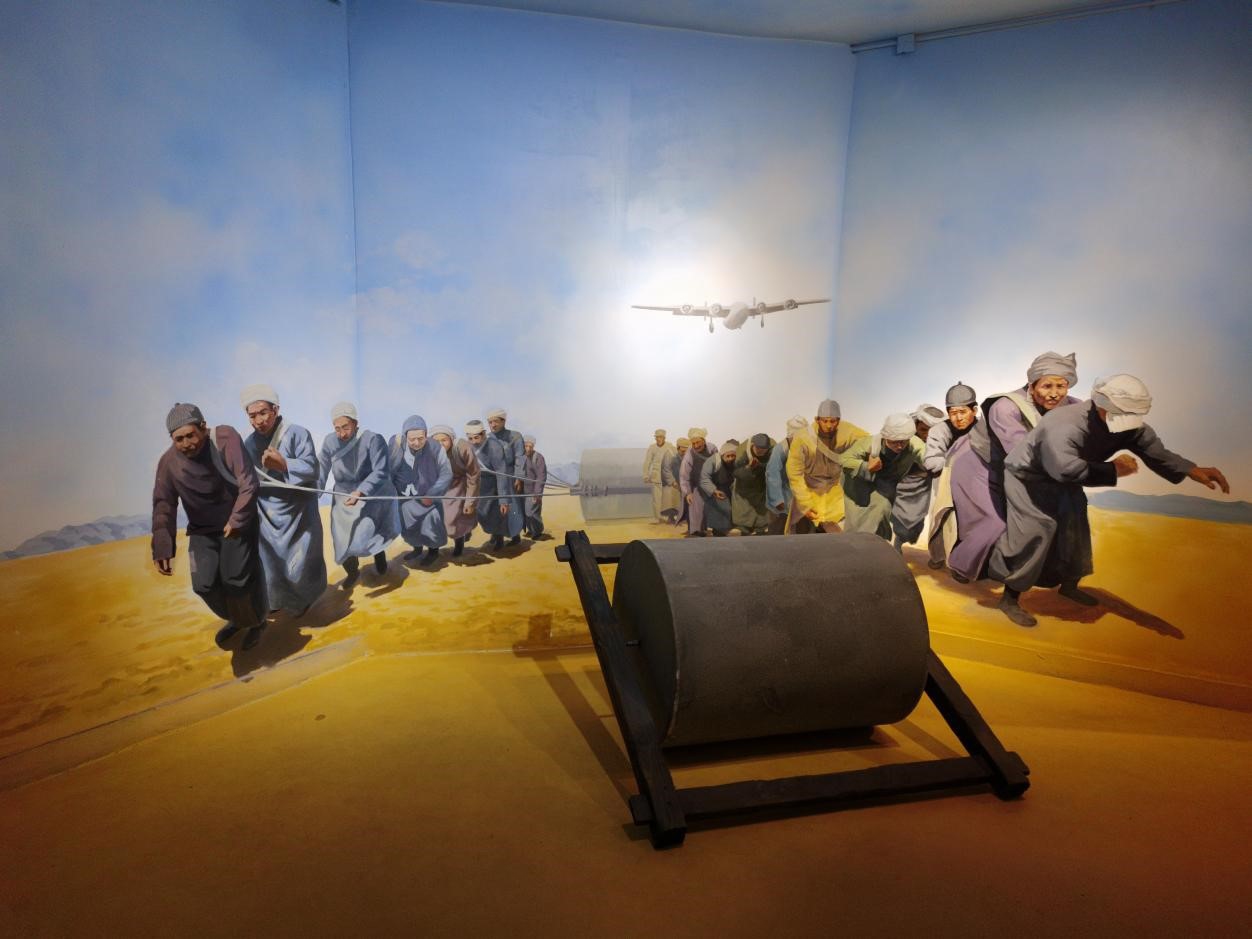
The Yunnan-Myanmar Road History Museum in Kunming, capital of Yunnan Province Photo: VCG
20 years of guarding monument
At dawn every day, Ye Xiaodong, an octogenarian, gets up and heads straight to the Nanyang Volunteer Drivers and Mechanics Memorial Park. His first task is always carefully cleaning the area around the monument.
His father was a member of the volunteer group, and he has guarded the monument in memory of his father and other martyrs for 20 years.
Between 1939 and 1945, responding to the call of patriotic overseas Chinese businessman and philanthropist Tan Kah Kee, over 3,200 overseas Chinese mechanics from Malaysia, Thailand, Vietnam, Indonesia and other countries voluntarily abandoned their comfortable and peaceful lives abroad. They returned to China in nine batches and joined the transportation work on the the road, transporting approximately 500,000 tons of military supplies. Among them, more than 1,000 sacrificed their lives, as reported by Yunnan Daily.
Ye Xiaodong's father, Chen Tuanyuan, was one of them.
At the Nanyang Volunteer Drivers and Mechanics Memorial Park in Wanding, the Global Times met Ye Xiaodong . In 1944, Ye's father Chen Tuanyuan was arrested by Japanese troops and cruelly buried alive - not even a single photograph of him remains. When his father sacrificed, Ye was only three months old. He didn't learn that his father was a heroic member of the volunteer group until he was 15. Since then, he has been traveling around, searching for his father's footsteps and learning about that period of history.
After retiring, Ye took the initiative to take on the responsibility of managing the Nanyang Volunteer Drivers and Mechanics Martyrs Monument - a commitment that has lasted more than 20 years.
Almost every day, he comes to the monument, wipes the stone surface, cleans the area, and tells the story of the group to visitors who come to pay their respects, again and again.
"I hope that in this 'place closest to my father,' more people will know that there was a group of people who fought desperately for us," Ye told the Global Times.
In Kunming's Xishan Forest Park stands a magnificent monument, with four powerful characters carved on it: "Merits of the Patriots." On the right side of the monument is a wall inscribed with names - all of them share a common identity: members of the Nanyang Volunteer Drivers and Mechanics.
For them, this journey was both leaving home and returning to their motherland. It is a story filled with the sorrow of separation, and even more with a profound love for family and country.
During the over three years of intensive transportation, the indiscriminate bombing by Japanese warplanes, malaria in the tropical and subtropical regions, and the dangerous road conditions became a "serial killer" for the mechanics. Those who sacrificed were often buried on the spot.
Just as Ye Xiaodong often tells visitors, buried here is patriotic heroism, unwavering national loyalty, and the indomitable spirit of sacrifice.
As the Global Times reporter retraced the Yunnan-Myanmar Road on the 80th anniversary of the War of Resistance, every step we take connects us to the courage and devotion of those who came before.
The cobblestones beneath feet, polished by time and countless wheels, are not just part of a road - they are touchstones linking the past to the present, reminding younger generation that peace never comes easily. This journey is more than a historical revisit; it is a dialogue with the martyrs, a way to honor their sacrifices and keep their spirits alive.
RELATED ARTICLES