MOFCOM criticizes EU’s Industrial Accelerator Act as ‘serious investment barriers and institutional discrimination,’ vows to safeguard Chinese firms’ rights
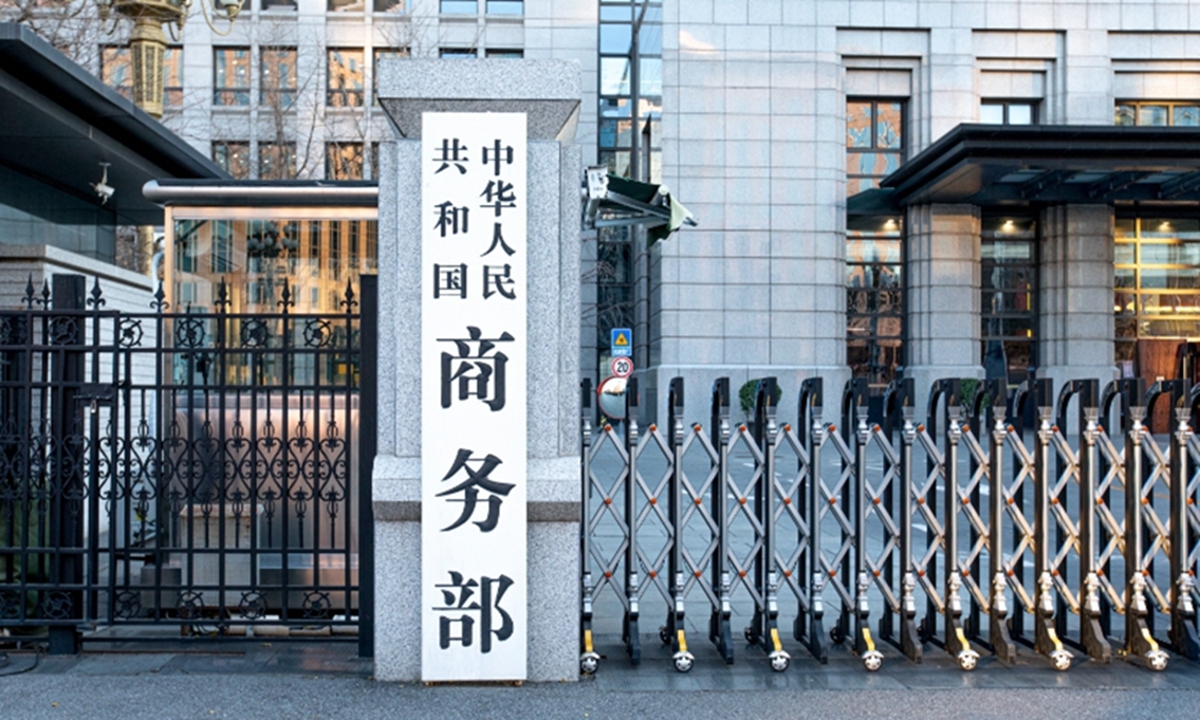
The Ministry of Commerce of China File photo: VCG
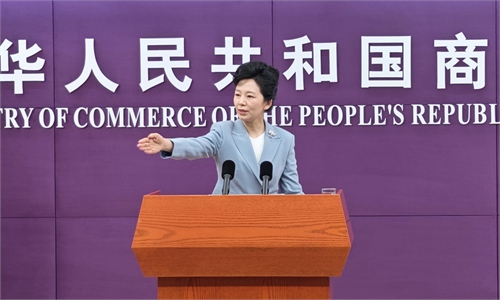
China's Ministry of Commerce (MOFCOM) on Friday expressed serious concern over the European Union's newly proposed Industrial Accelerator Act (IAA), saying certain restrictive provisions could constitute significant investment barriers and institutional discrimination, and vowing to firmly safeguard the legitimate rights and interests of Chinese companies.
The comments came in response to a media inquiry about the EU's release of the IAA on Wednesday, which introduces a series of restrictive requirements on foreign investment in four emerging strategic sectors, asking for MOFCOM's comment on the matter.
China has taken note that the EU released the relevant bill on March 4, which sets out restrictive provisions for foreign investment in four sectors - batteries, electric vehicles, photovoltaics and critical raw materials - including requirements related to mandatory technology transfer, limits on foreign shareholding, local content rules and local employment, a MOFCOM spokesperson said in a statement.
The restrictions apply specifically to third-country investors whose global production capacity in the above sectors exceeds 40 percent, and the bill also explicitly proposes a "Made in the EU first" principle in public procurement, the spokesperson said.
"These practices constitute serious investment barriers and institutional discrimination, and are suspected of violating the most-favored-nation treatment principle," the spokesperson said, adding that the measures could further increase uncertainty for Chinese companies investing in the EU, and China expresses serious concern over the issue.
China believes that, under the pretext of developing relevant EU industries and advancing the green transition, the EU is erecting barriers and engaging in protectionism. "Such actions will not only prove counterproductive, but will also undermine rules, distort fair competition, and disrupt the stability of global industrial and supply chains," according to the spokesperson.
Practice has proved that protectionism does not enhance competitiveness, while openness and cooperation remain the right path for development, the spokesperson said, noting that China and the EU are important economic and trade partners with broad shared interests and positive cooperation outcomes in addressing climate change and advancing the green transition.
"We call on the EU to take the lead in observing World Trade Organization rules and return to a path of fair, transparent and non-discriminatory cooperation as soon as possible, rather than moving further down the road of rule-breaking and protectionism," the spokesperson noted.
China will closely follow the legislative process, carefully assess the potential impact on Chinese interests, and firmly safeguard the legitimate rights and interests of Chinese enterprises, the spokesperson added.
The bill has faced divisions within the EU and criticism from some of the bloc's major trading partners over what they see as a protectionist industrial policy approach.
The China Chamber of Commerce to the EU also criticized the proposal on Thursday, warning that the current design of the bill risks shifting toward "a more protectionist and exclusionary system." The chamber also stressed that slowing European industries' access to China's mature supply chains could hinder the EU's own decarbonization efforts and ultimately lead to a lose-lose outcome.
Global Times
RELATED ARTICLES