ARTS / CULTURE & LEISURE
Ancient ‘Shehuo’ thrives thanks to innovation
Living tradition in motion
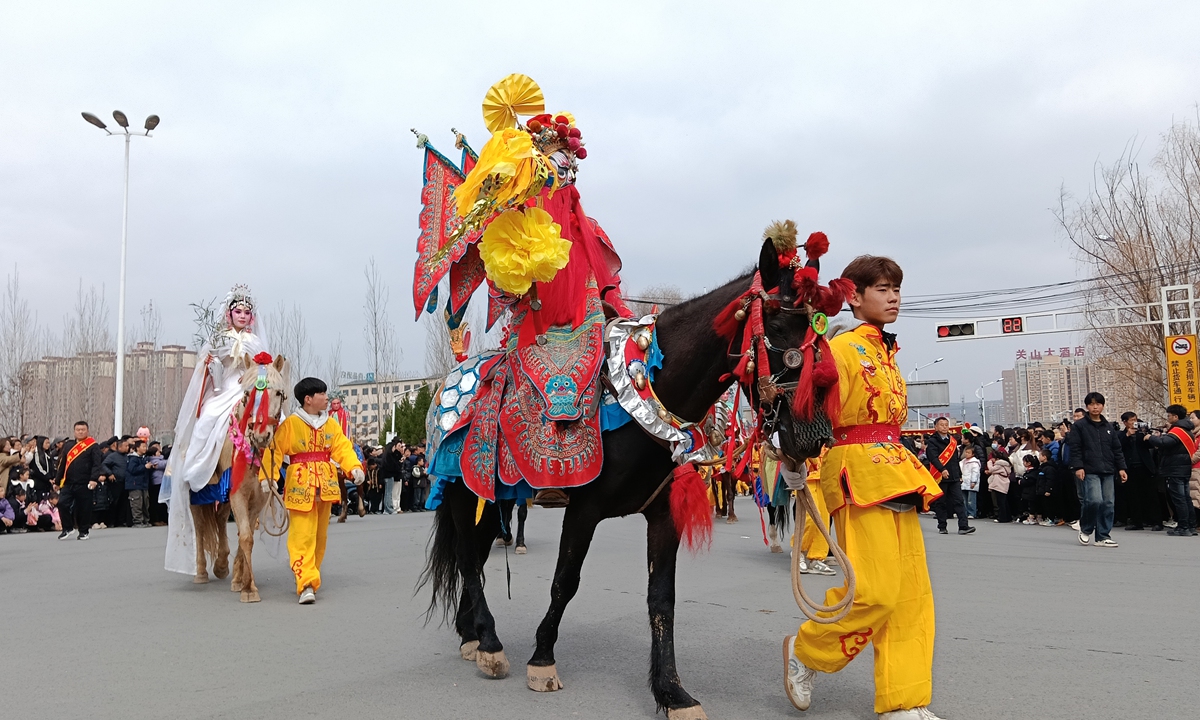
Performers stage a Shehuo performance in Longxian county, Northwest China's Shaanxi Province, on March 3, 2026. Photo: Courtesy of Yang Bingquan
Before dawn on the 15th day of the first lunar month, China's Lantern Festival, the narrow lanes of Huanghuayu village in Longxian county, Northwest China's Shaanxi Province were already stirring.At around 3 am, in the biting winter cold, members of a local Shehuo troupe bend over mirrors, brushing bold streaks of red, black and white across their faces. Others fasten embroidered costumes, adjust ornate headpieces and prepare saddles under lights. Horses wait in the darkness. Within hours, the village will set out for the Shehuo celebration, turning quiet country roads into a moving stage for the festival.
A total of 49 Shehuo troupes from 10 towns across the county marched along main thoroughfares, presenting a succession of more than 20 forms of performance.
The origins of Shehuo, a traditional folk custom widely practiced across China, usually staged from the beginning of the Spring Festival to the Lantern Festival, date back more than 2,000 years to ancient sacrificial ceremonies meant to ward off misfortune, usher in renewal and pray for good harvests. Over centuries, song, dance and acrobatics were woven into the rites, with specific forms and styles varying widely by region.
On Douyin, the Chinese version of TikTok, videos of Shehuo performances from across China have gone viral in recent weeks. Related hashtags have climbed the trending list, drawing wide attention.
According to Xiao Fang, a renowned Chinese folklorist and professor at the School of Sociology, Beijing Normal University, Shehuo originally referred to communal activities centered around the worship of the local tutelary deity. By the Song Dynasty (960-1279), Shehuo performances were already taking place in the Kaifeng area, Central China's Henan Province, while in southern China the tradition was more commonly known as processions.
Organized primarily by villages, these collective events have long served as a way to connect residents and provide a regional stage for folk art. Today, Shehuo remains one of the most important and lively annual community celebrations in China, offering villagers a traditional means to pray for a good harvest and peace, said Xiao.
"Shehuo performances are both a traditional blessing ritual and a form of public art," Xiao told the Global Times. "It reflects the present moment while preserving collective memory. As a shared performance, it embodies the community's hopes for good fortune and a better life."
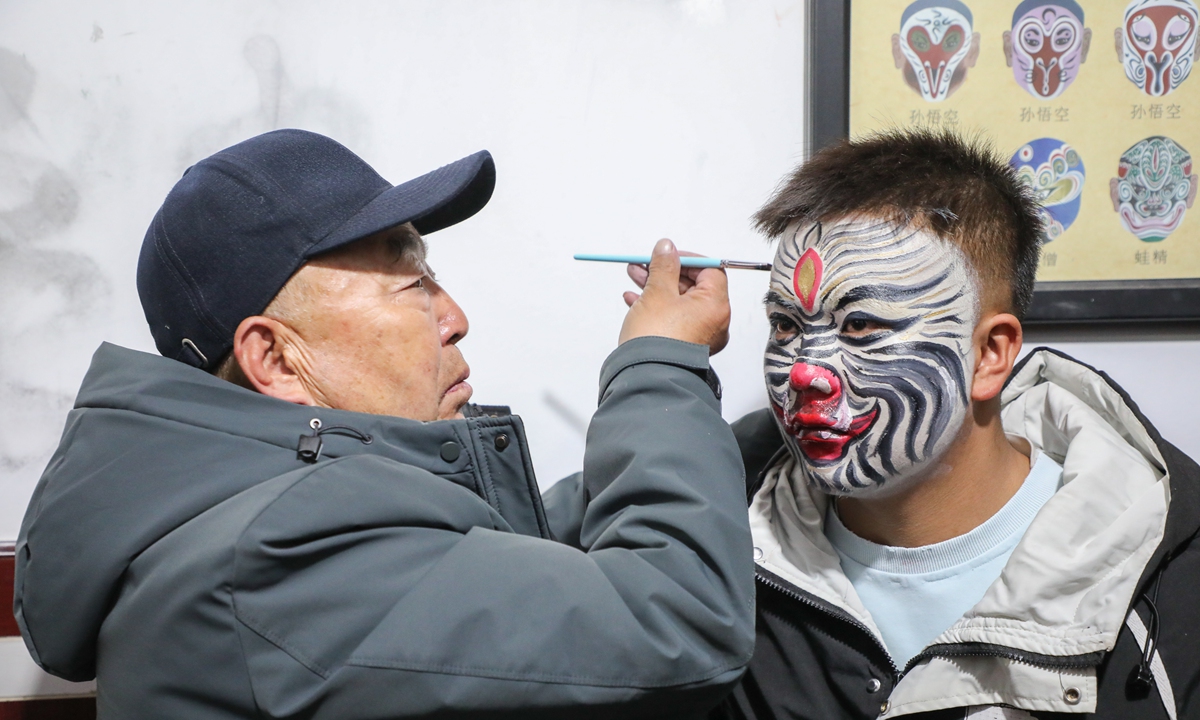
A makeup artist applies makeup to 16-year-old Shehuo performer (right) in Huangzhong district, Xining, Northwest China's Qinghai Province, on February 28, 2026. Photo: VCG
A living heritageLongxian county, historically known as Longzhou, is often called the "Hometown of Chinese Shehuo Culture." Unlike stage-bound performances, "Longzhou Shehuo" is mobile. The troupe moves from village to village, stopping at courtyards and crossroads to perform, delivering New Year's blessings household by household.
The Shehuo folk performance in Baoji city, Shaanxi, was added to China's national intangible cultural heritage list in 2006. Known for its vivid colors, finely detailed facial makeup and authentic, richly varied performances, the Longzhou Shehuo was included in Shaanxi Province's first batch of intangible cultural heritage listings in 2007.
Longzhou Shehuo performances draw heavily from mythology, historical epics and folk legends, and the tradition encompasses more than 20 distinct forms. Among the most representative is "horseback Shehuo," in which performers ride horses while reenacting scenes from well-known myths and historical tales.
The county's southwestern region is known for its Guanshan Grassland, long celebrated as prime horse-rearing territory. The abundant pastures provide a natural foundation for the local horseback Shehuo tradition, Yang Bingquan, chairman of the Longxian County Folk Artists Association in Shaanxi Province, told the Global Times.
Performers paint their faces in bold, symbolic colors, each carrying a distinct meaning that audiences can recognize at a glance. For example, red represents loyalty, white signifies treachery, black stands for integrity, while gold and silver are typically used for gods or supernatural beings.
Bold facial designs, richly colored garments and intricate props transform performers into larger-than-life figures, allowing the stories, and the blessings they carry, to be conveyed through striking imagery rather than words, said Yang.
Yet tradition here is not static.
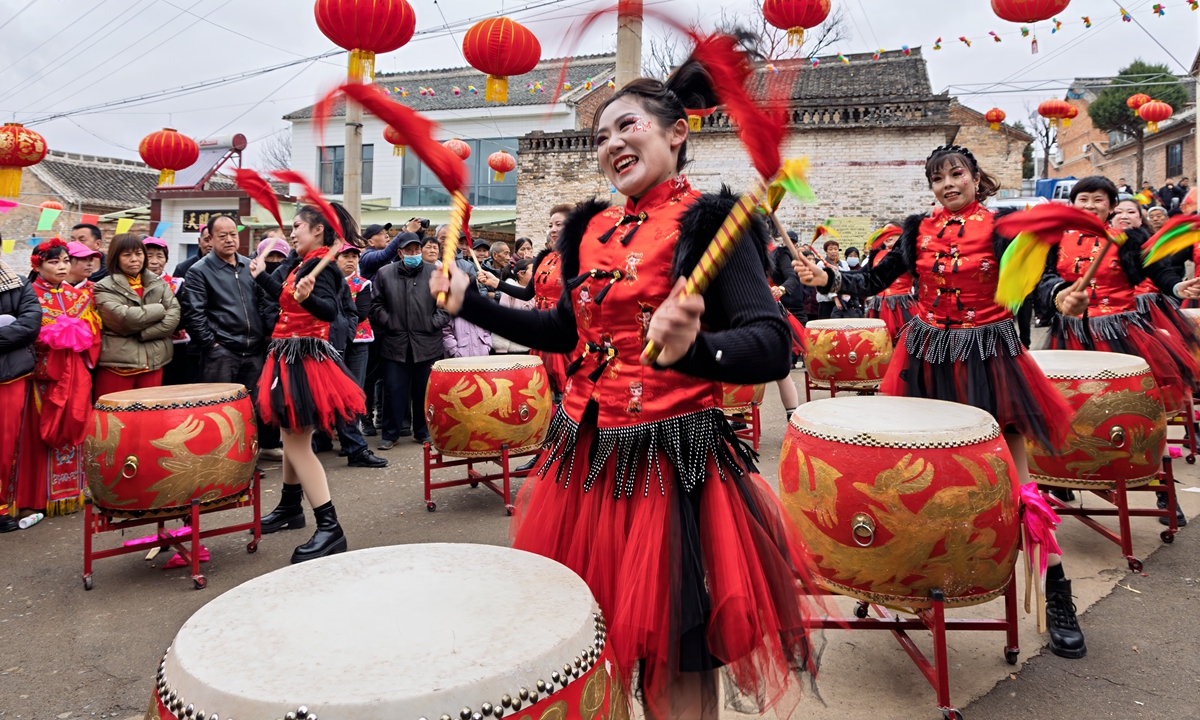
Villagers perform Shehuo program, bringing the festive atmosphere of the Lantern Festival to its peak in Nanjing, East China's Jiangsu Province, on February 27, 2026. Photo: VCG
Drive 'Shehuo' forwardIn recent years, Longxian county has taken steps to ensure that Shehuo does not remain confined to a once-a-year rural ritual. Several professional performance companies have been established, allowing troupes to stage shows beyond the Spring Festival season. This shift has made it possible for performers to earn income while practicing their craft year-round, shared Yang.
The repertoire has expanded. While many programs still draw from classical novels and historical narratives, newer productions incorporate contemporary storylines, reflecting modern rural life and national development themes.
The changes have not diluted residents' enthusiasm. If anything, they have broadened participation. The online attention has coincided with a surge of youth involvement on the ground. In Longxian county, two Shehuo associations were founded and organized by young people born after 2000. Many of these young members grew up watching the parade as children and now take leading roles as performers.
For this generation, the passion runs deep. Whether through the growing number of young users spotlighting Shehuo on social media or through their direct participation in performances, their involvement underscores the "enduring vitality of traditional culture," noted Yang.
According to statistics, more than 5,000 performers took part in this year's Lantern Festival Shehuo parade in Longxian county, drawing nearly 100,000 residents and visitors, Xinhua News Agency reported.
"Shehuo involves multiple stages, from preparation, makeup, performance to logistics, and often requires the coordinated effort of hundreds of people," said Yang. "It's the backbone of our community, and generations of Longxian county residents will continue to pass it down."
RELATED ARTICLES