'At least 20 to 30 years to take to achieve controlled nuclear fusion,’ says political advisor who is also a nuclear industry expert
By and Chen Zishuai Published: Mar 07, 2026 12:47 AM

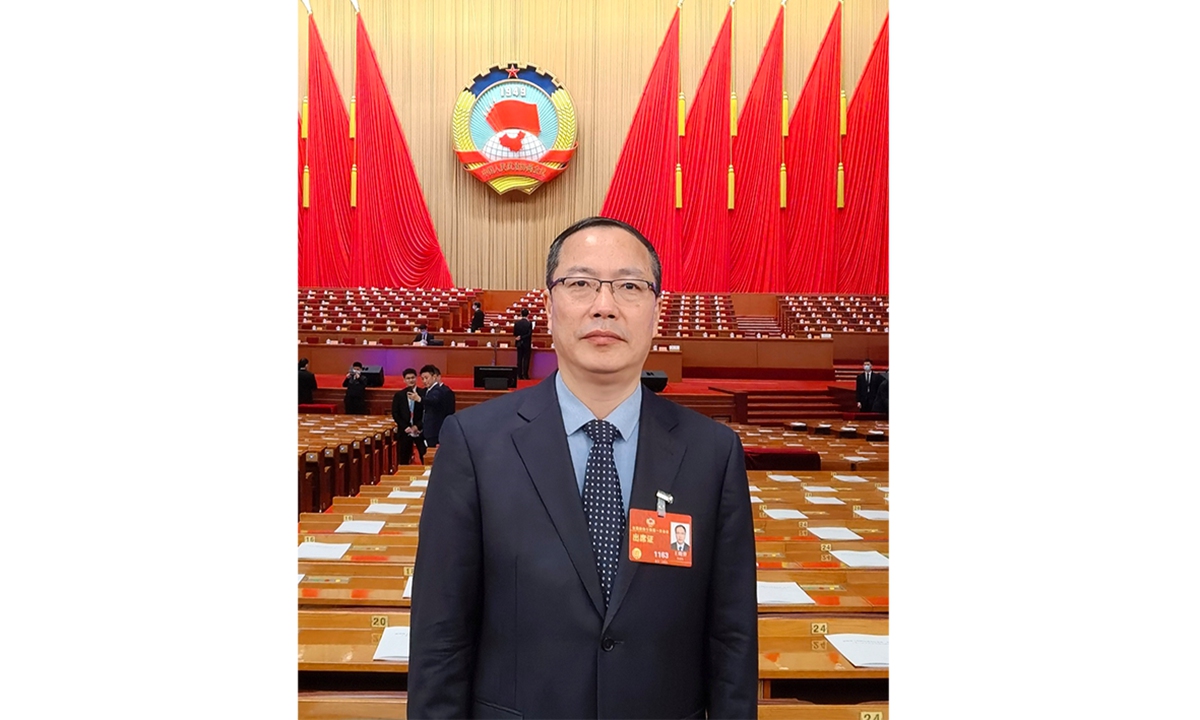
Wang Mingdan, a member of the 14th National Committee of the Chinese People's Political Consultative Conference and president of the Shanghai Nuclear Engineering Research and Design Institute under State Power Investment Corporation Photo: Courtesy of Wang
"Based on current knowledge and technological capabilities, achieving controlled nuclear fusion will take at least another 20 to 30 years," Wang Mingdan, a member of the 14th National Committee of the Chinese People's Political Consultative Conference who is also a nuclear industry expert, told the Global Times during the ongoing "two sessions."
Scientists around the world are working to achieve breakthroughs in controlled nuclear fusion, which some believe could become the "ultimate energy source" for human society.
Wang, who is also the president of the Shanghai Nuclear Engineering Research and Design Institute under State Power Investment Corporation, told the Global Times that nuclear fusion is widely recognized as a promising technological pathway. However, expectations for it may be too high, as many hope progress can be made faster. "At present, the field is still transitioning from basic research toward the development of large-scale scientific facilities," he said.
Wang added that single-point breakthroughs in controlled nuclear fusion, or applications in special scenarios, may come sooner. However, if the goal is commercial power generation, it will still take a long time.
He also noted that developed countries around the world are racing to make nuclear fusion controllable and widely applicable.
China has seen rapid progress in major scientific and technological infrastructure over the past five years, with many large-scale facilities completed and key technologies achieving breakthroughs, the Xinhua News Agency reported in December 2025.
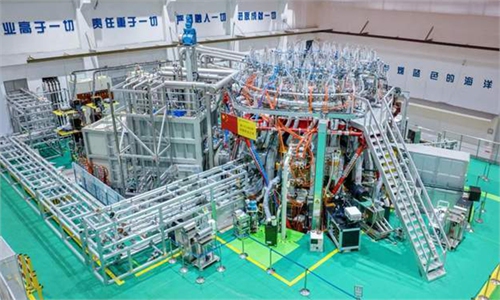
In May 2025, China officially commenced the overall assembly of the Burning Plasma Experimental Superconducting Tokamak (BEST) project in Anhui Province, Xinhua said.
Dubbed the "artificial sun", the BEST facility is scheduled for completion by the end of 2027. It represents one of China's major ventures into controlled nuclear fusion and is poised to attempt the world's first fusion energy power generation demonstration, per Xinhua.
RELATED ARTICLES