China does not subscribe to the logic of 'major-power co-governance,' Chinese FM answers question on 'China-US co-governance,' stresses multipolar coexistence
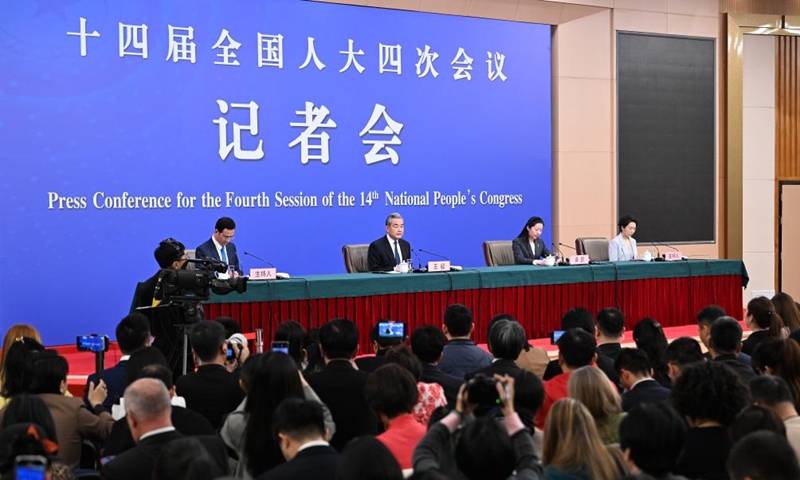
Chinese Foreign Minister Wang Yi, also a member of the Political Bureau of the Communist Party of China Central Committee, attends a press conference on China's foreign policy and external relations on the sidelines of the fourth session of the 14th National People's Congress (NPC) in Beijing, capital of China, March 8, 2026. (Xinhua/Cao Yiming)
China does not subscribe to the logic of "major-power co-governance," Chinese Foreign Minister Wang Yi said at a press conference on Sunday on the sidelines of the fourth session of the 14th National People's Congress. He answered questions of journalists from home and abroad on China's foreign policy and external relations, the Xinhua News Agency reported.
An NBC reporter said at the press conference that Foreign Minister Wang Yi has said China-US relations are one of the most important bilateral ties in the world and the strategic choices of the two countries influence global historic trends. In response to the reporter's inquiry whether China accepts the idea of "US-China co-governance" framework, proposed by people including US President Donald Trump, to share responsibility and deal with global challenges, and if not, what alternative China might offer to avoid confrontation with the US while assuring the world that a rising China does not intend to overturn the current international system, Wang said that China and the US of course have a significant impact on the world, but we should not forget that there are more than 190 countries on the planet, and world history has always been written collectively by all nations, while the future of humanity should be created jointly by the people of all countries. Diversity and coexistence are the true nature of human society, and multipolar coexistence is the proper form of the international landscape, Wang said.
Looking back at history, Wang said every episode of great-power rivalry and bloc confrontation has brought disasters and suffering to humanity. For this reason, China will never follow the old path that "a strong country is bound to seek hegemony," nor does it subscribe to the logic of "major-power co-governance." China's Constitution clearly stipulates that the country pursues an independent foreign policy and follows a path of peaceful development. Chinese leaders have repeatedly emphasized on international occasions that no matter how the international situation evolves and no matter how far China develops, it will never seek hegemony or expansion, Wang said.
As for how the international landscape should evolve, Wang said China's proposal is to build an equal and orderly multipolar world. "Equal" means that countries, regardless of size or strength, are all equal members of the international community and can find their place and play their due role in a multipolar framework. "Orderly" means that all countries should abide by universally recognized international rules, namely the purposes and principles of the UN Charter and the basic norms governing international relations.
Building an equal and orderly multipolar world should be the shared responsibility of all countries, Wang said, adding that major powers, with greater resources and capabilities, should demonstrate broader vision and responsibility by taking the lead in observing rules, honoring commitments and upholding the rule of law. China stands ready to remain a constructive force in a changing world and work with all countries to jointly welcome the arrival of a multipolar world.
Global Times
RELATED ARTICLES