China's vision of national wealth more about high-quality development, common prosperity
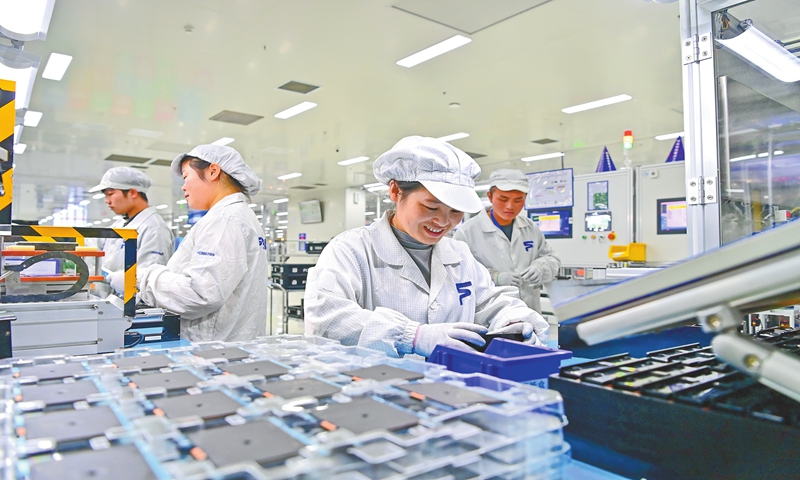
Workers assemble electronic products for new-energy vehicles in an intelligent workshop at a factory in the high-tech industrial park in Fengcheng, East China's Jiangxi Province on February 6, 2025. Local tech firms have been adopting new technologies such as cloud computing and artificial intelligence to empower their manufacturing capacity and elevate their product quality. Photo: VCG
In 1776, Adam Smith's The Wealth of Nations burst onto the scene. Hailed as the foundation of modern economic thought, the work, with its core ideas including the division of labor, market mechanisms and free trade, has offered humanity an entirely new perspective on wealth creation and economic growth.Today, 250 years later, as we look back at China's grand journey of over four decades of reform and opening-up, it is clear that China's development miracle is not only an adoption of existing theories, but also a unique path to modernization based on its national conditions.
The Wealth of Nations begins with the example of a pin factory to reveal how the division of labor could dramatically boost productivity. This insight has been vividly demonstrated in the rise of China's manufacturing industry. China leveraged its low-cost labor to become the "world's factory" for global manufacturing in the early stage of reform and opening-up. From garments and toys to home appliances and electronics, China rapidly built a comprehensive industrial system through large-scale division of labor and collaboration.
Taking the Pearl River Delta. Countless small and medium-sized factories adopted a "front shop, back factory" model, breaking down production into parts manufacturing, assembly and packaging, creating highly efficient industrial clusters.
Entering the 21st century, as the demographic dividend waned, China's manufacturing sector began transitioning toward intelligent manufacturing. The division of labor moved from "labor-intensive" to "technology-intensive."
The Yangtze River Delta has seen the deep integration of industrial robots, automated production lines and digital management systems, enabling a leap from traditional assembly lines to "unmanned factories."
If Smith were alive today, he would surely marvel at how China has fused the wisdom of the division of labor with modern technology to create new miracles in production efficiency.
One of the core propositions in The Wealth of Nations is that the "invisible hand" of the market can optimize the resources allocation through the price mechanism. This idea resonates strongly with China's institutional reforms during its reform and opening-up. In 1978, China launched its economic reforms, with the central task of breaking away from the rigidity of the planned economy and introducing market mechanisms. Rather than simply replicating the Western model of a free market, China instead explored a unique path in which government and market forces work in coordination.
As Smith observed, government should provide national defense, the administration of justice and public goods while avoiding excessive market intervention. China has leveraged a combination of "a well-functioning market and a proactive government" to play a pivotal role in infrastructure investment, industrial policy guidance and anti-monopoly regulation. For instance, in the new-energy vehicle sector, the "market-driven, government-guided" model not only reflects Smith's respect for market mechanisms but also embodies China's profound understanding of the proper role of government.
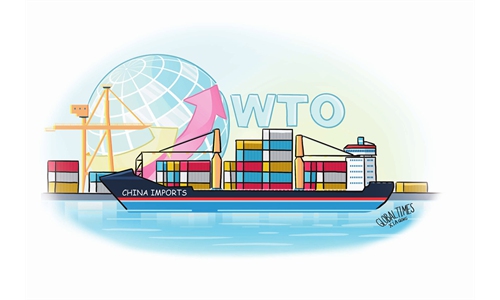
Amid the current global headwinds against globalization and the looming shadow of protectionism, China's commitment to high-level opening-up not only follows Smith's theory of comparative advantage but also actively upholds the global free trade system. From jointly building the Belt and Road Initiative to signing the Regional Comprehensive Economic Partnership, China is committed to turning breeding grounds for "disputes and hostility" into bonds of "solidarity and friendship."
Smith revealed the secret to wealth growth in The Wealth of Nations. And now, 250 years later, China's practice of reform and opening-up has infused this classic theory with new contemporary significance. From the efficiency revolution of labor division to institutional breakthroughs in market mechanisms, from the global vision of free trade to the value elevation of common prosperity, every step of China's economic development is vivid manifestations of basing actions on national conditions, drawing on the strengths of others, and upholding integrity while innovating. The Chinese understanding of "national wealth" has evolved from the narrow focus on imperialism and expansionism a century ago to today's broad vision of pursuing high-quality development and common prosperity.
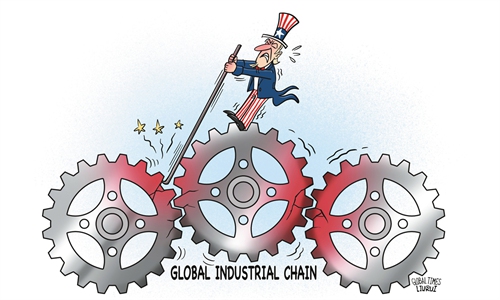
At this new historical starting point, The Wealth of Nations reminds the world: As trade barriers rise again, protectionism ultimately undermines the prosperity of the very nations that embrace it. When global cooperation faces challenges, China's economic practices demonstrate that only by respecting market principles, stimulating innovation, upholding openness and cooperation, and safeguarding ethical standards can humanity achieve the harmonious unity of economic prosperity and social progress. This may well be the finest tribute to Smith's masterpiece 250 years ago.
The author is the director of the National Center for Economic Research of Peking University. opinion@globaltimes.com.cn
RELATED ARTICLES