OPINION / GLOBAL MINDS
‘The world is in great need of major-country diplomacy with Chinese characteristics’

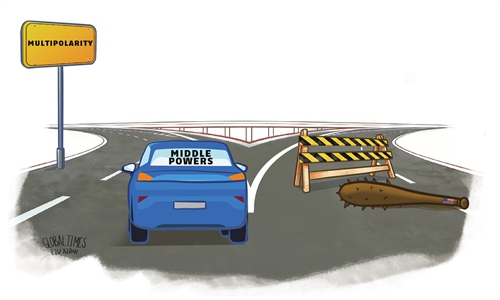
Illustration: Chen Xia/GT
Editor's Note:As China convenes the 2026 two sessions - the annual meetings of China's top legislature and top political advisory body - it's expected to send strong and fresh signals on pushing high-quality development, leveraging greater policy and reform support to ensure steady economic growth and social progress.
In the "Understanding signals at two sessions" series, the Global Times (GT) invites internationally renowned scholars, policy observers and business leaders to interpret the key signals from the two sessions regarding China's domestic roadmap, covering advancements in whole-process people's democracy, high-quality development, high-level opening-up, major-country diplomacy and the improvement of people's wellbeing.
On the margins of the Fourth Session of the 14th National People's Congress, Member of the Political Bureau of the CPC Central Committee and Foreign Minister Wang Yi held a press conference on Sunday, answering questions from Chinese and foreign media on China's foreign policy and external relations. In the fourth piece of the series, GT reporter Xia Wenxin discussed topics regarding China's diplomacy, including its achievements in the past year, the Global Governance Initiative (GGI) and the country's role in UN reforms, with Pino Arlacchi (Arlacchi), an Italian sociologist and former UN under-secretary-general.
GT: In the opening remarks delivered by Foreign Minister Wang Yi at a press conference on Sunday, he emphasized that China's diplomacy firmly safeguards national sovereignty, security and development interests, firmly upholds international rule of law and fairness and justice, firmly opposes all unilateral acts, power politics and bullying, firmly observes and fulfills our international obligations, and firmly stands on the right side of history. Which diplomatic achievement that China made in the past year impressed you the most?
Arlacchi: 2025 was quite an active year for Chinese diplomacy. Rather than a single landmark achievement, it was characterized by a broad initiative across multiple fronts.
The Shanghai Cooperation Organization (SCO) Summit in Tianjin was arguably the most symbolically significant event. It was the largest gathering in the 24-year history of the organization, bringing together leaders from more than 20 countries and heads of 10 international organizations. It was at the "SCO Plus" Meeting where Chinese President Xi Jinping proposed the GGI.
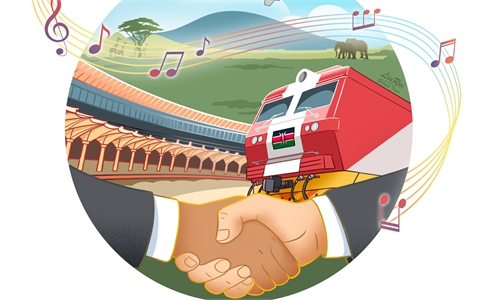
Consolidation of the Global South was another major front. In June, the heads of state of China and the five Central Asian countries jointly signed a treaty of permanent good-neighborliness and friendly cooperation in Astana. And China's Southeast Asia outreach was also notable in 2025: President Xi paid state visits to Vietnam, Malaysia and Cambodia, and during the Vietnam visit alone, the two countries signed 45 agreements covering connectivity, artificial intelligence, customs inspection and quarantine, agricultural trade, and more.
If one had to single out the most consequential achievement, from the perspective of long-term systemic impact, it would be the combination of the GGI proposal and the BRICS/Global South consolidation - which together represent China's most systematic effort yet to build an institutional architecture that provides additional options for global governance amid the Western-led order.
GT: China has successively put forward a series of proposals, including the Global Development Initiative, the Global Security Initiative, the Global Civilization Initiative and the GGI. In his press conference, the foreign minister noted that the series of important initiatives and propositions "point out the right way forward for the changes in the world unseen in a century." How do you interpret the characteristics of China's proposals, particularly when compared to Western development logic and governance approaches?
Arlacchi: China's proposals are welcome. The defining feature of China's four proposals is their capacity to introduce a framework for order, peace and cooperation in a world in which former, declining masters would prefer to see anarchy and war. Those proposals now need to be further articulated through specific governance plans.
Besides the four global initiatives, here I would also like to highlight the Belt and Road Initiative (BRI). The BRI is simultaneously an infrastructure project, a development strategy, a trade policy and a grand strategic vision.
GT: How can major-country diplomacy with Chinese characteristics contribute to building a more just international order, and what role might China play in reshaping global governance?
Arlacchi: The world is in great need of major-country diplomacy with Chinese characteristics. What I expect is that the transition from an "active participant" to a "proactive shaper" will materialize in a set of proposals based on the urgent need to update the international system. A multipolar world has the potential to be a more just and peaceful equilibrium vis-à-vis the past. Its logic should represent a radical change from the tragic, oppressive great power politics of the post-Westphalian era.
What struck me most about current Chinese foreign policy and diplomacy is its profound inspiration from the grand history. At a political-philosophical level, all major Chinese foreign policy proposals are inspired by the concept of tianxia - the first conceptualization of a world society to which all of us belong. At the operational level, Chinese foreign policy reflects the two epochal mega-trends in action today: the re-orient movement and the rise of the Global South.
I served as a UN under-secretary-general. Currently, the UN faces severe challenges and tests. China's most important contribution as a "proactive shaper" of a new world order could be a "refoundation of the UN system." Not just a UN reform, but a true refoundation of the organization based on a revival of its original spirit plus a democratization of its governance.
GT: In his Sunday press conference, Wang called the collective rise of the Global South "the distinct hallmark of the great transformation unfolding in the world." The rise of China, a natural member of the Global South, has consistently gained global attention, especially from the West. How should the West adapt to China's rise, and what would a constructive multipolar world order look like?
Arlacchi: The West must now find ways to adapt to a world in which China returns to being one of the fundamental centers of gravity of human civilization. This adaptation need not be antagonistic - there is no inherent reason why European prosperity cannot coexist with Chinese prosperity. But it does require abandoning the assumption of permanent Western hegemony and accepting a world of genuine multipolarity in which different civilizations and political systems coexist without one dominating all the others.
In this new world, Europe could rediscover its natural role not as the Western periphery of the Atlantic, but as the Western peninsula of Eurasia. This would mean reorienting its economic and political relationships to reflect geographical reality. Some US strategists, meanwhile, are already rethinking their country's role in a context where control of the oceans, while remaining important, no longer guarantees global hegemony. They increasingly recognize that the 1990s unipolar moment was just that: a moment, and that the future will require more true diplomacy, abstention from the use of military force, and greater willingness to accept a post-American global order.
RELATED ARTICLES