ARTS / CULTURE & LEISURE
Push for local heritage bureaus can preserve nation’s cultural narrative
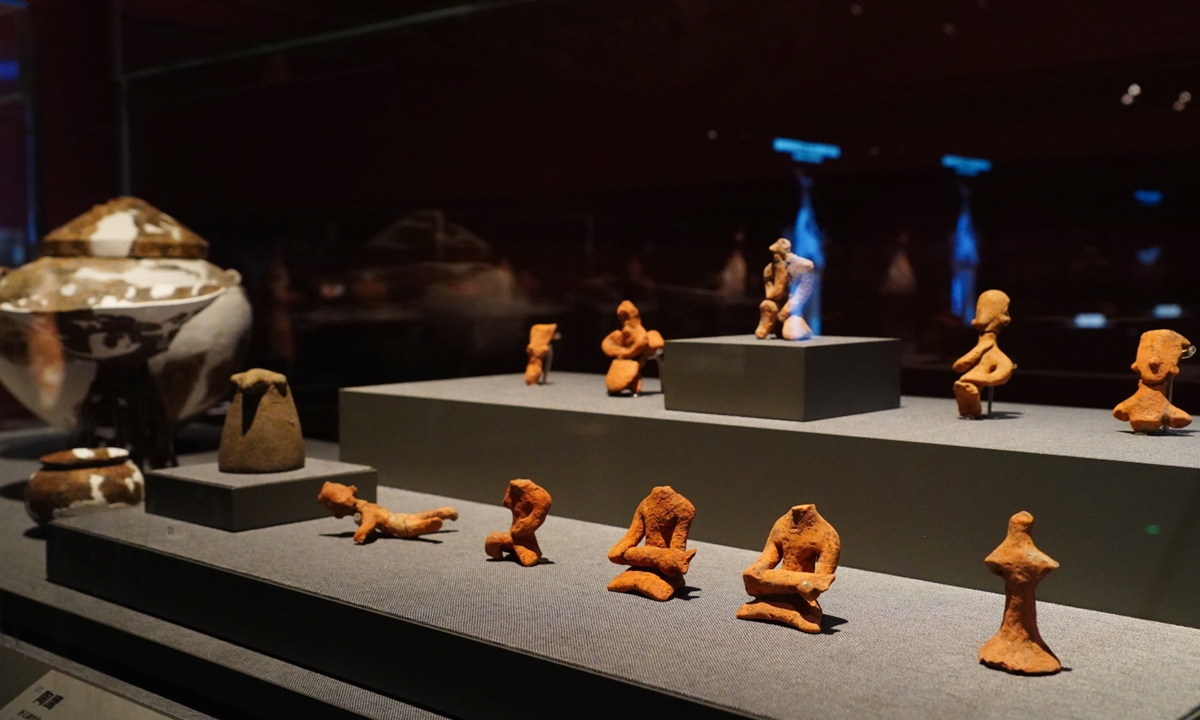
Relics from the the Chenghe archaeological site in Shayang county, Hubei Province Photo: VCG
At the 2026 national "two sessions," cultural heritage protection emerged high on the agenda for many deputies, including Huang Lin, a National People's Congress deputy from Hubei Province. Huang shared his views and suggestions on establishing county-level cultural heritage bureaus - offices rooted not in metropolises, but in rural areas. While the suggestion may appear to be an institutional tweak, it actually serves as a catalyst, drawing public attention to the country's grassroots heritage."Grassroots cultural heritage" can be viewed through a dimensional lens. Spatially, they mainly dot non-urban areas such as ancient dwellings and archaeological sites in the countryside. By scale, grassroots heritage sites are known for their numbers and reach. Take Shanxi Province for example. Its 28,027 ancient architectural heritage sites are scattered across the province, yet over 94 percent of them, mainly low-tier ancient buildings, are in rural fields and remain largely unknown to the public.
But a deeper dimension is actually cultural. Many grassroots heritage sites are considered "low-tier"; not because they lack value, but as they lack official designations. Unlike designated landmarks, like the Forbidden City, with their storied pasts and national prestige, grassroots heritage sites often are still being used for their original purposes, carrying the memories and traditions of ordinary people. And it is this living memory - unassuming yet irreplaceable - that makes their neglect so costly.
Driven by the cultural value of grassroots heritage sites, Huang suggested that county-level heritage bureaus include measures like "professional staffing training" and "registering grassroots sites." Whether the suggestion is adopted is one thing, but his suggestion invites a deeper inquiry:Why does protecting grassroots heritage deserve urgent attention?
As a country with a long continuous history, China's cultural heritage is more than relics - it tells the story of a civilization. And often, that story emerges when urban and rural heritages are pieced together.
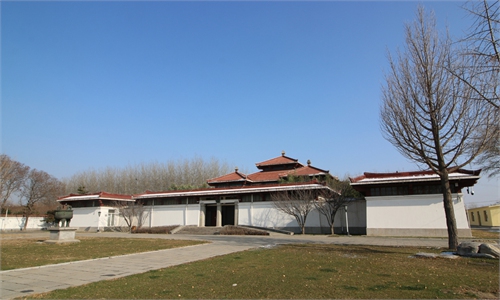
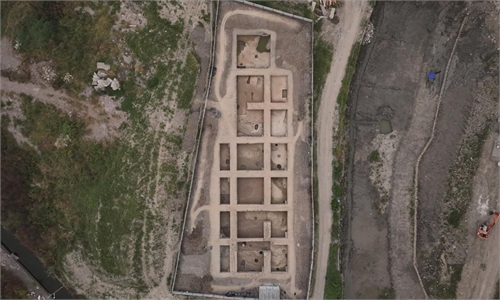
For example, in Hubei's Shayang county, the Chenghe archaeological site reveals how ancient people managed water through sophisticated drainage systems. Nearby in the province's Jingzhou city, there is another site called the Qujialing ruins. The site has also revealed how water was put to use in ancient times, but even more archaeologists have also found the remains of prehistoric rice at the site, providing insight into agricultural activities. Viewing both together, one can find not only how people managed water in ancient times, but also what they used it for. Together, the two sites trace the arc of farming civilization along the middle Yangtze 5,000 years ago.
With this example, it becomes clear that grassroots heritage is an indispensable part of the narrative of civilization. In other words, they are in urgent need of protection because we wouldn't want to let a part of civilization's story go partially interpreted or total left to the imagination due to their disappearance.
But it must be admitted that under combined pressures like natural erosion, lack of attention, and inadequate maintenance, many grassroots heritage sites are indeed in danger. At the beginning of 2026, several county-level governments across provinces like Gansu, Sichuan, Yunnan and more have confirmed lists of immovable cultural relics that have already disappeared.
While this reality is regrettable, the urgency to drive change has simultaneously taken root in many places. In Zhejiang Province's Songyang county, for example, a heritage protection mechanism has emerged. It includes designating the town's Party chief as the "primary person responsible" for grassroots heritage sites, allocating no less than 6 million yuan ($872,000) annually in special funds for grassroots heritage conservation, and more.
Rather than a fully-fledged "cultural heritage bureau" for grassroots heritage as proposed by Huang, what we truly need may be an all-round grassroots heritage protection mechanism.
First, such a mechanism would be more flexible and be able to adapt to the distinct characteristics of different local contexts. This is more advantageous as a one-size-fits-all institutional setup cannot address the diverse realities on the ground. Second, this mechanism should include not only heritage conservation experts from a dedicated bureau, but also professionals from collaborative sectors like tourism officials who understand revitalization, public security personnel who can combat heritage crimes and natural resource planners who manage land use. And of course, the participation of grassroots villagers is also an indispensable force.
For too long, grassroots heritage in rural China has generated no economic returns and lacked official recognition. But with better mechanisms in place, these sites can offer more than cultural value. Restored trails become tourism routes; farmers find new livelihoods in heritage tourism. In these small but telling ways, grassroots heritage is being transformed - from fading history into fresh fuel for rural revival.
The author is a reporter with the Global Times. life@globaltimes.com.cn
RELATED ARTICLES