GT Voice: Resilience of China’s shipyards won’t be derailed by geopolitical volatility

Illustration: Xia Qing/GT
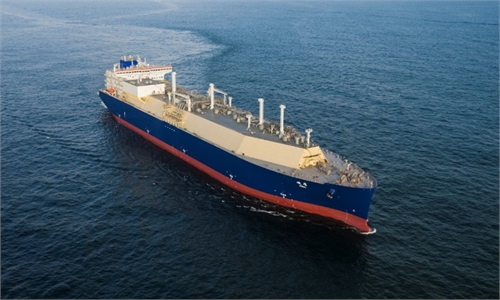
China's shipbuilding industry continued to demonstrate strong vitality in export markets in 2025, according to data from the China Association of the National Shipbuilding Industry.Last year, the country's shipyards completed 47.95 million deadweight tons (DWT) of export vessels, up 13.9 percent year-on-year. New export orders reached 95.1 million DWT, down 8.1 percent. As of the end of December, the sector's orders on hand stood 253.56 million DWT, up 30.5 percent year-on-year, data showed on Wednesday.
With export vessels accounting for more than 80 percent of all three major shipbuilding indicators - shipbuilding output, new orders, and orders on hand - these impressive figures highlight the resilient trajectory of China's shipbuilding industry in a time of complex global challenges.
Over the past year, the global ship market has had to adjust to geopolitical tensions. Yet, China's shipbuilding sector stood firm, showing that no short-term fluctuations can derail its long-term positive development.
Last year witnessed quite a stir in the global shipbuilding sector. The US launched a Section 301 investigation into China's shipbuilding sector in 2024, but it ultimately suspended the relevant measures in November 2025. Still, this saga sent ripples through the global shipbuilding market.
However, it was precisely against this backdrop of external disturbance that China's shipbuilding industry delivered an even more compelling performance. The surge in annual completion volumes and the considerable growth in orders on hand point to an undeniable reality: the global shipping market's deep reliance on the Chinese supply chain cannot be easily shaken by short-term fluctuations.
This dependence is rooted in China's comprehensive industrial system and its decades-long track record of reliable performance, forming a structural foundation that is difficult to replace. The winds of the external environment may shift, but the market's choice, guided by efficiency and reliability, remains steadfast.
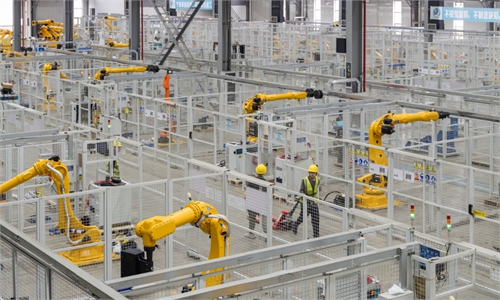
The resilience of China's shipbuilding industry stems from its well-established industrial chain ecosystem. China boasts a great industrial advantage difficult for any other nation to replicate. Stable and reliable production and delivery capabilities enable Chinese shipyards to fulfill orders on time and with consistent quality. This solid "fundamental base," forged over decades of development, is underpinned by strong market foundations and industrial logic.
In today's deeply integrated global economy, the worldwide shipbuilding industrial chain has evolved into an interconnected network. China's supply chain, with its advantages of efficiency, stability, and comprehensiveness, is deeply embedded in the global shipbuilding system, becoming an indispensable pillar of support for the international shipping and shipbuilding industries. Ultimately, global shipowners make decisions based on cost, efficiency, quality, and delivery timelines, not geopolitical fluctuations.
It is also important to recognize the competitiveness of other players. South Korea's strength in high-end vessel segments, its technological expertise in complex ships such as liquefied natural gas carriers and large container vessels, and its ability to navigate market volatility are worthy of attention and study by China's shipbuilders. This kind of healthy competition serves as a driving force for continuous technological innovation and progress across the global shipbuilding industry.
The global push for low-carbon and green development has opened new opportunities for China's shipbuilding industry. New technologies and vessel types are emerging, enabling Chinese shipyards to accelerate their transition toward high-end, intelligent, and eco-friendly products. From large container vessels to clean-energy ships and specialized vessels, Chinese shipyards are strengthening their industrial foundations while enhancing core competitiveness.
China's shipbuilding industry remains committed to openness and cooperation, integrating into the global market and working with international suppliers, shipyards and shipowners to promote the sustainable development of global shipping. As it continues to upgrade technology and deepen international collaboration, the sector is well positioned to remain a key stabilizing force in the global maritime industry. In the face of geopolitical volatility, China's shipbuilding industry will maintain its competitive edge through efficiency, reliability, and openness.
RELATED ARTICLES