Legislation should be improved to address disorders in prepaid eldercare services: NPC deputy, president of Shanghai High People's Court
By Published: Mar 12, 2026 08:38 PM

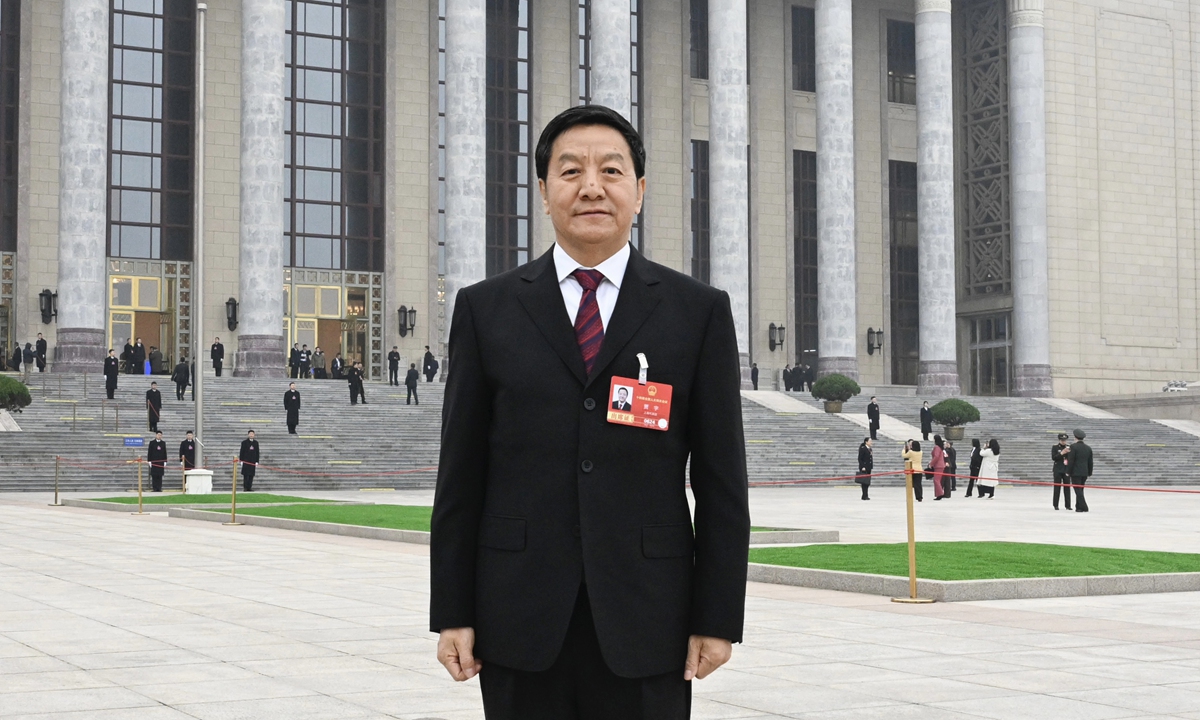
Jia Yu, a deputy to the 14th National People's Congress (NPC) and the president of the Shanghai High People's Court Photo: Courtesy of Jia
Legislation on prepaid elderly care services should be improved to enhance senior citizens' sense of security in elderly care, Jia Yu, a deputy to the 14th National People's Congress (NPC), president of the Shanghai High People's Court, told the Global Times during the two sessions this year.
According to Jia, prepaid elderly care services were originally a "win-win" attempt by care institutions to ease operational pressure while meeting the diverse needs of senior citizens, but they have inevitably been distorted by some operators into a tool for cash-grabbing.
"In routine judicial practice, we have observed a range of prominent issues that directly affect the vital interests of the elderly. These include operators setting unfair preset refund clauses, prepaid funds being kept outside regulatory oversight, arrangements that are nominally for eldercare but, in reality, involve selling housing and fraudulent fundraising through false advertising," Jia said.
These problems intertwine and compound one another, eroding savings of the elderly, while also hindering the high-quality development of the eldercare industry, and have now become pressing livelihood issues that urgently need to be addressed, Jia said.
Jia told the Global Times that to address the disorder surrounding prepaid eldercare services, the fundamental solution lies in strengthening the legislative framework, so that the prepaid model can operate under clear rules and with a solid legal basis.
Drawing on judicial practice, Jia said that Article 48 of the Law on Protection of the Rights and Interests of the Elderly should include provisions addressing the fairness of standard-form contract clauses. Specifically, eldercare institutions should be prohibited from using unfair standard clauses to restrict the rights of senior citizens to terminate contracts and receive refunds.
He also said that the provision should be added that eldercare institutions must not use standard-form clauses to establish unreasonable refund mechanisms, exclude or restrict the rights of senior citizens to terminate contracts, increase the liabilities imposed on them, or reduce or exempt liabilities of eldercare institutions.
Article 42, paragraph 2 of the Law provides that people's governments at all levels shall standardize the fee items and standards for eldercare services, and strengthen supervision and administration. However, Jia said it does not specify the competent regulatory authorities or the methods of supervision.
Jia went on to say that new types of prepaid eldercare institutions — such as wellness and retirement communities and senior apartments — and their operating funds should be incorporated into the regulatory framework, fee structures should be standardized and the authorities responsible for supervising such funds should be clearly designated.
Eldercare is a major matter of public well-being, carrying tremendous weight in every word and every policy, Jia said. The standardized development of prepaid eldercare services is never merely a matter of single-dimensional industry governance; it is also a livelihood project tied to the sense of security for hundreds of millions of elderly people, and an important lever for implementing the national strategy of actively responding to population aging.
Also, it is more necessary to use legislation as the foundation to delineate boundaries of conduct, the judiciary as a yardstick to clarify rights and obligations, and integrity as the guiding principle to return eldercare services to their original purpose, Jia added.
RELATED ARTICLES