ARTS / CULTURE & LEISURE
‘Blades of the Guardians’ cuts a new path for Chinese ‘wuxia’ films
By Published: Mar 12, 2026 11:04 PM

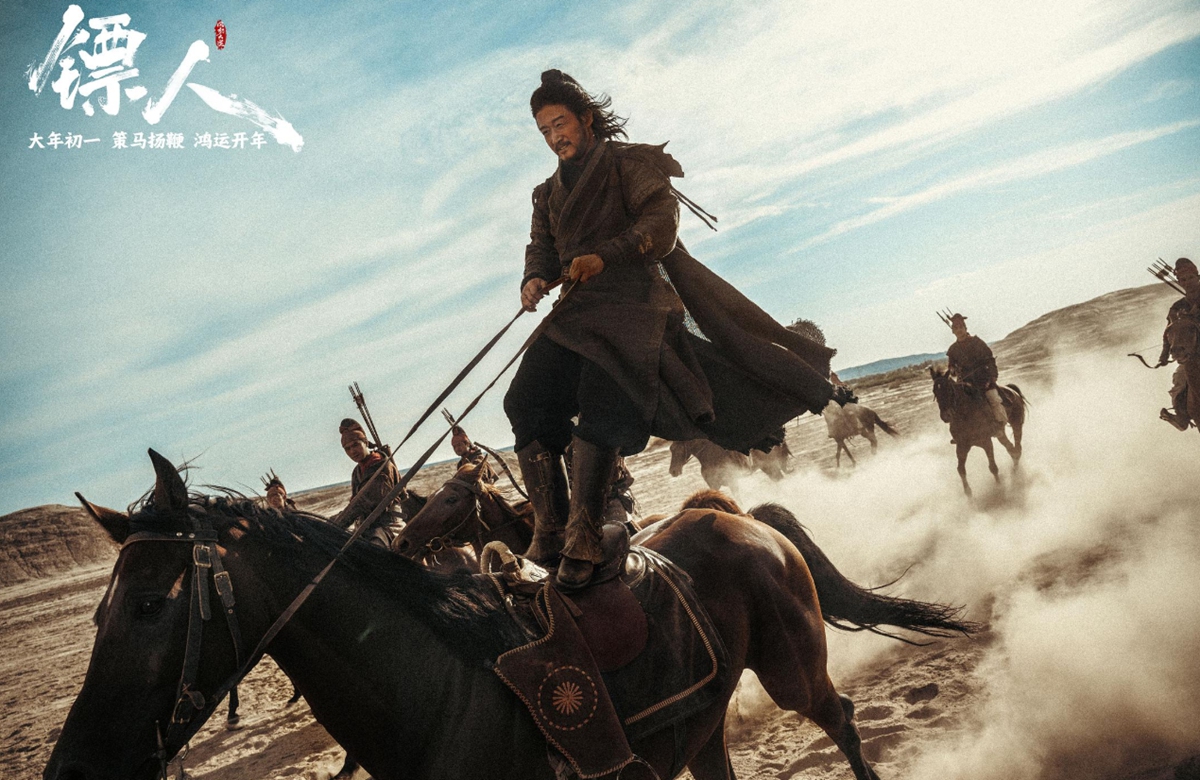
Promotional material for Blades of the Guardians Photo: Douban
Wuxia films, a genre uniquely created by Chinese cinema, were the earliest Chinese films to break into the international market, thanks to their distinct Chinese aesthetics and narrative charm.
From the golden age of Hong Kong wuxia cinema to Crouching Tiger, Hidden Dragon winning the Academy Award for Best International Feature Film, wuxia culture has remained a significant cultural touchstone in introducing Chinese films to the world.
Based on nostalgia, Blades of the Guardians: Wind Rises in the Desert has become the center of attention for its performance.
So far, its box office, good reputation and trending presence on social media have proved that the film is more than just a commercial hit, it has become a case study in how to modernize the classic wuxia genre. The success inspired a high-level seminar hosted by the China Film Art Research Center, where industry leaders and filmmakers gathered to dissect its formula for success.
The film's resurgence comes at a critical moment for wuxia, a genre that has struggled in the past two decades due to stale tropes, over-reliance on CGI, and a disconnect with younger audiences.
Unlike its predecessors, which prioritized visual spectacle over storytelling, Blades of the Guardians: Wind Rises in the Desert leans into authenticity with full on-location shooting in Northwest China's Xinjiang Uygur Autonomous Region and hand-to-hand combat choreographed to feel visceral.
It's a creative choice spearheaded by the 81-year-old action director Yuen Woo-ping, a legend whose credits include Crouching Tiger, Hidden Dragon and The Matrix, who sought to adapt wuxia for the young generation.
"We want to minimize all the flashy stuff in kung fu and use real movements to fight," Yuen told the Global Times in a previous interview on February 14. "Every slash of the blade, every thrust of the spear, every sword strike must feel substantial. I don't want those posed showy stances. I want it real."
That decision resonated with Gen-Z viewers, many of whom have been exposed to martial arts video games and crave the same sense of stakes in film. It also helped the film avoid the CGI fatigue that has plagued recent wuxia entries, grounding its action in the physicality that defined the genre's golden age.
Behind the film's creative risks is a team driven by passion. Screenwriter Yu Baimei told the Global Times on Thursday that he and lead actor Wu Jing initially thought the project might lose money, but pressed forward out of a desire to revive wuxia for a new generation.
"Wu is in his 50s, and he told me he would regret it if he never made another wuxia film," Yu said.
The "gamble" has paid off. Yu said the film has recouped its investment and spawned calls for a sequel. Most importantly, the film has made the industry regain confidence in wuxia films.
Critically, Blades of the Guardians: Wind Rises in the Desert has cracked the code for wuxia's global relevance by balancing cultural authenticity with universal storytelling.
Set in the late Sui and early Tang dynasties, the film weaves chivalry and patriotism into its narrative, but frames those themes around relatable human themes, including protection, loyalty, and resilience.
Lu Liang, deputy curator of the China Film Archive, noted at the recent seminar that the film deeply integrated "hardcore wuxia atmosphere and traditional Chinese heritage" and has achieved exploration and breakthroughs in areas such as IP adaptation, action choreography and cultural expression.
Internationally, the film is already gaining traction as it has earned a 95 percent fresh rating on Rotten Tomatoes and a 7.4/10 score on IMDb.
Its success challenges the narrative that wuxia is a niche genre, proving that when rooted in quality and adapted for modern audiences, it can compete on the global stage.
French writer Romain Rolland once said, "There is only one heroism in the world: to see the world as it is, and to love it."
Daoma, the film's protagonist, embodies this very spirit. Yet his heroism is mirrored by the filmmakers themselves: fully aware of the challenges facing wuxia cinema, they have not wavered in their love for wuxia, holding fast to the belief that the genre can be restored to its former glory.
The author is a reporter with the Global Times. life@globaltimes.com.cn
RELATED ARTICLES