Iran's new supreme leader vows to open new battlefronts in first message as Trump repeats 'soon' claims; Hormuz to become core battlefield amid record reserves release: expert
By Published: Mar 12, 2026 11:45 PM

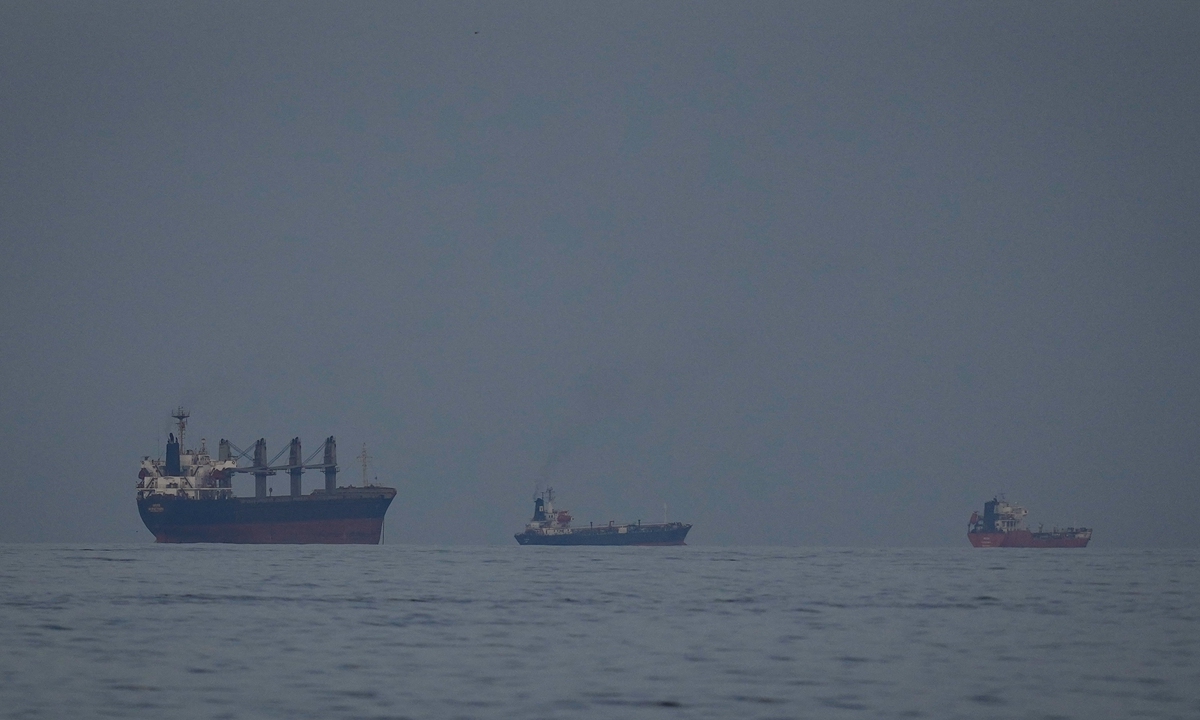
Oil tankers and ships line up in the Strait of Hormuz as seen from Khor Fakkan, United Arab Emirates, on March 11, 2026. Photo: VCG
Iran's new Supreme Leader Mojtaba Khamenei has called for the continued closure of the Strait of Hormuz and pledged to open new fronts in his country's conflict with the US and Israel, Xinhua News Agency reported.
In his first message as supreme leader, published on his official website Thursday, he said studies are underway to open other battlefronts where the enemy is "vulnerable and inexperienced." He added that these moves would happen if the war continues and serve Iran's interests, according to Xinhua.
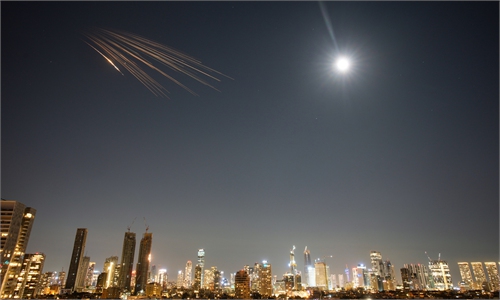
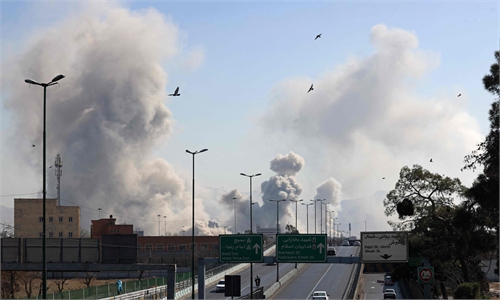
The conflict between US-Israeli forces and Iran shows no signs of abating as it enters its 13th day on Thursday, with fighting expanding from land-based operations to maritime confrontations, threatening vital shipping lanes, Strait of Hormuz.
Before Mojtaba's statement, Iran's President Masoud Pezeshkian laid out three conditions for ending the war in a social media post on Wednesday, saying he has reaffirmed Tehran's position during talks with the leaders of Russia and Pakistan.
"The only way to end this war, ignited by the Zionist regime and the US, is the recognition of Iran's legitimate rights, the payment of reparations, and firm international guarantees against future aggression," he wrote on X.
Iranian president's message coincides with US President Donald Trump's emphasis that the war with Iran will end soon in public.
"Any time I want it to end, it will end," Trump said during a brief phone interview with Axios on Wednesday local time, adding that there is "practically nothing left to target."
It's not the first time that the US president has indicated that the war will end soon. At a press conference on Monday, the US leader claimed that the war against Iran will end "very soon," and also said oil prices will drop, per CNBC.
Despite Trump's signals, the US and Israeli officials said they are preparing for at least two more weeks of strikes in Iran, and that there has been no internal directive on when such strikes might stop, according to Axios.
Similarly, Israeli Defence Minister Israel Katz said on Wednesday that their operation "will continue without any time limit, as long as required, until we accomplish all objectives and achieve victory in the campaign," per The Times of Israel.
Meanwhile, adviser to the Iran's Revolutionary Guard Corp's (IRGC) commander-in-chief, warned on Wednesday that the US and Israel "must consider the possibility that they will be engaged in a long-term war of attrition that will destroy the entire American economy and the world economy,'' according to the AFP.
Officials from US administration estimated during a congressional briefing this week that the first six days of the war on Iran had cost the US at least $11.3 billion, a source familiar with the matter told Reuters on Wednesday.
According to Zhu Yongbiao, a Middle East affairs expert with Lanzhou University, both sides want to declare victory, yet neither feels fully satisfied: The US fears its campaign will be seen as incomplete and humiliating, which could also negatively impact domestic midterm elections. For Iran, it hopes to give Washington an decisive lesson which is enough to avoid further aggression.
Furthermore, Washington and Israel, and even within the US administration itself, may have yet to reach a fully coordinated consensus, Zhu said.
Factors such as Israel's strategic intentions and Iran's strong determination for revenge continue to create the risk of the situation spiraling out of control or the conflict becoming protracted, Zhu said, "The longer the conflict drags on, the weaker America's ability to unilaterally dictate the terms of ending the war."
As strikes continue, military conflict is slipping over to the sea.
Iran's IRGC has claimed an early-morning attack on the US-owned, Marshall Islands-flagged Safesea Vishnu near Basra, Iraq, saying it ignored its warnings, according to Al Jazeera.
In addition, a container ship was struck in the waters north of Dubai, making it at least the sixth vessel to have sustained damage in the region since Wednesday, said the UK Maritime Trade Operations Centre on Thursday.
According to CNS News, Trump claimed on Wednesday that U.S. forces had hit 28 Iranian minelaying ships as of that day. Iran has yet to respond to the claim as of press time. Meanwhile, The US military has turned down a series of requests from around the region to escort oil tankers or other civilian ships through the Strait of Hormuz, the Wall Street Journal reported.
Concerns around the duration of the war has shown no sign of abating. The International Energy Agency (IEA) said Wednesday that it will release 400 million barrels of oil from emergency reserves, the largest release in the multinational organization's history.
Besides, the US Energy Department said Wednesday that the US will release 172 million barrels of oil from the country's emergency stockpiles, following the similar moves announced earlier by allies including Germany and Japan.
However, efforts by the US and IEA have failed to keep oil futures from soaring. According to WSJ, Front-month Brent crude-oil futures jumped 9 percent to $100.29 in Asian trading on Thursday before falling back into the mid-90s, while front-month West Texas Intermediate crude oil futures rose 8.9percent to $94.97 a barrel.
If the war persists, the contest for control over the Strait of Hormuz, which carries roughly one-fifth of the world's seaborne oil trade, will almost certainly intensify dramatically and emerge as the central theater of the conflict, Zhu said.
According to the expert, although the US Navy possesses strength, Iran can still inflict damage on the US at a comparatively low cost through asymmetric warfare. For example, Iran could achieve a partial blockade of the Strait of Hormuz using torpedoes, while its missiles and drones also possess the capability to harass and strike US forces.
RELATED ARTICLES