China's 15th Five-Year Plan unlocks new co-op opportunities in innovation, digitalization, and green transition: intl business leader

This strength is visible in the latest full-year economic results. In 2025, China's GDP exceeded 140 trillion yuan ($20.22 trillion) for the first time, rising 5 percent year-on-year and meeting the annual target despite a complex external environment.
More importantly, this resilience is structural. A vast market accelerates adoption and learning cycles, while a complete industrial system links research and development, production, logistics, and commercialization into an integrated loop. This allows innovation to scale faster than in most other economies.
Looking ahead to the 15th Five-Year Plan period, three growth drivers stand out. First is the productivity upgrade of the real economy through industrial AI, robotics, automation, and advanced connectivity, with digitalization increasingly acting as a multiplier across sectors. Second is the continued modernization of digital infrastructure and data governance, enabling new business models and more efficient resource allocation. Third is the green transformation, where digital tools make decarbonization measurable and optimizable, turning climate goals into industrial opportunities.
Together, these factors give long-term engagement with China strategic value beyond market access, making it ultimately a competitiveness decision grounded in scale, speed, and industrial execution. China remains one of the few places where innovation can be tested at scale and quickly move from pilot projects to broad adoption. For international enterprises, this means faster learning cycles, stronger product-market fit, and partnerships that shorten time-to-market.
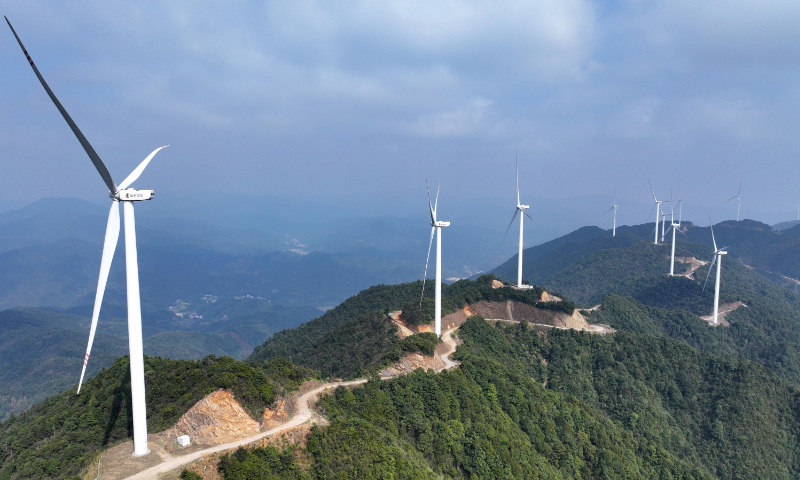
Wind turbines rotate atop the mountain peaks at a wind farm in Langchuan village, East China's Jiangxi Province, on March 6, 2026. Photo: VCG
New cooperation frontiers
For European companies and digital industries in particular, some of the most important medium- to long-term opportunities in the next Five-Year Plan period will lie where China is integrating digitalization, advanced manufacturing, and green transition into a coherent agenda. These include industrial digital transformation, intelligent mobility, logistics, energy digitalization, and innovation related to healthcare and aging.
A key reason is that China's green-tech and clean-energy sectors have already become a major industrial growth platform. This makes cooperation in industry, digitalization and green development even more valuable, as technology, manufacturing capacity, and large-scale deployment increasingly converge.
Equally important is cooperation on standards, interoperability, and trusted industrial ecosystems. In the digital economy, the most strategic markets are not only the largest but also those that define platforms and standards. European firms can benefit more by participating in co-innovation and co-standardization, rather than treating China simply as an export market.
China's commitment to higher-standard opening-up is also essential to enabling such cooperation. It provides certainty when it translates into predictable rules, stable expectations and an environment where long-term investment and innovation partnerships are feasible. For the global economy, continued opening-up by a major economy helps stabilize trade and investment channels and reduce supply-chain disruptions at a time of renewed protectionism.
At the same time, China's strengthening indigenous innovation capacity is reshaping its role in the global technological landscape. The country is moving from being primarily an adapter of global technology to becoming a builder of technological systems that develops platforms, ecosystems, and integrated industrial capabilities.
What defines this shift is China's ability to connect frontier technologies to industrial scale and build complete value chains around emerging sectors. The energy transition offers a clear example. China's newly installed wind and solar power capacity exceeded 430 million kilowatts in 2025, up 22 percent year on year and hitting a new record high.
Such progress creates greater potential for international technology cooperation built on complementarities, including joint R&D, cross-border industrial applications, shared standards and the co-development of solutions for real economic needs. Cooperation, particularly in standard-setting and joint industrial projects, helps keep systems compatible and predictable, ensuring that competitiveness does not turn into division.
The same momentum is also visible in China's green transition. Digital technologies are turning green ambition into real operational capacity. With AI, IoT, and data analytics, they help reduce industrial energy intensity, improve efficiency in buildings and cities, and optimize logistics and mobility.
Official data show that by the end of 2025, China's operational new-type energy storage capacity had reached 136 million kilowatts, more than 40 times the level at the end of the 13th Five-Year Plan period (2016-20). At this scale, digital dispatching and balancing are increasingly essential for maintaining system reliability and supporting effective decarbonization.
China's large-scale use of digital technologies to coordinate the energy system also provides a practical example of how climate goals can be translated into stable, workable outcomes. As emissions and energy systems become more transparent and easier to track digitally, climate commitments move closer to real accountability rather than broad promises, helping build trust between economies.
Governance for stability
From a governance perspective, the formulation of the 15th Five-Year Plan combines top-level design with broad consultation, including input from the public, private enterprises, foreign-invested companies, and international experts. This approach helps make policymaking more responsive, better informed and more effective in a fast-changing environment, while also making policy more implementable, testable and adjustable.
Amid global uncertainties, governance capacity is measured not only by the ability to set priorities but also by the ability to coordinate ecosystems and deliver results through strategic, adaptive and predictable processes. Companies invest for the long term when policy direction is clear and adjustment mechanisms are structured rather than arbitrary. When outcomes align with targets, policy credibility strengthens, and China's 2025 performance has reinforced business confidence in policy continuity and implementation capacity.
China's confidence in advancing the goals of the 15th Five-Year Plan rests on structural capabilities rather than short-term performance indicators alone. These include the ability to scale technologies rapidly, coordinate complex industrial ecosystems, and maintain strategic continuity across planning cycles. Over time, such strengths have enabled infrastructure expansion, industrial upgrading, and digital transformation to move from policy ambition to practical implementation.
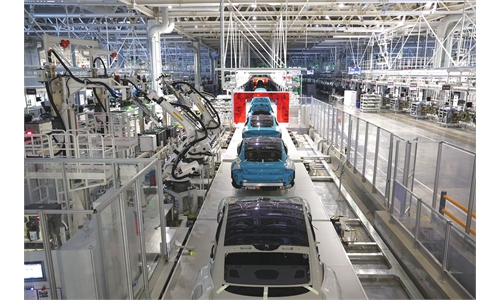
In recent years, these structural capabilities have become increasingly visible. China is now the world's largest market for industrial robots, with new installations in 2024 accounting for more than half of the global total. Rising automation density in manufacturing reflects not only capital investment but also the ability to diffuse advanced production technologies across entire industrial ecosystems.
For countries seeking to balance growth and stability, one key lesson from China's five-year planning is the value of disciplined planning: setting clear priorities, aligning policy tools with investment mechanisms, defining measurable milestones, and adjusting implementation based on evidence and feedback. This approach helps maintain policy continuity beyond short political cycles while allowing room for adjustment as conditions change. The combination of consistency and adaptability ultimately strengthens resilience and long-term confidence.

Luigi Gambardella Photo: Courtesy of Gambardella
The article is compiled based on an exclusive interview with Luigi Gambardella, president of ChinaEU, a Brussels-based international business association fostering Europe-China digital cooperation.
RELATED ARTICLES