A launch pad facing skyward at the US military's THAAD base in Seongju County, North Gyeongsang Province, South Korea, on March 5, 2025. Photo: VCG
The impact of this round of conflict in the Middle East has already spread to Northeast Asia. Due to attacks on US defense systems in the Middle East, the US has begun urgently redeploying missile defense assets from other regions, including some equipment stationed in South Korea. According to media reports, the US is moving parts of the THAAD system from South Korea to the Middle East.South Korean President Lee Jae-myung acknowledged that Seoul had "expressed opposition" to the withdrawal of US weapons. Nonetheless, "the reality is that we cannot fully push through our position," Lee said.
If a portion of the THAAD system can be deployed to the Middle East at any time, then it is clearly part of the US global missile defense system, rather than simply serving South Korea's security. In other words, the claim by some South Korean politicians and media that the THAAD system was "purely for defense against the North Korean threat" contained a clear logical contradiction.
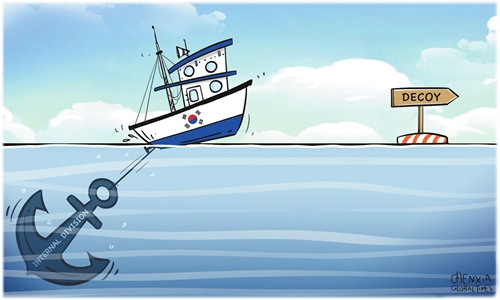
This issue once again highlights South Korea's extremely limited discourse power regarding the deployment of US troops stationed in the country. The South Korean government has virtually no say in the deployment and movement of US equipment, including the THAAD system, and may not even be informed of the arrangements in advance.
South Korea and the US reached a consensus in 2006 on the "strategic flexibility" of US forces stationed in South Korea, in which the US said it "respects the ROK position that it shall not be involved in a regional conflict in Northeast Asia against the will of the Korean people." However, in reality, this commitment is more of a political appeasement than a practically binding agreement.
The current situation in Middle Eastern countries demonstrates that US military bases often represent potential security risks. Once the US becomes involved in regional conflicts, the countries where these bases are located could become targets of retaliatory strikes. In other words, the US military presence in other countries is sometimes not a "security guarantee," but rather a source of security risk.
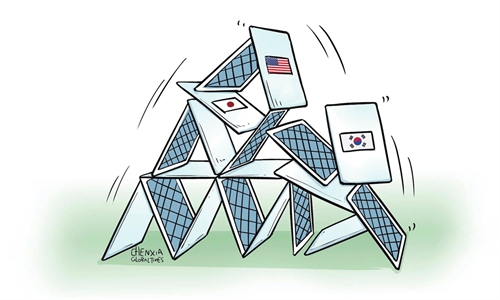
A similar logic is emerging in the economic sphere. In recent years, the US has continuously used tariffs, technology restrictions and industrial policies to demand that its allies invest in the US or adjust their industrial layout in key industries. While US allies such as Japan and South Korea have been able to gain some benefits from this, overall, this arrangement has significantly deepened their strategic dependence on the US and weakened their own autonomy in economic policy.
The deployment of THAAD in South Korea in 2016 severely impacted relations between China and South Korea and sparked ongoing controversy within South Korea.
Now, the US military is reportedly moving some THAAD equipment to the Middle East, and the South Korean president has acknowledged that this will not affect South Korea's deterrence strategy. This has undoubtedly prompted the South Korean public to reconsider the necessity of the THAAD deployment.
Opposition to THAAD has long existed within South Korean society, with local residents expressing their discontent. This incident may provide an opportunity for South Korea to reassess its related policies. Whether South Korea should continue to bear the diplomatic, security and social costs of deploying THAAD deserves serious discussion.
More importantly, if South Korea truly hopes to enhance its national security autonomy, the key lies not in introducing more external military equipment but in promoting a fundamental transformation of the Korean Peninsula's security structure. Transforming the Korean Peninsula armistice mechanism into a peace mechanism and reducing military confrontation are essential for achieving long-term stability on the peninsula.
From the Middle East to Northeast Asia, the current situation serves as a stark reminder to the world that, against the backdrop of increasingly fierce strategic competition among major powers, blindly relying on powerful nations does not necessarily bring security. On the contrary, it may expose a country to greater risks in conflict. For many US allies, striking a balance between alliances and national autonomy is becoming an increasingly pressing strategic challenge.
The author is director and professor of the Center for Korean Peninsula Studies at the Shanghai University of International Business and Economics. opinion@globaltimes.com.cn
RELATED ARTICLES