Translators' Voices: ‘Certainty dividend’ is China’s contribution to global growth

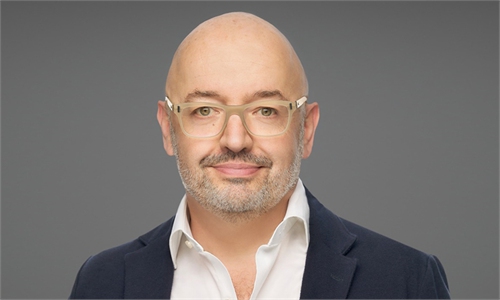
Nikolas Konidis Photo: Courtesy of Konidis
Editor's Note:
2026 marks the opening year of China's 15th Five-Year Plan period (2026-30). The outline of the Plan sets out the following development goals for the coming five years: significant achievements in high-quality development, substantial improvements in scientific and technological self-reliance and strength, fresh breakthroughs in further deepening reform comprehensively, notable cultural and ethical progress across society, further improvements in quality of life, major new strides in advancing the Beautiful China Initiative, and further advances in strengthening the national security shield.
The Plan's outline also calls for steadily expanding opening-up at the institutional level, building a new system for a higher-standard open economy, promoting the high-quality development of the joint construction of the Belt and Road Initiative, promoting broader international economic flows, drawing momentum from opening-up to propel reform and development, promoting an equal and orderly multipolar world and universally beneficial and inclusive economic globalization, and sharing opportunities with the rest of the world and promoting common development.
As China advances the building of a new development pattern, it will have far-reaching impact on the world. Volume V of the book series Xi Jinping: The Governance of China includes part of Chinese President Xi Jinping's written speech delivered at the APEC CEO Summit held in San Francisco, the US, in 2023 - titled "China Development: New Momentum and Opportunities for the World."In the speech, President Xi noted that "we have the confidence and ability to achieve long-term and stable growth, and through our development, we will continue to offer the world new growth momentum and opportunities."
In the 22nd installment of the special series "Decoding the Book Xi Jinping: The Governance of China," focusing on the main economic and social development goals for the 15th Five-Year Plan period, the Global Times, along with the People's Daily Overseas Edition, continues to invite Chinese and foreign scholars, translators of Xi's works, practitioners with firsthand experience, and international readers to explore how the medium- and long-term development blueprint outlined in the 15th Five-Year Plan can be translated into an "opportunity list" shared with the world.
In the 22nd article of the "Translators' Voices" column, GT interviewed Nikolas Konidis (Konidis), translator of the Greek edition of Volume I of the book series Xi Jinping: The Governance of China.
GT: What aspects of China's medium- and long-term planning left a particularly strong impression on you during the translation process? What governance philosophies and development concepts do they reflect?
Konidis: The most striking aspect of China's medium- and long-term planning is its relentless strategic consistency and the "blueprinting" of the nation's future. The 15th Five-Year Plan is not an isolated document but a link in a continuous chain of development, contrasting with the cyclical nature of governance seen in other political systems.
My translation process highlights several key planning elements. First, the "two centenaries" framework operates on a multi-generational scale, turning the transition from the 12th to the 15th Five-Year Plan into a "marathon" approach where each stage builds toward national rejuvenation. Second, there is a rigorous "top-level design" that presents plans as scientific formulations balancing macro-economic goals with specific social needs like poverty alleviation and ecological protection. Finally, this creates a holistic integration where economic targets are fused with social, cultural and environmental development, ensuring that progress is truly multi-dimensional.
These planning aspects reflect two important governance philosophies. One is the "people-centered development approach," guided by the principle that the people's desire for a better life is the common goal, making the plans evaluate their success based on their impact on the citizenry. The other is "seeking truth from facts," a pragmatic philosophy ensuring that while the "top-level design" is centralized, it remains flexible enough to adapt to local realities.
GT: General Secretary Xi has elaborated on his development philosophy in the book series Xi Jinping: The Governance of China. Volume IV collected part of the Explanation of the Recommendations of the Central Committee of the CPC for Formulating the 14th Five-Year Plan for Economic and Social Development and Long-Range Objectives Through the Year 2035 made at the Fifth Plenary Session of the 19th CPC Central Committee, in which he stressed that "during the new era and at the new stage we must follow the new development philosophy and ensure high-quality growth." The outline of the 15th Five-Year Plan sets a slew of goals, with high-quality development high on the agenda. What is the most fundamental difference between China's development concept and the mainstream development model in the West? What kind of civilizational traits or political philosophies underlie this difference?
Konidis: The development concepts embodied in the outline of the 15th Five-Year Plan for national economic and social development differ fundamentally with the mainstream Western model. While the Western model often prioritizes individual efficiency and shareholder value within the constraints of four-year election cycles, the Chinese approach represents a long-term development path.
Underlying this structural difference is a distinct political philosophy that shifts the focus from "capital-centered" growth to "people-centered" development. In many Western systems, development is viewed as an aggregate of individual profit motives with the hope that wealth will eventually trickle down. Conversely, the Chinese model, as articulated in the 15th Five-Year Plan outline, views increasing productivity as a tool to resolve "unbalanced and inadequate development." This philosophy integrates livelihood issues - such as healthcare, education, and an aging population - as core structural components of national strength rather than mere social costs or externalities.
While the Western model has historically relied on a zero-sum race for resources and market dominance, Chinese modernization seeks a balance between humanity and nature. This is a move toward a "new form of human civilization" that rejects the Western dichotomy of government versus market. Instead, it advocates for an interplay between an efficient market and a well-functioning government, where the state acts as a designer ensuring that market vitality consistently serves the public interest and national sovereignty.
GT: Western observers often simplistically view China's five-year plans as mere "economic plans." How would you explain to them that these are not merely economic documents, but rather a vision embodying political consensus and the logic of social governance?
Konidis: To observers accustomed to viewing national strategy through the lens of fiscal policy or annual budgets, China's five-year plans are often mischaracterized as rigid quotas or simple economic forecasts. However, a more accurate interpretation reveals that these are foundational political and social manifestos that synthesize the "will of the state" with "social consensus." Unlike Western economic plans, which primarily focus on market regulation and GDP targets, the 15th Five-Year Plan serves as a comprehensive "blueprint for civilization" that outlines how the CPC intends to organize the relationship between the state, the market, and the individual.
The logic of these plans is rooted in a political philosophy of "top-level design" integrated with the "whole-process people's democracy." Before a five-year plan is finalized, it undergoes years of deliberation. It not only gathers opinions from people in the economic and scientific fields as well as grassroots representatives, but also conducts public opinion solicitation activities to allow the general public to participate extensively in the planning process. This process transforms the document from a mere economic forecast into an instrument of political and social consensus. The plan is less about "predicting" the future and more about "constructing" it through a shared national vision.
Furthermore, these plans represent a sophisticated logic of social governance that views economic growth as a means to a broader social end. The transition toward "high-quality development" in recent plans shifts the focus from quantity to the quality of life, incorporating environmental sustainability, cultural confidence, and social equity into the core metrics of success. By embedding these social objectives into the national strategy, the five-year plan acts as a social contract. It provides a predictable roadmap that allows the public, businesses, and international partners to align their expectations with the government's long-term commitment to stability.
GT: The 15th Five-Year Plan outline calls for sharing opportunities with the rest of world and promoting common development. How can the 15th Five-Year Plan, a medium- to long-term development blueprint, be transformed into a globally shared "opportunity list"? Is the "certainty" brought about by China's development itself a crucial opportunity?
Konidis: For international partners, the 15th Five-Year Plan serves as a strategic roadmap that identifies exactly where China's doors are opening widest: in high-end manufacturing, green energy, digital transformation, and the burgeoning "silver economy." Rather than being a closed system, the plan acts as a market signal, inviting global capital and expertise to align with China's pursuit of new quality productive forces.
The certainty generated by China's development allows global businesses to make long-term investment decisions with confidence. When China commits to peaking carbon emissions by 2030 or achieving technological self-reliance, it creates a massive, predictable market for green technologies and innovative services, effectively anchoring global supply chains rather than just integrating into them.
Furthermore, the 15th Five-Year Plan marks a transition toward "institutional opening-up," where certainty is formalized through better legal protections and standard-setting. By shortening negative lists for foreign investment and scaling pilot reforms from the Hainan Free Trade Port to a national level, China is transforming its domestic stability into a shared global asset. This "certainty dividend" is China's contribution to global growth. Ultimately, the plan is not just a list of domestic tasks but a commitment to maintaining a "model market" where international partners can find reliable, high-quality growth opportunities.
RELATED ARTICLES