China’s Midu folk music sparks cross-cultural craze, inspires overseas gesture dance challenges
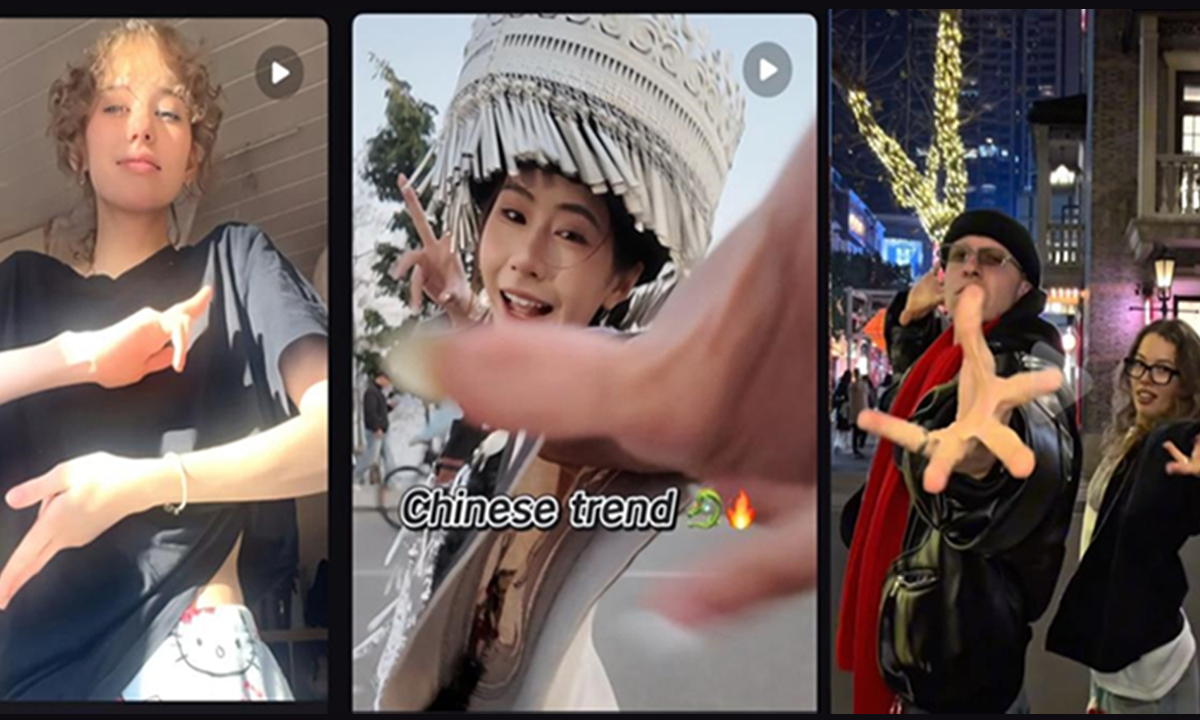
Netizens do Midu echoing gesture dance challenges on social media platform. Photo: Screenshot from websites
Formed during the late Ming Dynasty (1368-1644) and early Qing Dynasty (1644-1911), the Midu folk songs, have been passed down for nearly 400 years. The county has long been a key transportation hub in western Yunnan and an essential passage along the ancient Tea Horse Road, a bustling corridor for caravans trading tea for horses, according to a local media report.
Caravans traveling between north and south not only brought commercial prosperity, but also the songs of muleteers longing for home. Through singing, they expressed homesickness and dispelled the loneliness of life on the road. These melodies deeply resonated with local communities, and over time, the people of Midu came to use songs as a natural way to express the full range of human emotions, from joy to sorrow.
The ongoing trend started when an influencer YANGYINYUE posted a remixed version of the folk song on Youtube months earlier, which fuses the original melody with phonk, characterized by heavy basslines and electronic beats that have recently surged in popularity through short-video platforms. This video has gained more than 37.92 million views on the platform
Since the song went viral, netizens have embraced the trend, creating their own interpretations across platforms at home and abroad. Many don traditional Chinese attire while performing signature wrist rotations and gesture dances, while celebrities have also joined the movement, amplifying its visibility.
"When traditional culture is revitalized, rhythm is key," Liu Mengfei, a professor at School of Arts & Communication at Beijing Normal University, told the Global Times. "In Black Myth: Wukong, traditional instruments like the suona and erhu blend with electronic beats, even incorporating elements like cyber-style chanting and northern Shaanxi storytelling. Folk melodies are naturally catchy and easy to spread. After being reworked with faster tempos and stronger rhythms, they better fit modern tastes, making them more appealing to young audiences and easier to be understood overseas."
Now, driven by inventive rearrangements, celebrity promotion, and a surge of user-generated content, the hashtag "Midu echoing" has amassed over 4.05 billion video views across Douyin, the Chinese version of TikTok. The trend has also drawn participation from international content creators, who are joining in dance challenges and sharing their interpretations on platforms including Tiktok and Instagram.
Some overseas music influencers also produced videos comparing the remixed track with its original folk version, introducing global audiences to its cultural roots. On TikTok, some netizens expressed a preference for the original, describing it as "more soulful," while others praised the fusion style, noting that "this track goes hard" and that "Chinese songs are getting hot." The discussions have also sparked curiosity about the song's origins, with users asking about its background and discovering its roots in traditional Chinese folk music.
This shows that the vitality of culture matters more than its form, Liu noted. "Hand-gesture dances have gone viral overseas because they are lively, easy to learn and fit young people's desire for self-expression. Rooted in Chinese traditional culture, this trend actually aligns well with global youth culture, and there's no need to be overly rigid: What young people enjoy today has its own value. This kind of 'people's art' is often the most capable of crossing cultural boundaries and gaining global recognition," Liu said.
RELATED ARTICLES