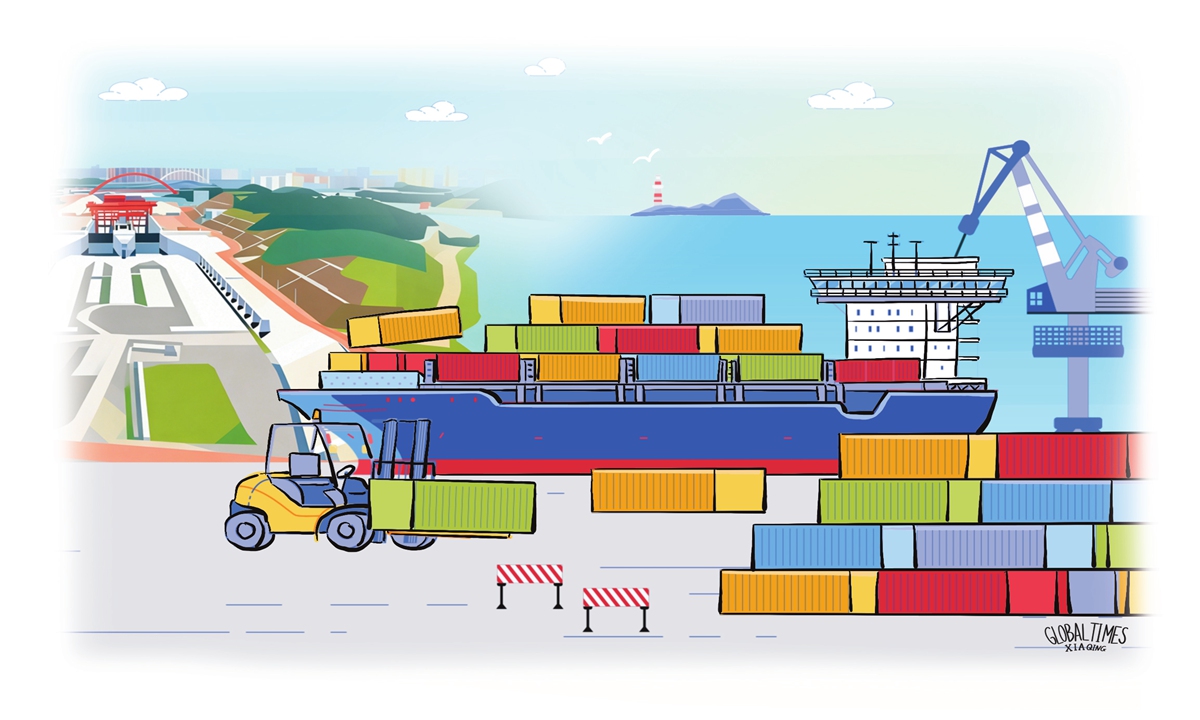
Illustration: Xia Qing/GT
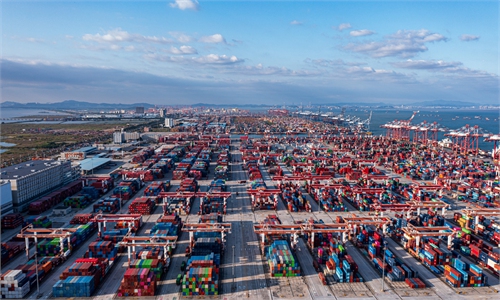
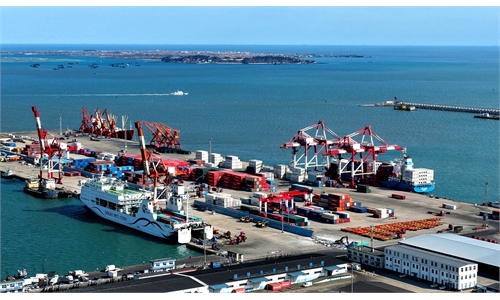
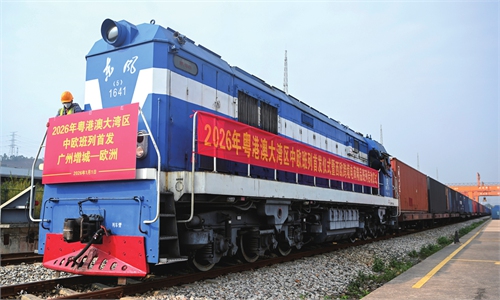
The Pinglu Canal, a flagship project of the New International Land-Sea Trade Corridor and a major river-sea intermodal transport water route in Southwest China, entered the equipment commissioning stage on Wednesday, marking another major step toward full operation, CCTV News reported.This important development exemplifies China's proactive efforts to advance major cross-regional transport corridors as part of its overall efforts to boost the "dual circulation" development pattern, amid sluggish global trade growth and an increasingly complex external environment. By strengthening regional infrastructure connectivity, these efforts are helping China mitigate external uncertainties and unlock new development opportunities.
This new waterway stretches 134.2 kilometers and is designed for 5,000-ton class vessels. The project is poised to transform Southwest China's connectivity with international markets, carrying multiple significant benefits by promoting trade growth and driving industrial development.
The most immediate benefit lies in logistics efficiency. The canal will enable seamless river-sea intermodal transport, directly linking the Xijiang River system to coastal ports. This is expected to shorten inland shipping distances by more than 560 kilometers compared with traditional routes via Guangzhou, while significantly reducing transit time - for example, cutting shipping times from Chongqing to Singapore from 22 days to about seven days.
Beyond speed, the reduction in transshipment steps will improve reliability and predictability, factors that are increasingly critical for modern supply chains. Lower and more stable logistics costs, in turn, will provide tangible support for stabilizing growth and strengthening industrial chains.
Improved connectivity also carries clear implications for China's external trade structure, particularly in the context of growing uncertainties in global demand. By enhancing direct access from the western regions to international markets, especially ASEAN, the canal helps expand regional openness and diversify trade channels.
Estimates suggest that the additional transport capacity generated by the Pinglu Canal economic belt could contribute nearly 13 billion yuan ($1.89 billion) in additional trade between 2027 and 2035, and more than 130 billion yuan between 2036 and 2050. Such gains underscore the canal's role as a new anchor for integrating western China more deeply into both domestic and international economic cycles.
Beyond trade, the canal is expected to boost industrial development of regions along its route. Logistics costs are a fundamental variable in determining where industries locate. Already, major projects are clustering along the canal corridor, including lithium carbonate production and integrated pulp and paper industrial parks, according to media reports. This reflects a broader shift: from isolated infrastructure development to the emergence of a "canal economy belt," where transport, industry, and urban development reinforce one another.
The optimization of industrial layout will also support closer cooperation with ASEAN members in supply chains and production networks. As cross-border connectivity improves, border regions and industrial parks adjacent to ports are likely to become new growth poles, further strengthening regional economic integration.
Equally important is the canal's contribution to green development. Compared with road and air transport, inland waterway shipping offers significantly higher capacity with lower energy consumption and emissions per unit of cargo. By shifting part of freight transport to waterways, the Pinglu Canal will help optimize the transport structure and reduce carbon intensity.
Preliminary estimates indicate that by 2035, the canal could cut carbon emissions by approximately 663,000 tons compared with existing transport modes. Framed this way, the project represents not just an infrastructure upgrade, but a long-term, structural approach to low-carbon transition.
The acceleration of the Pinglu Canal construction reflects more than the progress of a single project. It illustrates how China is leveraging major transport corridors to respond to a changing external environment, reduce barriers, and unlock new development potential in inland regions. By building a new growth path, the canal exemplifies a broader transformation: turning the western inland into a new frontier of openness and opportunity.
The author is a reporter with the Global Times. bizopinion@globaltimes.com.cn
RELATED ARTICLES