China ready to boost energy coordination with Southeast Asia, FM says on Philippine claim that China assures no fertilizer export restriction
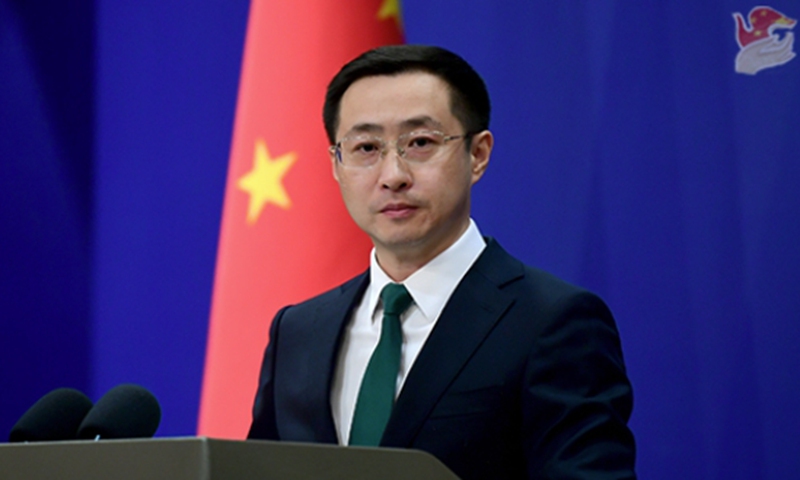
Chinese Foreign Ministry spokesperson Lin Jian
The situation in the Middle East has dealt a heavy blow to global energy security, and relevant countries need to stop military operations immediately to prevent regional turmoil from further impacting global growth, Chinese Foreign Ministry spokesperson Lin Jian said on Thursday.
"China stands ready to strengthen coordination and collaboration with Southeast Asian countries and jointly address energy security issues," said Lin in response to questions following the Philippine agriculture secretary's claim that China assured it would not restrict fertilizer exports to the country, and the Chinese Ambassador in Manila had also met with the Philippine energy minister to talk about energy security.
The reporter asked what topics were discussed between the two sides during the meeting, whether the Philippine side was interested in increasing its energy security through China's help, whether oil supply issues were discussed, and whether China would be able to offer the same kind of reassurance about energy supply the way it did for fertilizers.
"On your question about fertilizers, China is a major producer and consumer of fertilizers and a key participant in global fertilizers trade. While ensuring that domestic demand is met, China exports some of its fertilizers to international markets. For anything specific, I'd refer you to competent authorities," Lin said.
The Philippines' Department of Agriculture (DA) is in talks with China to secure fertilizer supplies, citing the need for urea - a nitrogen-based fertilizer that the country imports - amid tensions in the Middle East, Philippine media outlet ABS-CBN reported on Tuesday.
The Philippines imported 7.1 million metric tons of fertilizers from 2021 to 2023, mainly from China, Indonesia, Malaysia, Canada and South Korea. Nitrogenous fertilizers made up 63 percent of imports, according to Philippine media outlet Interaksyon.
ABS-CBN reported on Wednesday that China has assured the Philippines it will sustain fertilizer exports despite persistent oil price hikes, Agriculture Secretary Francisco Tiu-Laurel said. The secretary added in an interview that China would not restrict fertilizer exports, calling it "good news."
Beyond China, the Philippines is also seeking fertilizer supplies from other countries. According to ABS-CBN, the Philippines is now in talks with more fertilizer-producing countries - including India, Russia and Belarus - and is also looking into "alternative technologies like liquid fertilizers and nanotech," the DA chief said.
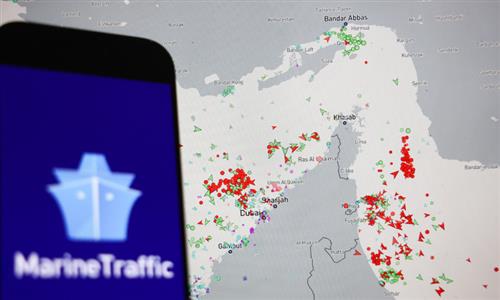
Lin Boqiang, director of the China Center for Energy Economics Research at Xiamen University, told the Global Times that since mid-February, tightening geopolitical tensions in the Middle East and disruptions to navigation in the Strait of Hormuz have significantly hindered fertilizer shipments from the Persian Gulf. Against this backdrop, China's recent statements are aimed at stabilizing supply expectations, helping ease market sentiment and bilateral relations.
"With China's strong fertilizer production capacity, it is generally feasible to maintain exports to countries including the Philippines while meeting domestic demand. For relatively small markets, such supply arrangements allow for a certain degree of flexibility within China's overall production capacity," Lin Boqiang noted.
According to the China's General Administration of Customs, China exported a total of 46.27 million tons of various fertilizers from January to December 2025, up 44 percent year-on-year, with total export value of $13.755 billion, an increase of 57.9 percent, data cited by the China Nitrogen Fertilizer Industry Association on its official website showed.
Xu Qinhua, a professor at the School of International Studies of Renmin University of China and director of the Center for International Energy and Environment Strategy Studies (CIEESS), told the Global Times on Thursday that China's position reflects its willingness to contribute to global energy security rather than targeting any single country, including the Philippines. She added that the same applies to fertilizer supply, noting that China is fulfilling its responsibilities as a major country and stands by its commitments.
RELATED ARTICLES