Illustration: Liu Rui/GT
In Nanchang, East China's Jiangxi Province, the arrival of spring brings families to Jiulonghu Park, where colorful tents and picnic mats are spread across the newly green lawns. This simple scene is more than just a sign of the season - it reflects a larger trend in China's evolving "spring economy." As the weather warms, outdoor activities such as picnics and outings become catalysts for consumer spending, contributing to the "spring economy"In southeastern China, Jiangxi Province warms up earlier than northern China, ushering in the "spring economy" sooner. The sight of families enjoying flower-viewing, picnics, and outdoor outings reflects the arrival of this seasonal shift. This trend, however, extends well beyond the city, becoming a sales opportunity hundreds of kilometers away in Yiwu, China's small commodity hub.
In that vast market, some retailers focus on outdoor gear - tents, camping chairs, and trekking poles. According to tidenews.com.cn, a veteran retailer with more than 40 years of experience in the outdoor industry anticipates that as temperatures rise, domestic demand for these products is likely to grow.
Yiwu's story is far from unique; similar sales trends are unfolding across China, contributing to the growth of a broader consumer market. According to a 2024-25 report on China's outdoor sports industry, the camping market was estimated at 213.97 billion yuan ($31.01 billion) in 2024, a year-on-year increase of more than 60 percent.
Camping and outdoor excursions are just some examples of the many new scenes emerging within China's "spring economy." Another trend is the increasing emphasis on spring health and wellness, a concept deeply rooted in traditional Chinese practices, particularly traditional Chinese medicine (TCM). With rising consumption and shifting preferences, this market segment continues to expand. What was once largely a pursuit of older generations is now increasingly popular among younger consumers. Some are turning to TCM courses or engaging in wellness routines like baduanjin, both to alleviate stress and foster social connections, further fueling the trend.
There are many other scenes within the "spring economy." In Longwu town, a core production area of West Lake Longjing tea in Hangzhou, East China's Zhejiang Province, spring markets have been integrated into tea plantations, while "tea-view rooms" allow tourists to open their windows to greenery. Visitor flows in the town have increased by 50 percent in March compared with normal levels. In Hanzhong, Northwest China's Shaanxi Province, 15 curated tourism routes have been designed across more than 1 million mu (66,667 hectares) of rapeseed flower fields, along with six thematic zones and nearly 20 new formats, including helicopter flower-viewing and flower-sea music concerts.
The "spring economy" extends far beyond the activities mentioned so far, embracing a wide range of emerging trends, including outdoor music festivals, pet outings, flower exhibitions, and urban cycling. These growing scenes are not only diversifying the consumption landscape but also driving a web of interconnected markets. From the production of outdoor gear to the expansion of tourism and wellness services, these trends are fostering growth across both manufacturing and services industries, further extending the reach and influence of the "spring economy."
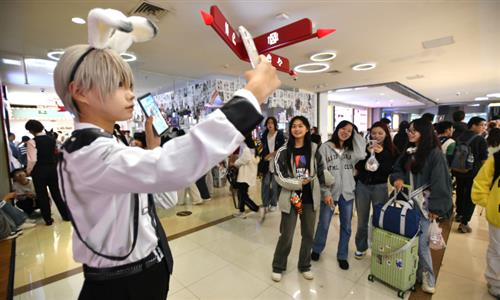
The "spring economy" exemplifies the ongoing development of China's consumer landscape, driven by the country's consumption upgrade. As disposable incomes rise, there is a clear shift toward quality-driven consumption, with consumers increasingly favoring experiences that enrich their lifestyles over simple, functional needs. This trend is reflected in the growing popularity of outdoor activities, wellness practices, and cultural events.
An important factor in this development is the rise of emotional consumption. As individuals seek ways to manage stress and enhance their well-being, purchases driven by emotional and experiential factors are becoming an integral part of economic growth. This increasing demand for self-care, personal fulfillment, and shared social experiences is shaping evolving consumer behavior in China, with notable effects on industries ranging from tourism to wellness and entertainment.
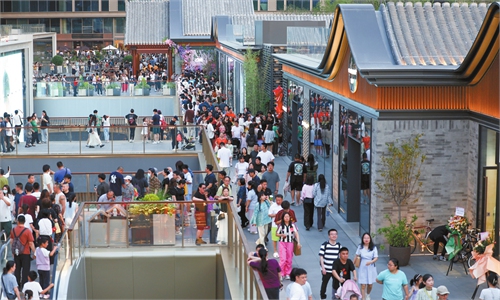
The "spring economy" reflects a transformation in China's consumer market, as demand moves beyond basic goods toward more refined, experience-focused products and services. Some foreign media outlets may be keen to predict a downturn in China's consumer market. However, such assessments do not align with reality. The smaller, everyday scenes - like the colorful tents and picnic mats at Jiulonghu Park - are part of a larger macroeconomic movement, showcasing the vibrancy and resilience of Chinese consumption.
The author is a reporter with the Global Times. bizopinion@globaltimes.com.cn
RELATED ARTICLES