Illustration: Liu Xidan/GT
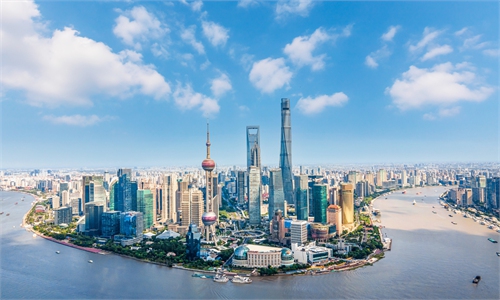
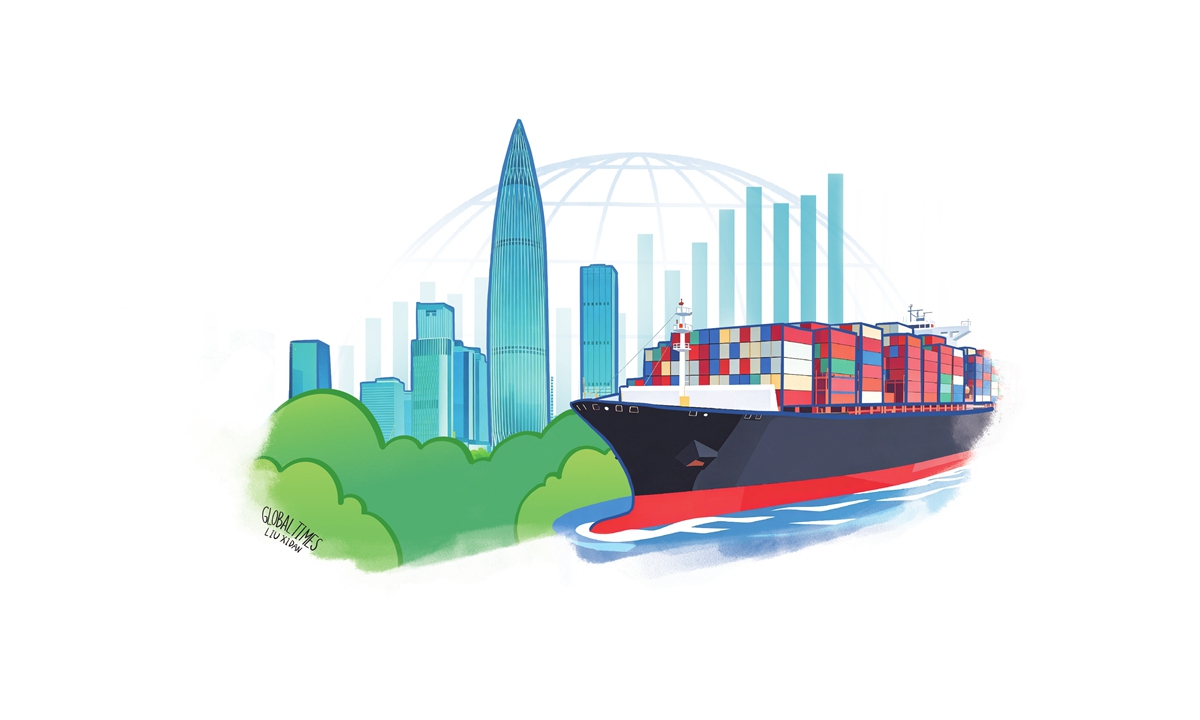
Shenzhen city - one of China's most internationally connected commercial hubs - has recently released trade figures that offer a closer look at the forces driving export growth.
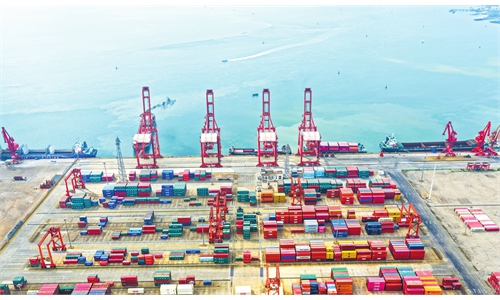
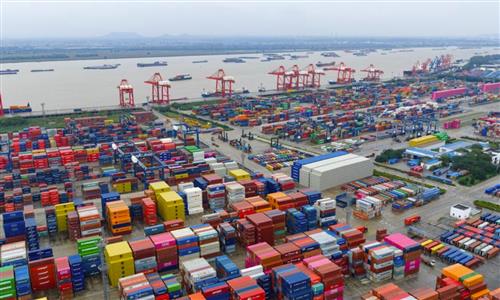
According to an article posted on the official account of Shenzhen Fabu on Saturday, the city ranked first among China's mainland cities in total foreign trade in the first two months of the year. Foreign-invested enterprises accounted for 206.65 billion yuan ($30.01 billion) in imports and exports, up 25.5 percent year-on-year and representing 25.1 percent of the total.
Shenzhen was once a small fishing village on China's southern coast. Today it is a megacity widely recognized for its electronics and information technology manufacturing, and an important hub of foreign trade among Chinese mainland cities. Throughout this transformation, foreign-invested companies have become deeply embedded in the city's industrial ecosystem, contributing to the expansion of the trade flows.
For foreign investors, Shenzhen shows how integration with China's industrial networks can be mutually beneficial. Multinational firms gain access to extensive supply chains, a skilled workforce, and a large domestic market, while their investment supports the city's development as a center for manufacturing and trade. Seen in this light, Shenzhen offers a lens on broader trends in China's export sector.
The role of foreign-invested enterprises can be discerned within China's export sector. According to customs data, from January to November 2025, these firms exported $928.8 billion, as part of China's total exports of $3.41 trillion across all types of enterprises. Their participation forms part of China's broader industrial and trade networks, illustrating how different types of firms - domestic and foreign - interact within the country's export ecosystem.
The export growth of foreign-invested enterprises stems from China's sustained openness to international trade and investment over the past decades. As a result, the country has become an important destination for foreign investment, offering access to its vast market, well-developed industrial infrastructure, and increasingly efficient logistics systems. This openness has not only attracted multinational corporations but also fostered mutually beneficial exchanges, supporting the expansion of exports.
Some observers in both developed and developing economies, influenced by the growing rhetoric of de-globalization and trade protectionism, may see a conflict between openness and export growth, leading them to prioritize domestic manufacturing and adopt protectionist policies toward foreign investment.
However, the evidence suggests otherwise: providing fair treatment to foreign investors and encouraging foreign capital has generally supported local manufacturing and boosted trade performance, as demonstrated by Shenzhen and other Chinese cities. In this context, China's experience underscores how integration with global capital and overseas market can drive sustained export growth.
As many economies look to develop advanced manufacturing sectors and boost exports to address trade imbalances, attracting foreign investment presents a promising strategy. The first step in this process is to expand openness by providing a level playing field for foreign companies, fostering an environment that encourages long-term commitment from international investors.
For advanced economies, taking advantage of their established industrial bases to attract investment in emerging industries such as electric vehicles and renewable energy could be a beneficial approach. Developing economies might focus on utilizing their rapidly growing markets and competitive labor costs to attract manufacturing investments.
China, both a recipient and source of foreign investment, exemplifies this dynamic. In 2025, China's outbound foreign direct investment totaled $174.38 billion, up 7.1 percent year-on-year. These investments create growth opportunities for manufacturing and exports in recipient economies and help establish complementary supply chains. Strengthening these supply chains and ensuring that Chinese investors are treated fairly can support local industries, boost export growth, and help address trade imbalances.
As economies navigate the complexities of globalization, the role of foreign investment in driving manufacturing and export growth warrants closer attention. While some advocate for protectionist policies to shield domestic markets and promote local industries, such measures may lead to a harmful cycle of economic isolation. In contrast, fostering an open environment that encourages foreign investment creates a more sustainable path for economic growth and global integration.
Shenzhen, with its dramatic transformation from a small fishing village to one of China's most prominent manufacturing hubs, offers a clear example of this approach. As China deepens its engagement with the global economy, Shenzhen's experience provides valuable insights for other regions seeking to boost export growth and build long-term industrial capacity.
The author is a reporter with the Global Times. bizopinion@globaltimes.com.cn
RELATED ARTICLES