IN-DEPTH / IN-DEPTH
From seeing to belonging: Expats in Hainan share how they are ‘becoming Chinese,’ embrace ‘Very Chinese Time’ in an ever more open China
By Published: Mar 25, 2026 11:47 PM

Editor's Note:
In early 2026, the phrase "Very Chinese Time" went viral on global social media platforms. Content centered around China's everyday life has been widely viewed and discussed, bringing the Chinese experience into the international public sphere in an extremely down-to-earth way. However, this phenomenon goes beyond mere online popularity - it is unfolding amid the ongoing reshaping of the global order and the accumulation of anxiety in Western societies. A deeper transformation is emerging, as China's lifestyle, pop culture and technological practices are increasingly recognized, discussed, and used as references around the world.
This series uses "Very Chinese Time" as an observation lens to go beyond a single internet trend and systematically showcase how the Chinese experience is entering global everyday life. This is the fourth installment of the series.

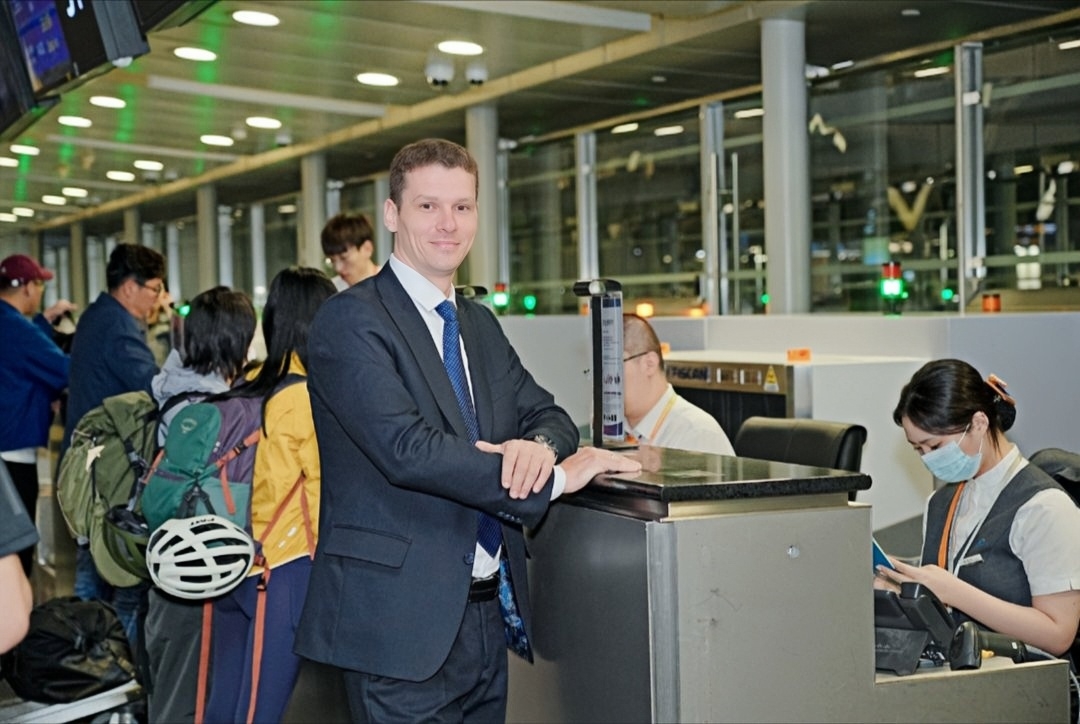
In the early morning, Italian media professional Eva Molaro stretches along with a group of early risers. At a shop in the airport, Igor Marchuk, representative of a Kazakh airline, pays deftly with his phone. Downstairs in a neighborhood courtyard, French entrepreneur Sua parks her bike and, smiling, answers a neighbor's greeting in Chinese: "Chi guo la (I've eaten)!"
The hashtags of "Very Chinese Time" and "Becoming Chinese" have recently gone viral on social media, inspiring foreigners to imitate everyday Chinese habits - such as drinking hot water, cooking a tomato-and-egg stir-fry, or even joining a square-dance troupe - with contagious relish. Beyond the online buzz, a growing number of people have, in recent years, come to China to work, live and settle long term. Rather than just sampling a fleeting "Chinese experience" they have come to embrace an authentic Chinese lifestyle through the rhythms and habits of everyday life.
Recently, the Global Times spoke with three foreign residents of Hainan, an island province in South China, who shared how they encountered China, deepened their understanding of it, and, in many ways, are "becoming Chinese."
A genuine Chinese experience
The hashtag "becoming Chinese" on overseas social media has not only showcased the idiosyncratic charm of Chinese culture and lifestyle, but also sparked fresh curiosity about this vast, eastern nation. For Molaro, Marchuk, Sua and many other expats living in China, that curiosity has long since grown into a fully immersive experience: they've been living, breathing an authentic Chinese way of life.
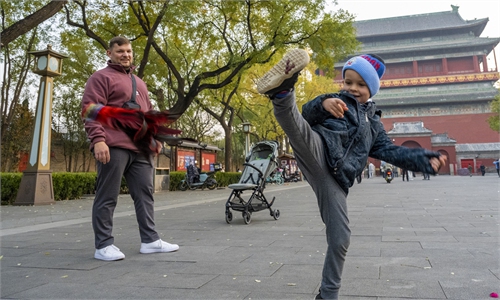
Molaro's favorite "China moments" are found in the simplest daily details: a cup of hot water and the rhythm of morning exercise. Now 40, the journalist has spent nearly two decades living across China, growing to appreciate simple comforts like hot water and traditional Chinese herbs.
Molaro has also embraced outdoor exercise, joining her Chinese neighbors in singing and dancing in public squares, and drawing inspiration from the vitality of Chinese seniors. "I definitely aspire to become like them in my old age, full of enthusiasm, engaged in the community and open to dialogue," she told the Global Times.
Marchuk's favorite "China moments" read like a compact history of mobile payments.
Arrived in 2008 as a student who paid in cash and marveled at almost everything, he now finds his daily life shaped by a tightly integrated digital ecosystem. "In China, many everyday activities - such as payments, transportation, and communication - are highly integrated into mobile applications," he said. "Now it has become a natural part of my daily life."
Looking back on their early days in China, Molaro and Marchuk recall a mixture of astonishment and affection.
When Molaro first arrived in 2004, one of the sights that surprised her most was seeing people going out on the streets, in shops and in diners wearing slippers and pajamas. "This was something I had never seen before," she said. "I thought it was peculiar at first, but also very liberating. And nowadays I see it as completely normal."
Meanwhile, Marchuk underwent a quiet "revolution" of his taste buds: confronted with a bewildering array of Chinese regional cuisines and unfamiliar ingredients, he felt disoriented at first, but time worked its magic. "Now Chinese cuisine is one of the things I enjoy the most about living in China."
"Overall, living in China has been a very interesting experience of learning and adapting," Marchuk told the Global Times. "Many things that seemed unusual at the beginning eventually became things I really appreciate about life here."

Connecting with people
For many, what leaves the deepest impression about life in China is not just modern convenience, but the warmth of genuine human connections. Over time, many expats learn to read the subtle, quiet logic underlying Chinese social interactions, forming lasting friendships through small everyday exchanges.
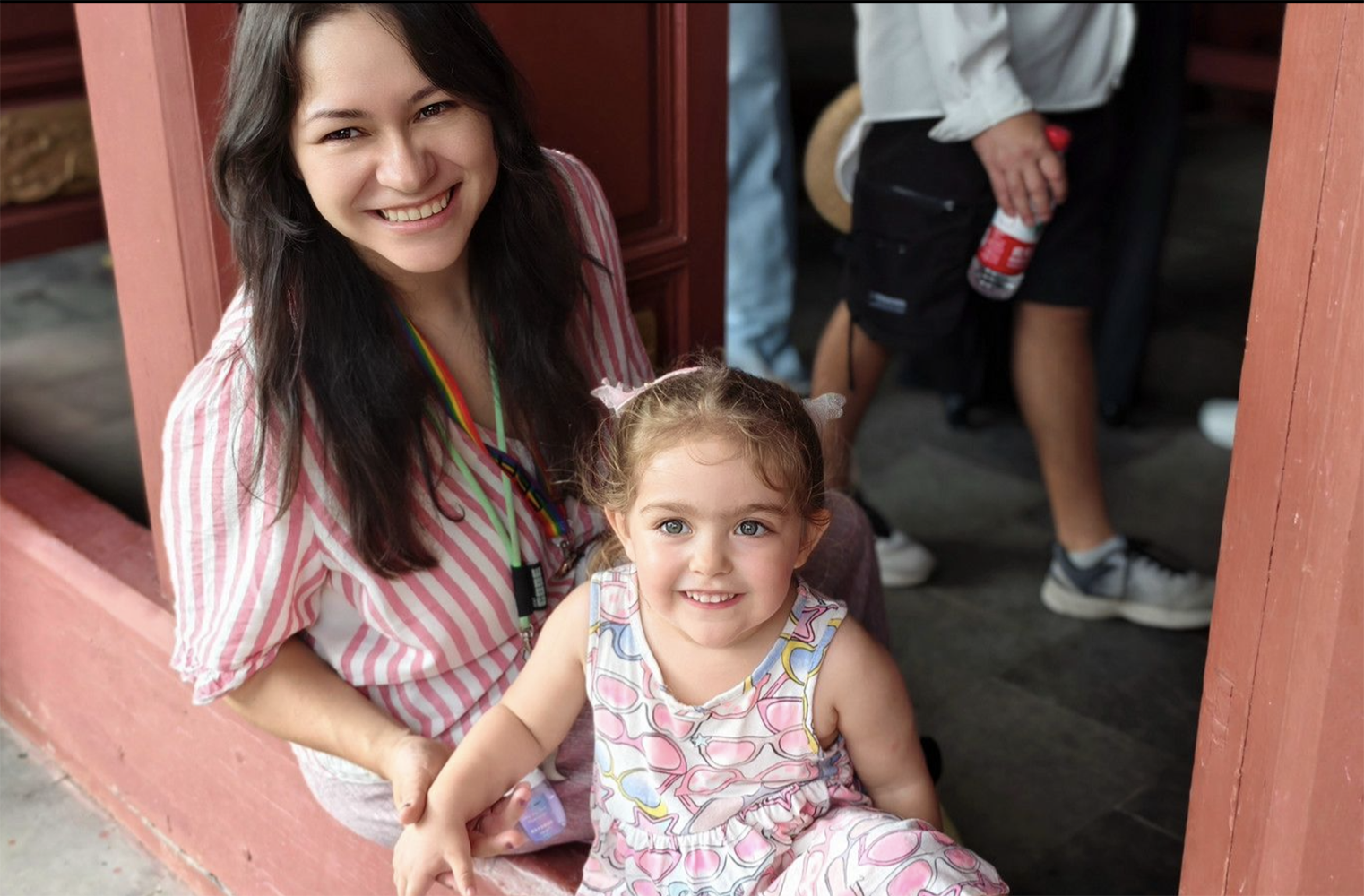
Sua, who has been in China for only a year, remembers a telling moment. One evening, as she was parking her bicycle, a neighbor greeted her with the familiar "Have you eaten" in both Chinese and English. Confused, Sua stood there and tried to recall what she'd eaten that afternoon. Only later, remembering what a Chinese friend had once told her, did the penny drop: "It's not really about food, it's about noticing someone." Sua started to realize that Chinese social cues are economical in words yet rich in meaning.
For Molaro, two decades in China have quietly rewritten her personality. "Living here has made me more outgoing," she said, crediting the generosity of neighbors and friends. "Seeing how they treated me and others has taught me a lot about relationships and about opening one's home and heart to others."
Marchuk sees this interpersonal wisdom reflected in the ubiquitous mental attitude of patience and consistency. Last year, his airline applied in China for a "Seventh Freedom of the Air" route, which allows foreign carriers to operate flights between two foreign countries without having to land in their home country. At first Marchuk was impatient, focused on pushing things forward quickly. His Chinese colleagues, however, reminded him of a Chinese proverb: "Taking time to sharpen the knife won't delay the woodcutter." Eventually, once every document was prepared thoroughly, the approval process ran more smoothly and efficiently than Marchuk had expected.
"Looking back, I now understand and appreciate this more cautious and steady approach," Marchuk told the Global Times. "You can't rush it - if you hurry, you spoil the taste" they say.
Beyond work, Marchuk has also been struck by everyday hospitality and a readiness to help.
"For example, when someone sees that a foreigner may have difficulty understanding something, Chinese people often try to help, even if there is a language barrier," he observed. "These small but meaningful details have left a strong impression on me and have made my experience of living and working in China both comfortable and rewarding."
A more open China
Behind these personal transformations lies a broader reality: a China that is opening its doors wider, and the shift is tangible - from high-level policy down to the smallest everyday gestures.
Molaro remembers a moment not long after she arrived in Hainan: she and some other foreigners were invited to a meeting with provincial officials, where they could ask questions directly to the heads of various departments. "This event not only made me feel welcome right away but also gave me the opportunity to learn about how to best plan and manage my life here," Molaro said.
That openness shows itself in the countless, carefully honed details of daily life. For Sua, who has been in China for only a year, those details have left a deep impression. "Payment apps that work, shops where someone will whip out a translation app effortlessly, menus with photos: every single one of these details have been a blessing," she shared.
China's opening and rapid development are drawing more and more foreign visitors, a shift felt firsthand by Marchuk. "From the perspective of my work in the aviation industry, in recent years I have observed a clearly growing interest from international travelers in visiting China," he told the Global Times. "As international travel gradually recovers and visa policies become more convenient, more tourists are considering China as a travel destination again."
While the growing interest leads more people to approach China, some are captivated by particular facets of the country, and decide not only to visit, but to stay.
For Marchuk, what stands out most is the speed of China's progress, especially in technology and infrastructure. Modern airports, high-speed rail networks and highly efficient urban transit systems, he said, "have greatly improved connectivity between cities and regions, and have also made travel more convenient for both domestic and international visitors."
Meanwhile, Molaro is drawn to China's cultural depth. She adores the long histories and archaeological treasures of cities like Xi'an and Beijing. "Visiting or living in these cities is like walking into a history book," she said.
What moved her most, though, was the spirit she encountered among the people and in particular, the broad social participation of Chinese women. She has seen women in managerial roles, serving in the armed forces and doing every kind of job, from bus drivers to CEOs, from construction workers to police officers. "During my first visit, I was left with a very positive impression and a sense of hope and expectation for China's future," said Molaro.
From online trends like "Very Chinese Time" and "Becoming Chinese," to the long queues snaking through arrival halls at entry ports, a more open, authentic and multi-dimensional China is increasingly being seen, understood and embraced by the world. For many expats, that connection begins with curiosity, deepens with the convenience of travel, and ultimately rests on the sincere connections people make with one another.
China recorded 30.08 million inbound visits by foreign nationals under visa-free policies in 2025, up 49.5 percent year on year, according to data from China's National Immigration Administration. For newcomers who want to experience a truly "Very Chinese Time," these foreign residents offer a few suggestions.
Marchuk encourages travelers to leave the megacities and explore China's diversity, and to learn at least a few words of Chinese. "Once you start learning the language, you begin to understand the country and its culture in a much deeper way," he explained. Molaro recommends visiting historical sites, taking part in historical reenactments, attending traditional festivals and performances, and experiencing China's intangible cultural heritage crafts and arts. "Getting in touch with Chinese culture first-hand is the best way to understand the history and culture and appreciate it in the context of our time."
Sua's advice is perhaps the simplest and the most memorable: "Share a meal. And let go of the concept of 'my plate.' That's it," she said. "Everything else will take care of itself."
Jiang Wei contributed to this story
In early 2026, the phrase "Very Chinese Time" went viral on global social media platforms. Content centered around China's everyday life has been widely viewed and discussed, bringing the Chinese experience into the international public sphere in an extremely down-to-earth way. However, this phenomenon goes beyond mere online popularity - it is unfolding amid the ongoing reshaping of the global order and the accumulation of anxiety in Western societies. A deeper transformation is emerging, as China's lifestyle, pop culture and technological practices are increasingly recognized, discussed, and used as references around the world.
This series uses "Very Chinese Time" as an observation lens to go beyond a single internet trend and systematically showcase how the Chinese experience is entering global everyday life. This is the fourth installment of the series.
Foreign tourists dressed in exquisite Hanfu parade along an old street in Xianyang, Northwest China's Shaanxi Province, on March 3, 2026. Photo: VCG
In the early morning, Italian media professional Eva Molaro stretches along with a group of early risers. At a shop in the airport, Igor Marchuk, representative of a Kazakh airline, pays deftly with his phone. Downstairs in a neighborhood courtyard, French entrepreneur Sua parks her bike and, smiling, answers a neighbor's greeting in Chinese: "Chi guo la (I've eaten)!"
The hashtags of "Very Chinese Time" and "Becoming Chinese" have recently gone viral on social media, inspiring foreigners to imitate everyday Chinese habits - such as drinking hot water, cooking a tomato-and-egg stir-fry, or even joining a square-dance troupe - with contagious relish. Beyond the online buzz, a growing number of people have, in recent years, come to China to work, live and settle long term. Rather than just sampling a fleeting "Chinese experience" they have come to embrace an authentic Chinese lifestyle through the rhythms and habits of everyday life.
Recently, the Global Times spoke with three foreign residents of Hainan, an island province in South China, who shared how they encountered China, deepened their understanding of it, and, in many ways, are "becoming Chinese."
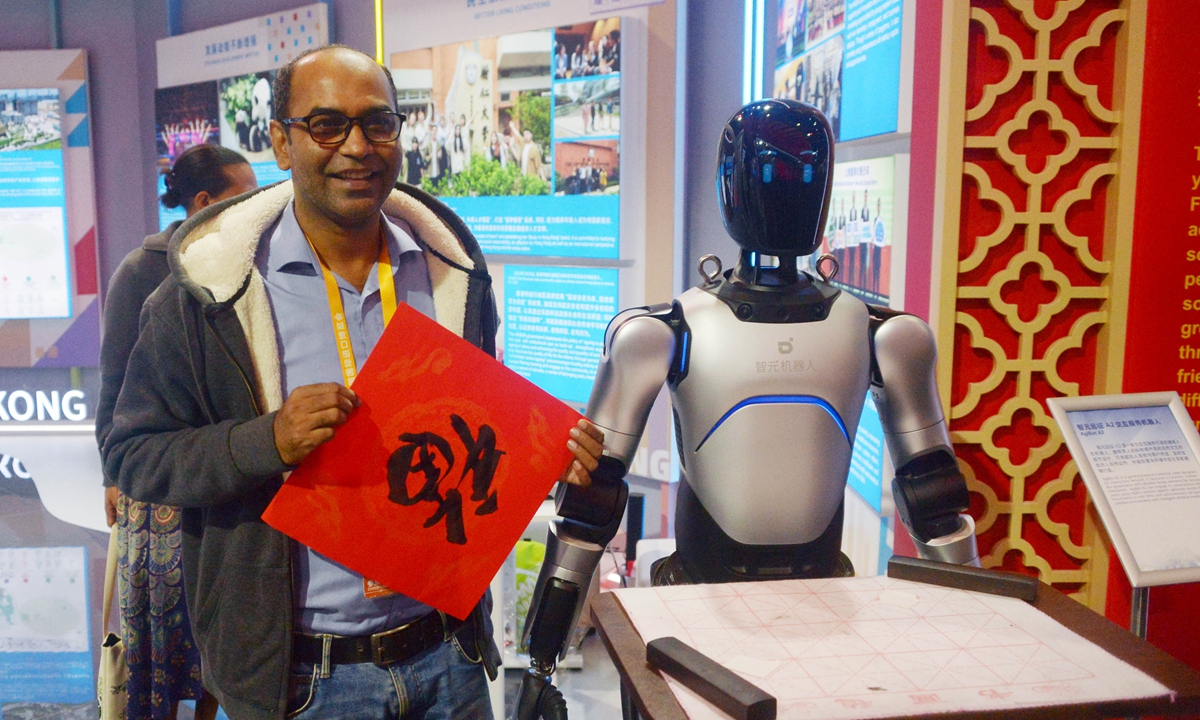
A foreign visitor experiences robot calligraphy during the 8th China International Import Expo in Shanghai on November 8, 2025. Photo: IC
A genuine Chinese experience
The hashtag "becoming Chinese" on overseas social media has not only showcased the idiosyncratic charm of Chinese culture and lifestyle, but also sparked fresh curiosity about this vast, eastern nation. For Molaro, Marchuk, Sua and many other expats living in China, that curiosity has long since grown into a fully immersive experience: they've been living, breathing an authentic Chinese way of life.
Molaro's favorite "China moments" are found in the simplest daily details: a cup of hot water and the rhythm of morning exercise. Now 40, the journalist has spent nearly two decades living across China, growing to appreciate simple comforts like hot water and traditional Chinese herbs.
Molaro has also embraced outdoor exercise, joining her Chinese neighbors in singing and dancing in public squares, and drawing inspiration from the vitality of Chinese seniors. "I definitely aspire to become like them in my old age, full of enthusiasm, engaged in the community and open to dialogue," she told the Global Times.
Marchuk's favorite "China moments" read like a compact history of mobile payments.
Arrived in 2008 as a student who paid in cash and marveled at almost everything, he now finds his daily life shaped by a tightly integrated digital ecosystem. "In China, many everyday activities - such as payments, transportation, and communication - are highly integrated into mobile applications," he said. "Now it has become a natural part of my daily life."
Looking back on their early days in China, Molaro and Marchuk recall a mixture of astonishment and affection.
When Molaro first arrived in 2004, one of the sights that surprised her most was seeing people going out on the streets, in shops and in diners wearing slippers and pajamas. "This was something I had never seen before," she said. "I thought it was peculiar at first, but also very liberating. And nowadays I see it as completely normal."
Meanwhile, Marchuk underwent a quiet "revolution" of his taste buds: confronted with a bewildering array of Chinese regional cuisines and unfamiliar ingredients, he felt disoriented at first, but time worked its magic. "Now Chinese cuisine is one of the things I enjoy the most about living in China."
"Overall, living in China has been a very interesting experience of learning and adapting," Marchuk told the Global Times. "Many things that seemed unusual at the beginning eventually became things I really appreciate about life here."
Eva Molaro
For many, what leaves the deepest impression about life in China is not just modern convenience, but the warmth of genuine human connections. Over time, many expats learn to read the subtle, quiet logic underlying Chinese social interactions, forming lasting friendships through small everyday exchanges.
Sua, who has been in China for only a year, remembers a telling moment. One evening, as she was parking her bicycle, a neighbor greeted her with the familiar "Have you eaten" in both Chinese and English. Confused, Sua stood there and tried to recall what she'd eaten that afternoon. Only later, remembering what a Chinese friend had once told her, did the penny drop: "It's not really about food, it's about noticing someone." Sua started to realize that Chinese social cues are economical in words yet rich in meaning.
For Molaro, two decades in China have quietly rewritten her personality. "Living here has made me more outgoing," she said, crediting the generosity of neighbors and friends. "Seeing how they treated me and others has taught me a lot about relationships and about opening one's home and heart to others."
Marchuk sees this interpersonal wisdom reflected in the ubiquitous mental attitude of patience and consistency. Last year, his airline applied in China for a "Seventh Freedom of the Air" route, which allows foreign carriers to operate flights between two foreign countries without having to land in their home country. At first Marchuk was impatient, focused on pushing things forward quickly. His Chinese colleagues, however, reminded him of a Chinese proverb: "Taking time to sharpen the knife won't delay the woodcutter." Eventually, once every document was prepared thoroughly, the approval process ran more smoothly and efficiently than Marchuk had expected.
"Looking back, I now understand and appreciate this more cautious and steady approach," Marchuk told the Global Times. "You can't rush it - if you hurry, you spoil the taste" they say.
Beyond work, Marchuk has also been struck by everyday hospitality and a readiness to help.
"For example, when someone sees that a foreigner may have difficulty understanding something, Chinese people often try to help, even if there is a language barrier," he observed. "These small but meaningful details have left a strong impression on me and have made my experience of living and working in China both comfortable and rewarding."
Igor Marchuk
A more open China
Behind these personal transformations lies a broader reality: a China that is opening its doors wider, and the shift is tangible - from high-level policy down to the smallest everyday gestures.
Molaro remembers a moment not long after she arrived in Hainan: she and some other foreigners were invited to a meeting with provincial officials, where they could ask questions directly to the heads of various departments. "This event not only made me feel welcome right away but also gave me the opportunity to learn about how to best plan and manage my life here," Molaro said.
That openness shows itself in the countless, carefully honed details of daily life. For Sua, who has been in China for only a year, those details have left a deep impression. "Payment apps that work, shops where someone will whip out a translation app effortlessly, menus with photos: every single one of these details have been a blessing," she shared.
China's opening and rapid development are drawing more and more foreign visitors, a shift felt firsthand by Marchuk. "From the perspective of my work in the aviation industry, in recent years I have observed a clearly growing interest from international travelers in visiting China," he told the Global Times. "As international travel gradually recovers and visa policies become more convenient, more tourists are considering China as a travel destination again."
Sua (left)
While the growing interest leads more people to approach China, some are captivated by particular facets of the country, and decide not only to visit, but to stay.
For Marchuk, what stands out most is the speed of China's progress, especially in technology and infrastructure. Modern airports, high-speed rail networks and highly efficient urban transit systems, he said, "have greatly improved connectivity between cities and regions, and have also made travel more convenient for both domestic and international visitors."
Meanwhile, Molaro is drawn to China's cultural depth. She adores the long histories and archaeological treasures of cities like Xi'an and Beijing. "Visiting or living in these cities is like walking into a history book," she said.
What moved her most, though, was the spirit she encountered among the people and in particular, the broad social participation of Chinese women. She has seen women in managerial roles, serving in the armed forces and doing every kind of job, from bus drivers to CEOs, from construction workers to police officers. "During my first visit, I was left with a very positive impression and a sense of hope and expectation for China's future," said Molaro.
From online trends like "Very Chinese Time" and "Becoming Chinese," to the long queues snaking through arrival halls at entry ports, a more open, authentic and multi-dimensional China is increasingly being seen, understood and embraced by the world. For many expats, that connection begins with curiosity, deepens with the convenience of travel, and ultimately rests on the sincere connections people make with one another.
China recorded 30.08 million inbound visits by foreign nationals under visa-free policies in 2025, up 49.5 percent year on year, according to data from China's National Immigration Administration. For newcomers who want to experience a truly "Very Chinese Time," these foreign residents offer a few suggestions.
Marchuk encourages travelers to leave the megacities and explore China's diversity, and to learn at least a few words of Chinese. "Once you start learning the language, you begin to understand the country and its culture in a much deeper way," he explained. Molaro recommends visiting historical sites, taking part in historical reenactments, attending traditional festivals and performances, and experiencing China's intangible cultural heritage crafts and arts. "Getting in touch with Chinese culture first-hand is the best way to understand the history and culture and appreciate it in the context of our time."
Sua's advice is perhaps the simplest and the most memorable: "Share a meal. And let go of the concept of 'my plate.' That's it," she said. "Everything else will take care of itself."
Jiang Wei contributed to this story
RELATED ARTICLES