UK wind power controversy reflects expansion of overstretching security concept in West
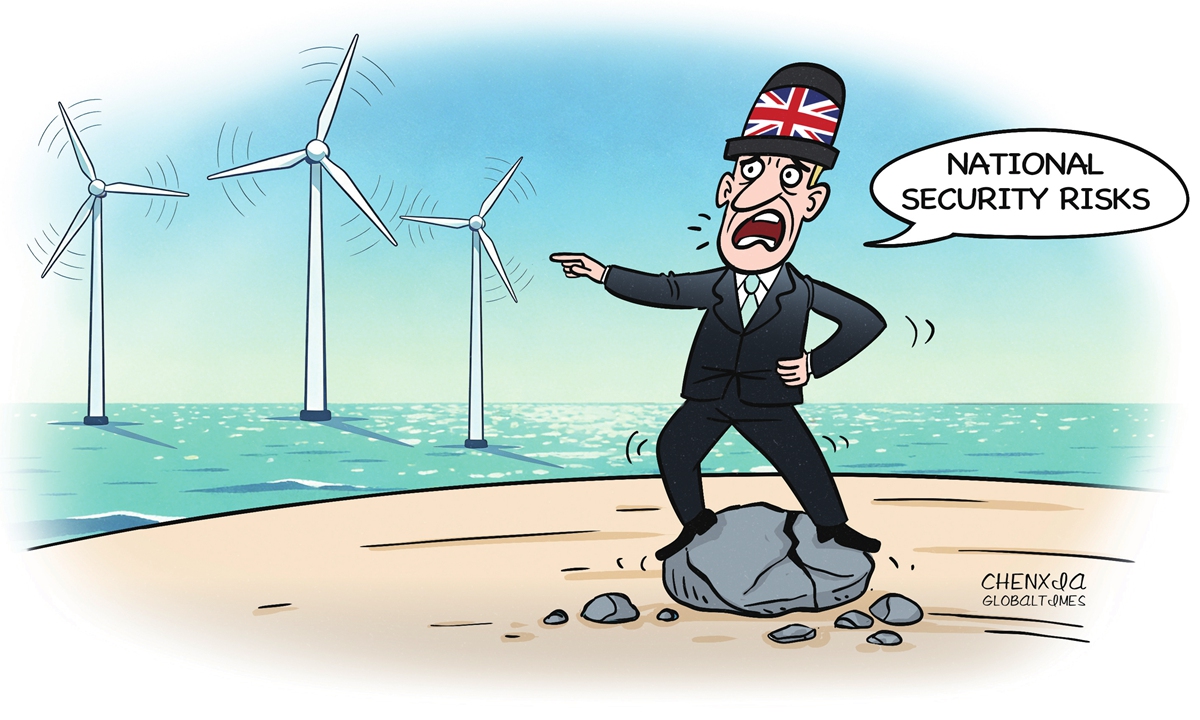
Illustration: Chen Xia/GT
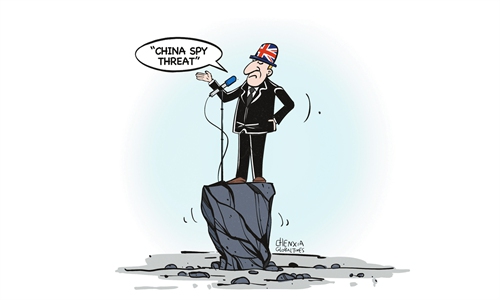
On Wednesday, the UK government rejected the use of Chinese turbine maker Ming Yang's products in the country's offshore wind projects on the grounds of so-called "national security risks," a move that could derail its planned investment and factory construction in Scotland. As security logic continues to squeeze market space, what is being eroded may not only be the fate of a single project, but also a country's long-standing reputation for openness and its development resilience."This decision clearly shows that the UK's tendency to overstretch the concept of security has expanded from traditional high-tech sectors such as telecommunications and semiconductors to basic energy infrastructure," Gao Jian, director of the Center for British Studies at Shanghai International Studies University, told the Global Times. "Under the framework of the National Security and Investment Act, the definition of supply chain security is becoming increasingly broad and unpredictable."
This move marks a serious departure from the UK government's stated position of strengthening economic and trade cooperation with China. In 2025, the two sides signed a Memorandum of Understanding for a UK-China Clean Energy Partnership, in which offshore wind was identified as a key area of cooperation. Mingyang also pledged to invest 1.5 billion pounds ($2 billion) in a Scottish factory. Yet, London ultimately chose to forgo these economic benefits.
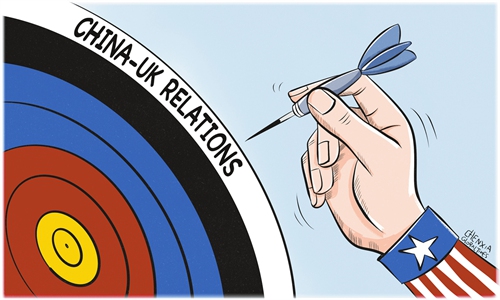
"This indicates that in today's UK political landscape, the weight of political risk avoidance has significantly outweighed that of economic growth and job creation," Gao said. He also noted that the US played a decisive role in exerting pressure on this decision. In mid-2025, Washington repeatedly warned London that the deployment of Chinese wind turbines in the North Sea could involve so-called "electronic surveillance" technologies. As a post-Brexit economy that relies heavily on the UK-US special relationship for security guarantees, the UK's decision can largely be seen as an economic sacrifice made to maintain alignment with US security strategy.
From an industrial perspective, the immediate consequences of this decision are already emerging. Previously, British industry - including energy companies - had repeatedly called for "embracing China" in the renewable sector, citing the cost and technological advantages of Chinese firms. Excluding Chinese companies will weaken market competition and slow the decline in the levelized cost of electricity for wind power. In addition, the Keir Starmer administration has pledged to achieve clean power by 2030. Rejecting a globally leading technology partner will directly threaten the timeline for achieving Net Zero targets.
This decision, made without clear supporting evidence, has not only left Scottish officials "regrettable," but also prompted disappointment among businesses. Mingyang's planned fully integrated manufacturing base in Scotland had been seen as a key driver of local industrial transformation. If the project stalls, it would not only mean the loss of investment and jobs, but also slow Scotland's transition from traditional oil and gas to green energy. Meanwhile, the inconsistency in policy is gradually eroding mutual trust between China and the UK. For businesses, it translates into higher uncertainty and increased risk premiums.
"It is hoped that the UK will provide a fair, just and non-discriminatory business and investment environment for companies of all countries, including Chinese companies," Chinese Foreign Ministry spokesperson Lin Jian said on Thursday in response to a question on the UK's decision to block plans by Ming Yang Smart Energy to build a wind turbine factory in Scotland. This position had also been emphasized by Chinese leaders during Starmer's visit to China in January, when he expressed support for welcoming Chinese investment. However, the Starmer administration's China policy appears to exhibit a clear pattern of "dual-track" operation and a gap between rhetoric and action.
"This contrast makes the UK's China policy appear highly opportunistic. It seeks to tap into China's market opportunities while building high walls around key technologies and infrastructure," Gao told the Global Times. This suggests that such statements may serve more as diplomatic gestures aimed at maintaining channels of dialogue, while in critical sectors, the UK still adheres to a Cold War-style defensive logic.
Looking back to mid-2025, supporters of Mingyang's plan were optimistic that the company's wind turbines would "enable the UK government's ambitions to build floating wind farms." Today, however, that vision is overshadowed by politicization and the overstretching of the concept of security. What turns the blades of offshore wind farms is not just the wind, but also the principle of win-win cooperation. The UK should return to rationality and pragmatism, allowing cooperation - rather than restriction - to become the true driving force behind wind power development.
RELATED ARTICLES