BASF launches largest investment project in China, ‘shifting from discretionary choice to strategic necessity’
By Chi Jingyi in Zhanjiang and in Beijing Published: Mar 26, 2026 11:00 PM

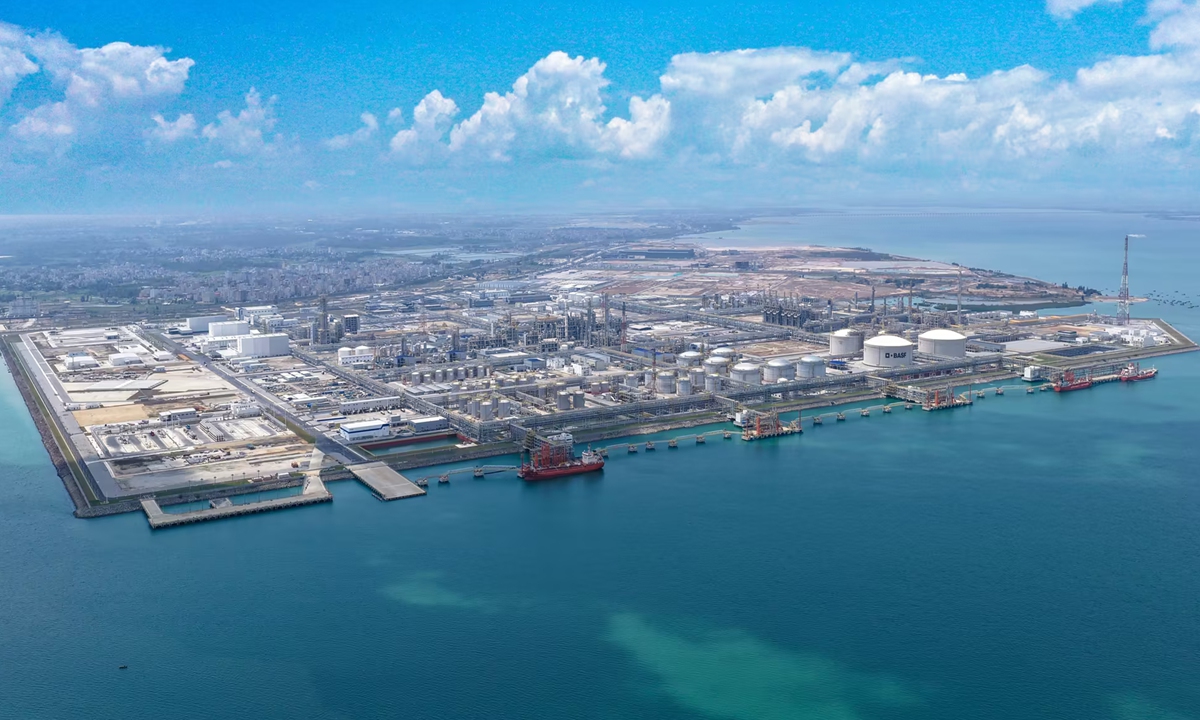
An aerial picture of BASF's Verbund site in Zhanjiang, South China's Guangdong Province Photo: Courtesy of BASF
German chemical giant BASF celebrated the official inauguration of its newly built, world-scale Verbund site in Zhanjiang, South China's Guangdong Province, on Thursday, the latest sign that multinationals are doubling down on investment in the Chinese market amid global economic headwinds.
The site, with a total investment of 8.7 billion euros ($10.04 billion) to date, is BASF's largest-ever investment and its third-largest site worldwide, according to the company.
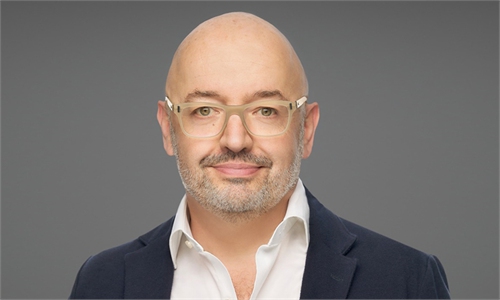
"Many people have asked us: why Zhanjiang, why now, why at this incredible scale? Our answer has always been clear — because we believe in this market, we believe in the drive of this region, in the talent of its people, and the power of partnership to achieve what no one can achieve alone. That belief has never wavered," Markus Kamieth, CEO of BASF, said at the ceremony attended by representatives from the government, customers, business partners, and employees.
In a video message, Chinese Minister of Commerce Wang Wentao said that the BASF Zhanjiang Verbund site, the biggest German-funded project in China, has received strong support from both governments since its 2019 launch. Its full commissioning marks a milestone in China-Germany economic cooperation, and it is set to boost BASF's growth, drive local industrial development, and serve as a new model for China-Germany and China-EU trade ties, Wang said.
The project was inaugurated amid a week of high-level forums in China that has attracted a slew of multinational executives, including the China Development Forum, a clear signal that the world's second-largest economy remains committed to opening-up and sharing development opportunities with the world.
Meanwhile, a number of multinational companies have recently announced plans to expand their investment in China.
On March 11, US pharmaceutical giant Eli Lilly unveiled plans to invest $3 billion over the next decade to scale up its supply chain and manufacturing capacity in China, including the local large-scale production of an innovative oral drug, according to the Xinhua News Agency.
Schneider Electric is on the verge of completing several major projects in China. The expansion of Schneider Electric's Beijing Yizhuang Industrial Park will boost both production capacity and the digital research and development capabilities of its China Software Center; its new industrial park in Wuxi is nearing completion; and the newly built Xiamen Industrial Park is scheduled to begin production in 2026.
On Wednesday, Federal Express Corp said that it had launched its first solar panel installation at the Shanghai Pudong International Airport, serving as an example of the company's ongoing efforts to advance sustainable logistics infrastructure, according to the information the company shared with the Global Times.
He Yongqian, a spokesperson for the Ministry of Commerce (MOFCOM), stated on Thursday that a wave of visits by global executives and business association representatives, including the US-China Business Council, has recently taken place in China. After candid and pragmatic meetings with the ministry, all parties praised China's economic resilience, innovation vitality, super-sized market advantages, and improving business environment — with many now viewing China as an innovation hub for global operations.
"For multinationals, investing in China has shifted from a discretionary choice to a strategic necessity," He said.
Data from the MOFCOM showed that 8,631 new foreign-invested firms were established across China in the first two months of the year, up 14 percent year-on-year. High-tech industries attracted 63.21 billion yuan ($9.16 billion) in foreign direct investment (FDI) during the period, up 20.4 percent year-on-year and accounting for 39.2 percent of the nation's total FDI.
China is one of the most dynamic consumer markets in the world. The 15th Five-Year Plan (2026-30) explicitly places high priority on expanding high-quality consumption, accelerating innovation, and strengthening domestic demand — priorities that closely align with PepsiCo's long-term strategic business focus, PepsiCo CEO Ramon Laguarta told the Global Times on Thursday.
"Our success in China is deeply intertwined with the vitality of the country's consumer economy. That is why we see ourselves as a long-term partner, investor, and contributor in China's next phase of development," Laguarta said.
RELATED ARTICLES