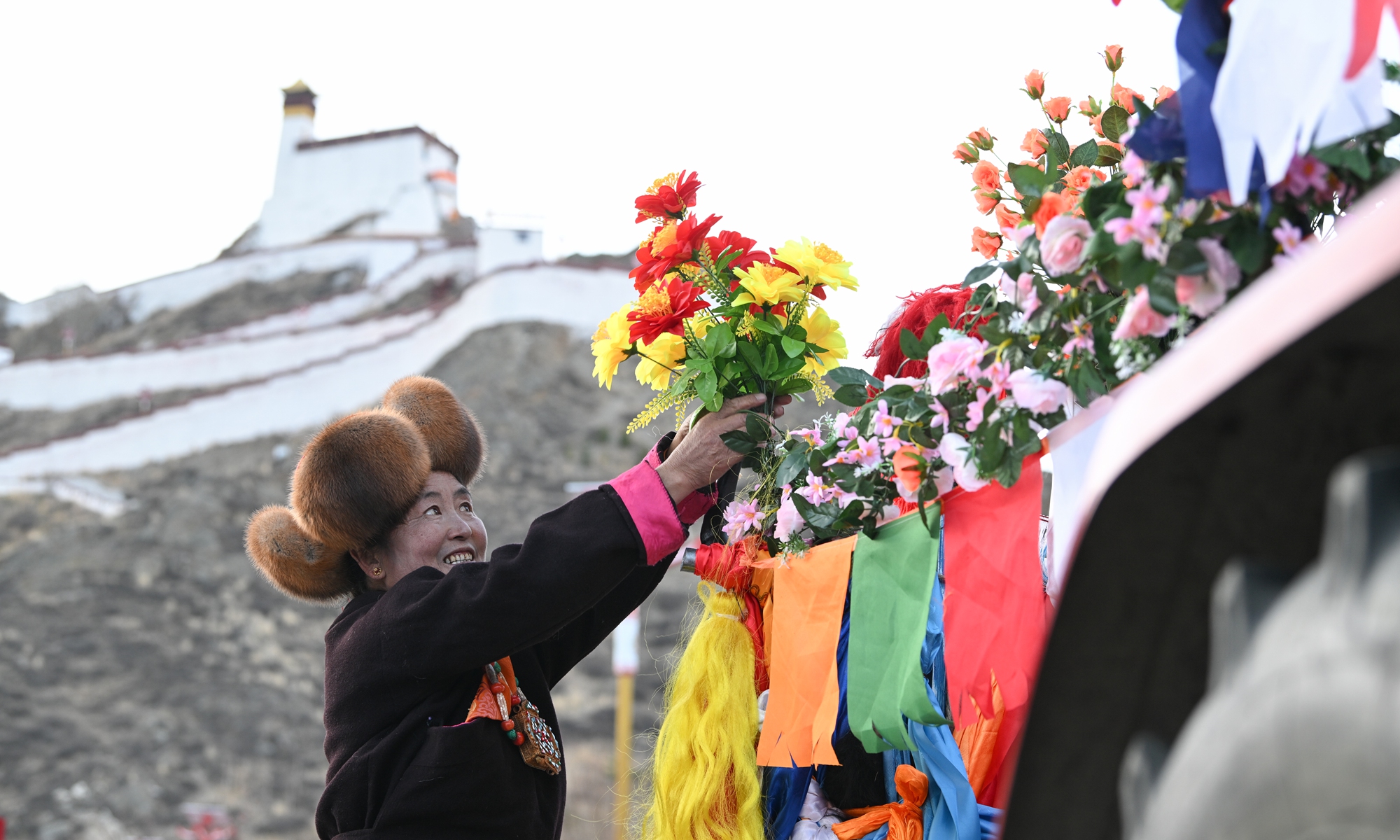
A villager dressed in traditional attire holds flowers as farmers mark the spring plowing and sow the first seeds of the season in Shannan, Southwest China's Xizang Autonomous Region, on March 16, 2026. Photos: IC
On the vast plateau of Southwest China's Xizang Autonomous Region, newly built highways cut across snow-capped mountains, 5G signals reach remote villages, and modern homes replace old dwellings once scattered across harsh terrain.These visible changes offer a vivid snapshot of transformation, one that now enters a new phase with the launch of the 15th Five-Year Plan (2026-30).
Saturday marks the 67th anniversary of the democratic reform that ended feudal serfdom in Xizang Autonomous Region. On March 28, 1959, people in Xizang launched the democratic reform, freeing one million serfs. In 2009, the regional legislature designated March 28 as the day to commemorate the emancipation of these serfs.
As the first year of the 15th Five-Year Plan (2026-30) unfolds, Xizang is accelerating its modernization drive across multiple fronts, including livelihoods, infrastructure, ecological protection and border governance.
According to the Outline of the 15th Five-Year Plan for National Economic and Social Development of the Xizang Autonomous Region, adopted at the fourth session of the 12th Xizang Autonomous Region People's Congress in February, the 2026-30 period marks a critical stage for laying a solid foundation toward the basic realization of socialist modernization and advancing the building of a new modern socialist Xizang.
The document also sets out macro and specific targets for the next five years, covering areas such as economic growth, industrial development, infrastructure, ecological protection and people's well-being. It underlines building a modern industrial system suited to plateau conditions, advancing new-type urbanization and rural revitalization, and improving public services including education, healthcare and social security.
The plan also highlights green and low-carbon development, aiming to strengthen ecological conservation and to ensure the environment remaining among the best nationwide. Meanwhile, greater efforts will be made to expand opening-up, enhance connectivity with South Asia, and improve border area development and governance. Together, these goals form a comprehensive blueprint for advancing modernization in Xizang.
During the 14th Five-Year Plan period (2021-25), Xizang achieved remarkable and comprehensive progress under the strong leadership of the Communist Party of China. Social stability was continuously strengthened, people were highly satisfied with the state of public security, and ethnic unity was improved. Economic development maintained solid growth, with GDP surpassing 300 billion yuan ($41.7 billion) and urban and rural residents enjoying steady income increases. Infrastructure including railways, highways, airports and digital networks improved significantly.
Over the past decades, Xizang has witnessed leapfrog development across key economic and social indicators. Its GDP surged from 327 million yuan in 1965 to 300 billion yuan in 2025, a 166-fold increase.
Zhu Weiqun, former head of the Ethnic and Religious Affairs Committee of the 12th National Committee of the Chinese People's Political Consultative Conference, told the Global Times on Tuesday that since the peaceful liberation of Xizang, and especially since the reform and opening-up, the region has shared in the country's overall development.
"People of this generation and the next will witness a bright future for Xizang," he said confidently.
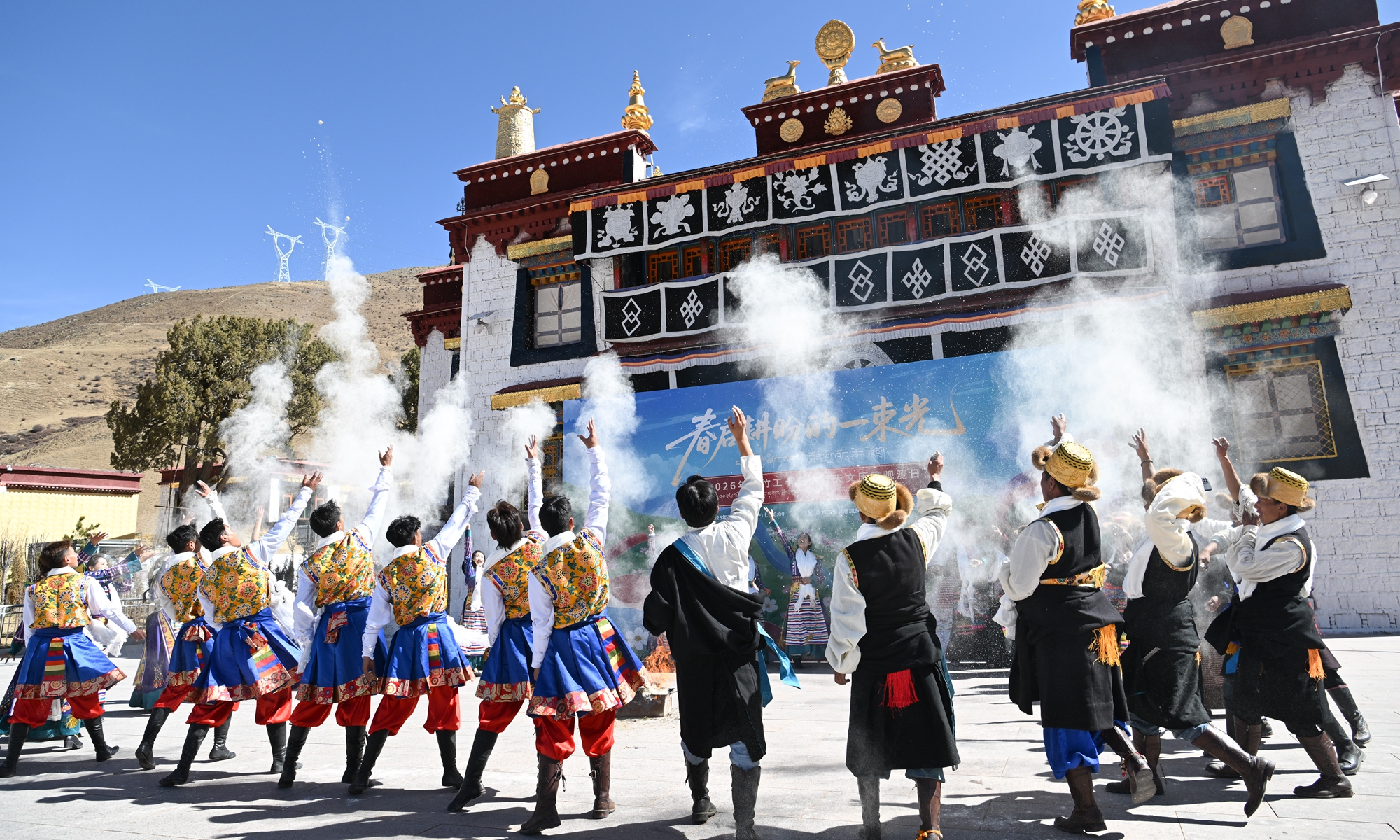
People dressed in festive costumes dance to celebrate the annual astronomical observation day at Dapu Astronomical Observatory, which has a history of over 300 years, in Maizhokunggar county, Xizang Autonomous Region, on March 9, 2026.

A primary school student reads aloud in class as she and her classmates attend a Tibetan language lesson at Lhasa Experimental Primary School in Lhasa, Xizang Autonomous Region, on March 2, 2026.

Dancers dressed in traditional costumes perform on stage during the recording of the 2026 Spring Festival and Tibetan New Year Gala in Lhasa, Xizang Autonomous Region, on February 4, 2026.
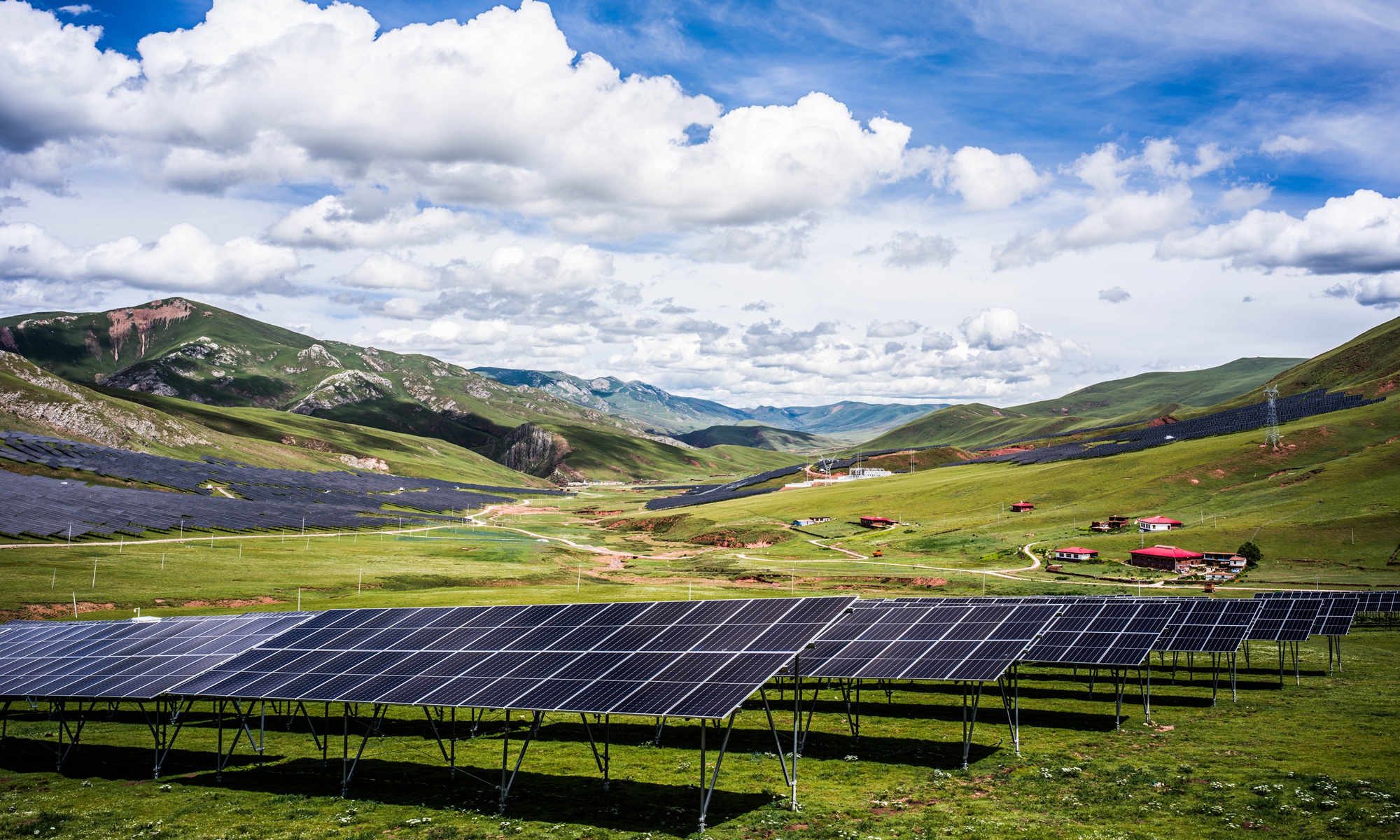
Solar panels reflect the blue sky at a photovoltaic power station in Dengqen county, Qamdo, Xizang Autonomous Region, on August 3, 2025.

A rider performs during a traditional equestrian show and horse-racing event celebrating the third day of the Tibetan New Year at a horse racing track in Lhasa, Xizang Autonomous Region, on March 2, 2026.