Japan’s statement of ‘deeply regrettable’ is a low-level smokescreen: Global Times editorial
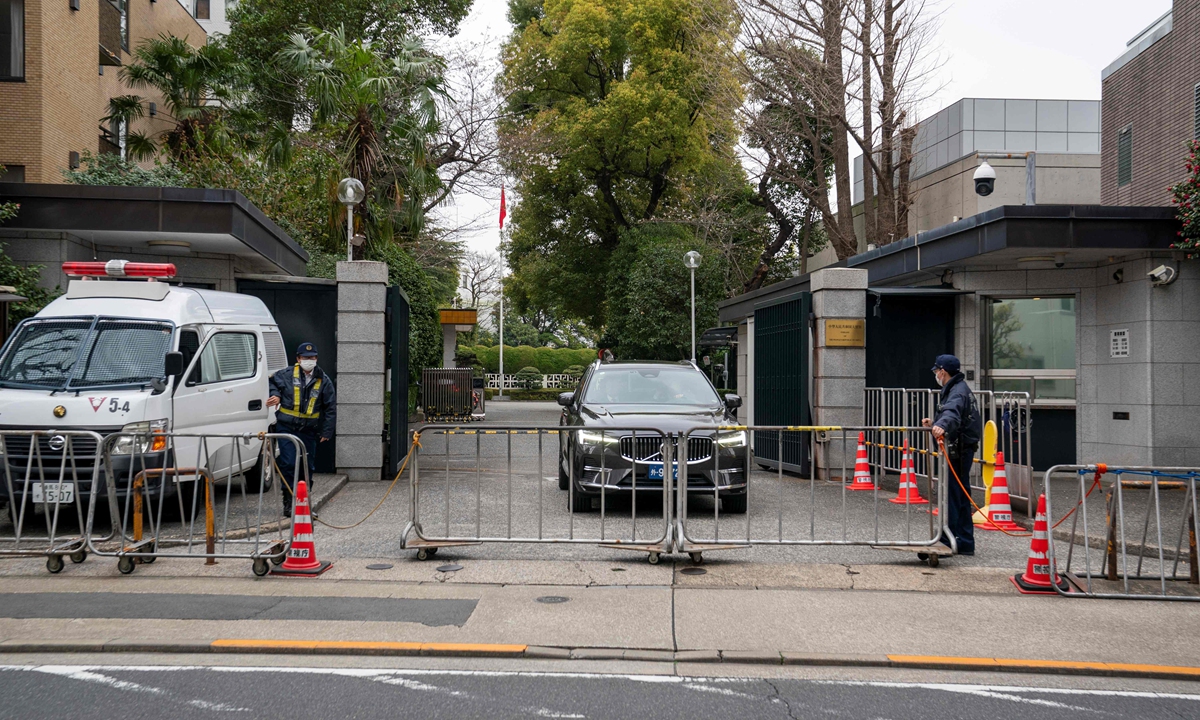
An entrance to the Chinese embassy is seen in Tokyo on March 25, 2026. A man was apprehended in Tokyo March 24 after he trespassed onto the grounds of the Chinese embassy in Tokyo. Photo: VCG
It has been several days since Japanese Self-Defense Force (SDF) officer Kodai Murata broke into the Chinese Embassy in Japan with a knife on March 24, but Japanese Prime Minister Sanae Takaichi remains silent. Furthermore, while the Japanese Ministry of Defense bears direct responsibility for the incident, Defense Minister Shinjiro Koizumi only issued a perfunctory statement on March 27, saying the incident is "deeply regrettable." It seems that Japan, from the prime minister to high-ranking officials, intends to use evasive crisis management to "drag" the matter out. This callous attitude of shirking responsibility and lacking reflection is causing further damage to China-Japan relations.
Japan is not without historical experience in handling security breaches against foreign diplomats. On March 24, 1964, then US ambassador to Japan Edwin Reischauer was stabbed in front of the US Embassy in Tokyo. The Japanese government at the time displayed an "extraordinarily" swift response: then prime minister Hayato Ikeda personally called the US president and apologized to the American people on behalf of the Japanese people via satellite broadcast; the following day, then chairperson of the National Public Safety Commission, Takashi Hayakawa, resigned. This incident directly led to the establishment of the Protection Section of Japan's Tokyo Metropolitan Police Department.
Today, a knife-wielding active-duty SDF officer entered a foreign embassy - a far more egregious act - yet Tokyo is resorting to various excuses and perfunctory responses. Are American diplomats enjoying special privileges in Japan, or is Japanese politics regressing significantly?
A formal apology is not an extra requirement, but the minimum obligation. It is well known that in diplomatic discourse, there is a fundamental difference between "regret" and "apology." Japan's frequent use of "regret" is an attempt to downgrade a diplomatic incident to a public order case, thereby evading responsibility for systemic dereliction of duty.
Two questions require clarification from Japan. First, from which direction will the investigation proceed? Is it an isolated incident of an SDF officer's emotional outburst, or a general situation that the SDF failed in their training, management, and control? The conclusions from these two investigations will be entirely different.
Second, does the Tokyo Metropolitan Police Department's filing of a case merely as a minor offense of "trespassing at the Chinese Embassy in Tokyo" mean that the serious nature of the incident - violating international law and endangering diplomatic security - will not be investigated? This opportunistic mentality of downplaying the seriousness of the incident only exposes Japan's negligence and indifference when faced with issues involving foreign sovereignty and diplomatic dignity, despite its constant claims of being a "rule-of-law state," and will further exacerbate Tokyo's predicament.
Special mention must be given to the Japanese media for their complicity.
For this absolutely headline-grabbing news event, major Japanese newspapers neither published it on their front pages nor conducted in-depth investigations, merely glossing over it with brief news reports in the corner. After China was the first to disclose this egregious incident, Japanese media reports either exaggerated the "strong Chinese reaction" or implied that the suspect "had no malicious intent" or "did not harbor any extremist ideologies." They skillfully reported the event like a case, skillfully personalized it, and skillfully dismantled what should have been a serious diplomatic incident requiring a thorough investigation into its roots, breaking it down into fragmented details to divert attention and absolve themselves of responsibility.
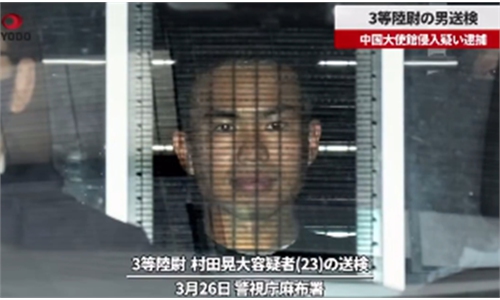
In particular, the photo of Kodai Murata giving a strange smile to the media during his transfer was widely circulated in Japanese media, yet received almost no condemnation. This stands in stark contrast to the tsunami of criticism that erupted in 2024 when an anchor referred to the "Senkaku Islands" as the "Diaoyu Islands" on an NHK program.
This approach by the Japanese media is both a manifestation and a result of Japan's distorted political environment, and in turn, fuels the deteriorating atmosphere toward China, creating a vicious cycle.
The real problem with the embassy break-in wasn't just one individual "Kodai Murata," but rather the environment that fostered him and his ilk. The lessons of Japan's modern history - militarism's overstepping of boundaries, the loss of control over its hardline sentiments, and the ultimate backlash against the nation - are not far removed from reality.
But now, Tokyo is once again employing its well-worn "accountability-avoidance tactics", attempting to downplay and sever ties, hoping time will erase responsibility and that its mistakes will be forgotten.
From revising history textbooks to downplaying its war crimes, to visiting the Yasukuni Shrine which enshrines Class-A war criminals from World War II, from denying the forced recruitment of "comfort women" and laborers, to delaying and denying reparations - all follow this pattern. Tokyo's collective silence on apologies today serves as a piercing alarm for regional peace.
Therefore, even though Japan may be determined to gloss over the matter, we must continue to demand an explanation from Takaichi, the highest-ranking official in the Japanese government. Demanding a formal and responsible accounting from Japan is not only crucial for protecting China's legitimate rights and interests, but also essential for maintaining regional peace and stability.
The world is watching how long Takaichi will remain silent.
RELATED ARTICLES