As mosquitoes arrive early, Chinese health authorities urge vigilance against dengue fever, chikungunya
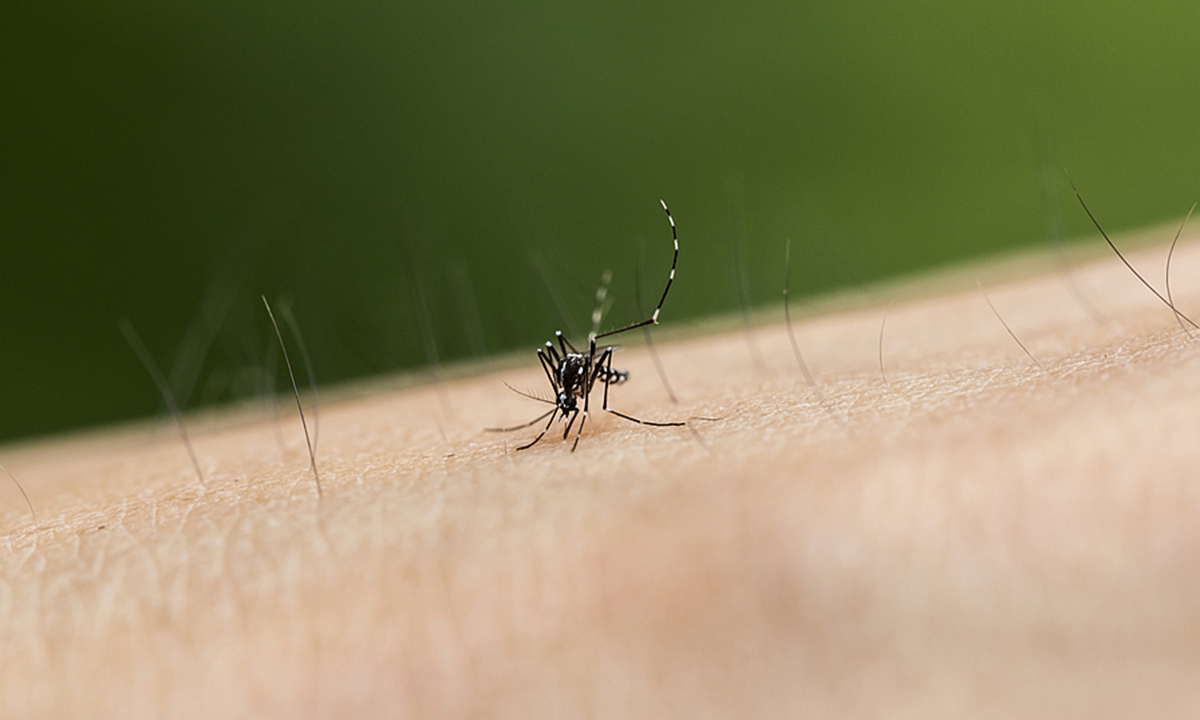
An Aedes mosquito known for its resilience and tendency to lay eggs on the inner walls of small water containers, hatching when rainwater accumulates Photo: VCG
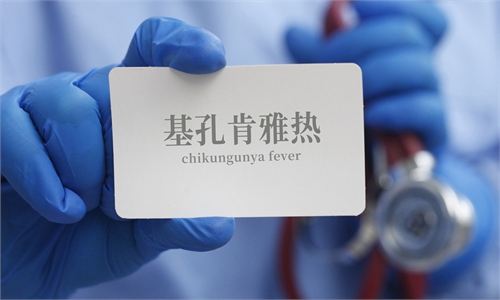
A surge in mosquito activity across China has triggered fresh public concern, as health authorities elevated the classification of two major mosquito-borne diseases — dengue fever and Chikungunya — to Class B notifiable infectious diseases starting on Wednesday, warning of heightened risks as the insects appear earlier than usual this year.
The announcement, issued by China's National Health Commission, came amid growing online discussion under the hashtag "mosquitoes may see an epic surge this year," with some netizens saying bites have already disrupted their sleep in as early as March.
"I've been bitten all night at home and still can't catch it—it's infuriating," said a netizen from Southwest China's Guangxi Zhuang Autonomous Region. "They're in Heilongjiang Province too—I killed one last night," another netizen added.
Residents in southern regions reported mosquito activity weeks ahead of the typical season, while those in northern areas also expressed surprise at their early arrival despite lingering cool weather, per Chengdu Daily.
In Beijing, a resident living on the 23rd floor told the Global Times that mosquitoes had already appeared in their home, even before temperatures had fully risen. Despite deploying repellents and coils, the insects were still found resting on window screens, and bites had caused fever symptoms in a child in the household.
An expert warns that an increase in mosquito populations directly raises the risk of disease transmission. According to health authorities, both dengue and chikungunya, diseases spread primarily by Aedes mosquitoes that cause fever, headache, and joint pain, pose growing public health challenges, particularly as global outbreaks continue and cross-border travel increases the likelihood of imported cases, per Xinhua.
So why have mosquitoes appeared earlier this year?
At a press conference held by the National Disease Control and Prevention Administration on March 26, Liu Qing, deputy director of the department of infectious disease prevention and control, noted that climate change, including rising temperatures and increased rainfall, has expanded mosquito breeding grounds in China and prolonged transmission seasons.
Further environmental factors are also playing a role. Ma Jun, director of the Institute of Public and Environmental Affairs, told the Global Times that the unusually warm winter spanning late 2025 to early 2026, coupled with extreme weather linked to a strong El Nino event in 2026, has accelerated mosquito maturation and shortened breeding cycles.
Regional health authorities have echoed these concerns. Guangdong's disease control agency warned that mosquito-borne diseases are endemic in neighboring regions and, combined with this year's mild winter, could enter an active phase earlier than usual.
China's Center for Disease Control and Prevention also issued an early-season reminder on March 27, urging the public to begin mosquito prevention efforts in spring. It highlighted common household mosquitoes like Culex mosquitoes, which thrive in warm indoor environments like basements and corridors, and Aedes mosquitoes, known for their resilience and tendency to lay eggs on the inner walls of small water containers, hatching when rainwater accumulates.
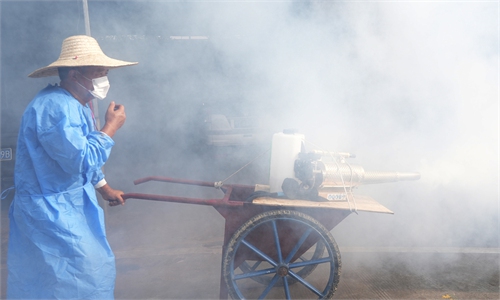
Authorities recommend a combination of measures, including eliminating stagnant water, cleaning hidden indoor corners, and adopting both physical barriers and chemical repellents, to curb mosquito breeding and reduce the risk of infection.
RELATED ARTICLES