What a pair of gloves tells about the executive power of China’s Five-Year Plans
By Published: Apr 01, 2026 11:03 PM
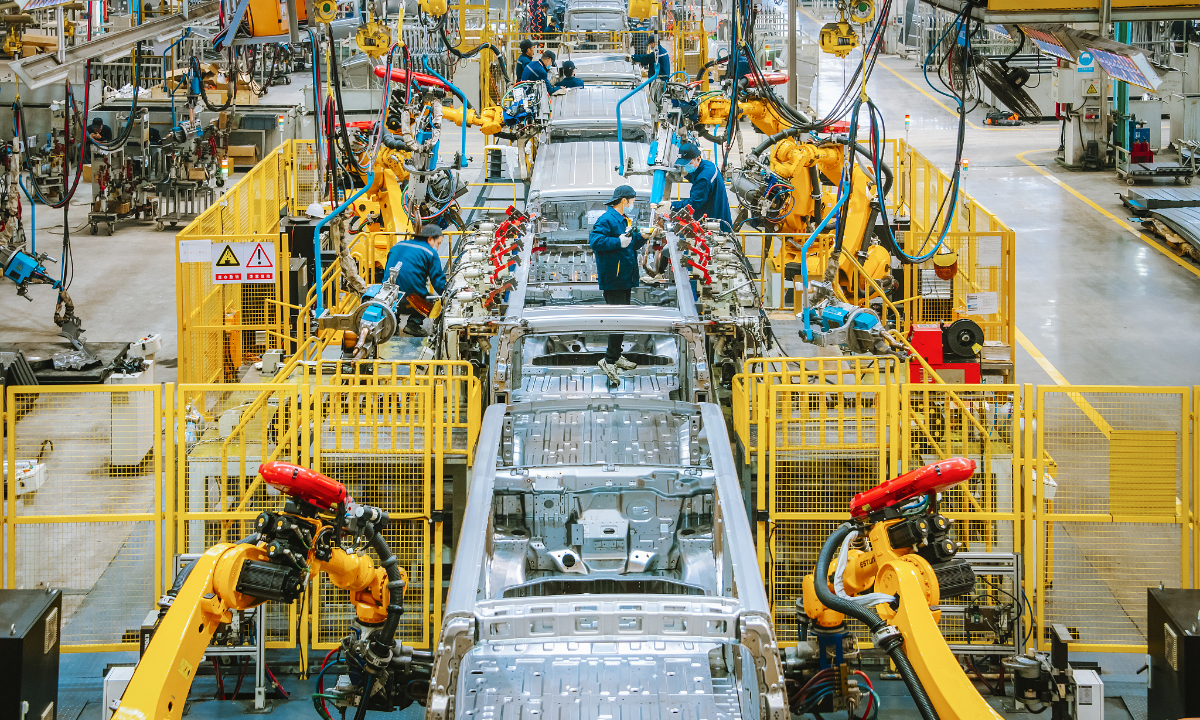
Photo:VCG
While I was at university, over 40 years ago, an American friend gifted me a rare American-made pen, a symbol of then-unreachable quality and craftsmanship.Decades later, I came across a video that brought that memory rushing back - except this time, the roles and the direction had been reversed entirely.
A mechanic bought Chinese tools online. He found work gloves inside - simple cotton ones. It reminded him of childhood extras: gum with baseball cards, topped-off oil at the garage and extra donuts.
Back then, American businesses genuinely cared about their relationships with customers. But today, American commerce has become precise and cold. The algorithm knows exactly what you want. It just doesn't care about you as a person anymore.
Then he turned to the tools themselves. He had come in with low expectations - at that price, he figured he'd get his money's worth even if they fell apart after one job. Instead, the quality surprised him. These were tools he could see himself using for years.
Watching that video, my first thought wasn't "wow, Chinese manufacturing has come a long way." It was something else entirely: This mechanic probably has no idea that, behind the quality of that wrench, there is a structural force at work - what China has been systematically building through its Five-Year Plans.
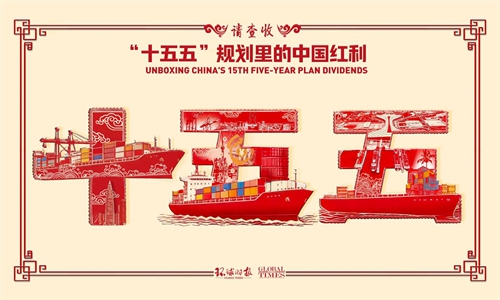
In March this year, China approved its 15th Five-Year Plan outline. The Atlantic Council, a Washington-based think tank, published an analysis laying out some key warnings for US policymakers, such as that China's biotechnology is ascendant, the pace of exports will continue and China aims to become the world's biggest R&D funder. These observations are all correct. But after reading the full piece, I felt something was missing - and it turned out to be one of the most important things of all.
What the Atlantic Council saw were moves on a strategic chessboard. What that pair of gloves represents is the element that actually decides the game.
China's strength lies not only in scientific research but even more so in production, which manifests itself not only in raw materials but also in finished products. The wrench in that American mechanic's hand is the end of that chain.
US Treasury Secretary Scott Bessent has said that the US will move "at warp speed over the next one to two years" to reduce its dependence on Chinese rare earths.
I don't doubt the ambition. He may not fully appreciate that what needs to be escaped is no longer just the minerals. By the time China has turned minerals into tools, tools into quality, quality into trust and trust into a pair of gloves that makes an American blue-collar worker feel genuinely seen, decoupling at the mineral level is nowhere near enough.
There is a logic here that I think most Western observers consistently miss: The real battlefield of China's manufacturing upgrade is not in the laboratory or in policy documents. It is in the everyday experience of ordinary consumers around the world. The real power of China's Five-Year Plan lies not in its grand narrative but in its capacity for execution. It translates national strategy into instructions on the factory floor, and then translates what comes off that factory floor into something that consumers on the other side of the world can feel in their hands.
That capacity for translation - from policy to product, from strategy to sensation - is the core competitive advantage that four decades of Chinese manufacturing have actually built. So, when we ask how the US should read China's new Five-Year Plan, my answer is this: Don't just watch the show of hands in the Great Hall of the People, and don't just scan the keyword lists in strategy documents. Look at the gloves. Listen to what that American mechanic had to say. The real executive power of the Five-Year Plan lies in the small, unannounced gifts tucked into boxes in one of China's countless factories, every single day.
The author is a senior editor with the People's Daily and currently a senior fellow with the Chongyang Institute for Financial Studies at Renmin University of China. dinggang@globaltimes.com.cn. Follow him on X @dinggangchina
RELATED ARTICLES