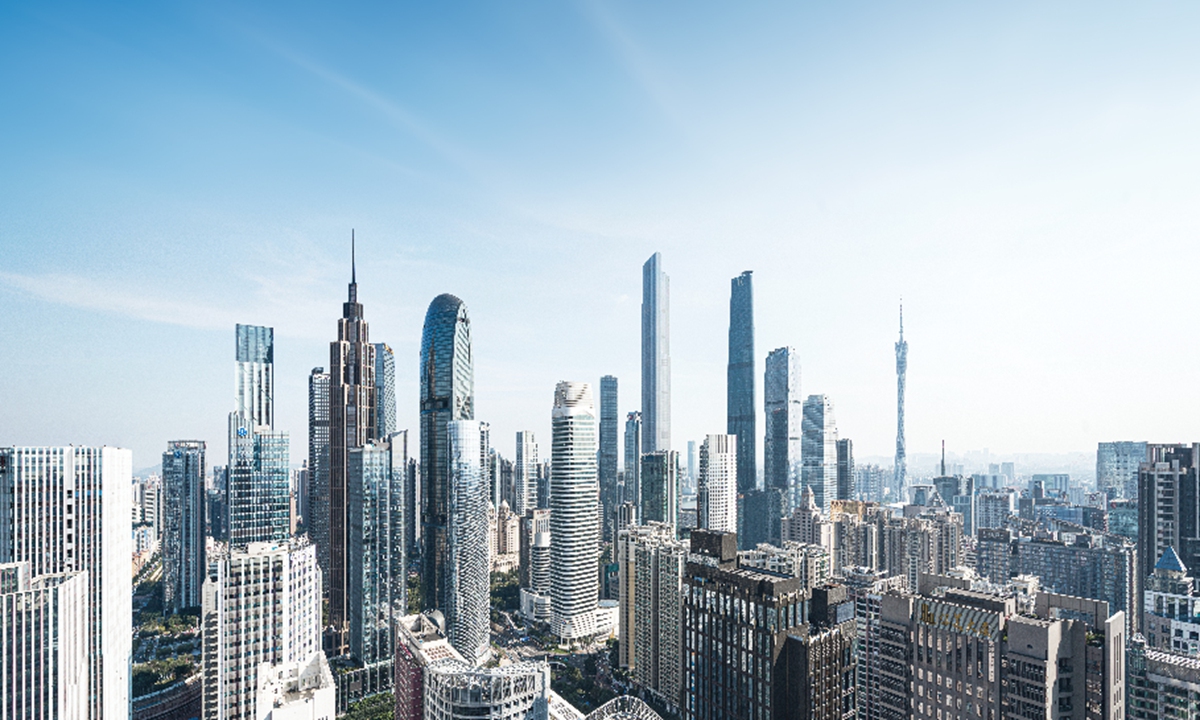
A view of the skyline of Guangzhou, South China's Guangdong Province Photo: VCG
Editor's Note:The 2025 Understanding China Conference held in Guangzhou, capital of South China's Guangdong Province, concluded on Tuesday. During the conference, former Singaporean foreign minister George Yeo (Yeo) shared his insights on China's five-year plans, global initiatives, the current tension between China and Japan, and the future dynamic of China-US ties, with Global Times (GT) reporter Li Aixin in an exclusive interview.
GT: The conference this year focuses on China's 15th Five-Year Plan (2026-30). When discussing the 14th Five-Year Plan (2021-25) previously, you emphasized that its key idea was "strategic robustness." Now that the proposals for the 15th Five-Year Plan have been released, what do you see as its key idea?
Yeo: The main point in the 15th Five-Year Plan is that technology is the most important productive force. But new technologies also introduce new challenges. There will be inequality. Some people will move ahead, while others will lag behind. So, in addition to the attention on technology, there's almost an equal emphasis on ensuring social cohesion amid these changes. These two main points are fully articulated in the document.
The planning requires elaborate consultation because it's very difficult to know Chinese conditions in the different corners. When I was younger, I was one of the advisers to former chief executive of the Hong Kong Special Administrative Region, Leung Chun-ying. I observed how Hong Kong was consulted at every stage of the process. There was a lot of negotiation. Every region in China and every town wanted to make sure that their interests were represented.
It's a way by which the whole country is brought together and a common focus established. It's not the plan itself, but the process of developing the plan that is important - not only as an indication of where China is headed, but also in terms of how it will be implemented. Without consultation, implementation becomes very difficult; it becomes something imposed on people. But since they were part of the planning process, implementation becomes easier.
You need both democracy and leadership. If every region and every province thinks only of itself, then the country as a whole will lose its unity. Therefore, there has to be a process by which the democratic consultation is widespread, yet concentrated, so that there is an overall coherence.
GT: Another major theme of the conference is the China-proposed Global Governance Initiative (GGI). In your opinion, what is the GGI really about?
Yeo: China has become so big. It's already the biggest economy in the world in real terms. Everyone is feeling the impact of China's growth and development, and this will become even greater in the future. Not surprisingly, there are not only opportunities, but also misunderstandings and problems. Take electric cars. China has made remarkable advances in electric vehicles, but this has created great challenges for car manufacturers in Europe, Japan, South Korea and the US.
The GGI is China's way of telling the world that we are all interconnected; what I do affects you, and what you do affects me. It is about taking others' needs into account, including creating conditions for win-win cooperation. That's very important for peace and harmony in the world.
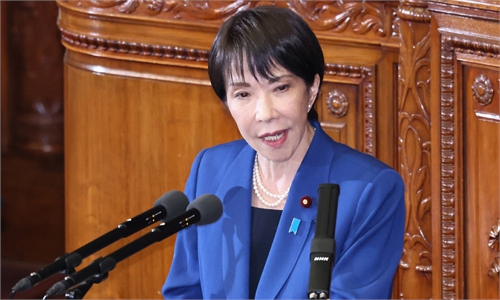
GT: Let's talk about the ongoing diplomatic tension between China and Japan regarding the Taiwan question. What was your first reaction when you heard Japanese Prime Minister Sanae Takaichi's remarks implying the possibility of armed intervention in the Taiwan Straits?
Yeo: My initial reaction was that a new prime minister was being careless in the way she chose her words, because the words she used were the words Japan used to justify the invasion of China in 1931. Maybe it could be deliberate. Because if you use these words, China is bound to react. Then the Japanese become a bit more nationalistic, they'll agree to spending more money on military equipment. Maybe it will improve her popularity in Japan.
And it would depend on how much the Americans support it. The Japanese know that without American backing, they cannot successfully pursue a course of action. There are over 50,000 American troops in Japan, and the US provides a nuclear umbrella, so Japan cannot do anything fundamental without the Americans at least acquiescing to it.
So when US President Trump called Prime Minister Takaichi to lower the temperature, it was clear that there was no support. However, it's possible that lower down the system, there were Americans who encouraged the Japanese to take a hard position, because the US is not unitary. Things can happen in the American system without the president necessarily being aware.
But in this case, there is clear high-level attention indicating that the US doesn't support her remarks. Japan should only act if the US wants it to act. But if Japan acts on its own, disregarding American interests, the Americans will put a stop to it.
The Japanese prime minister will have to climb down, but she will lose face, and she will lose support. China cannot take it lightly, because when you say something affecting Taiwan also affects Japan, it is a position not taken by any other country. You are, in fact, making the defense of Taiwan the defense of Japan.
Currently, she's still a little reluctant to affirm the positions made by the agreements between Japan and China, which form the basis for their relations, so this tension will continue until there is greater clarity. I don't see China accepting that what she has said recently is sufficient to overcome the severity of what she said in parliament.
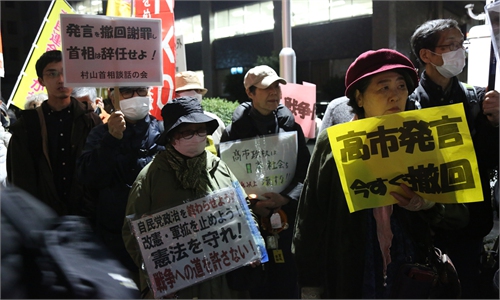
What she said in parliament was very serious. And therefore, I'm not surprised at all that China has taken a very firm position. If I were in the Chinese government, I would want a much clearer statement. But in Japanese culture, even among themselves, they are always ambiguous.
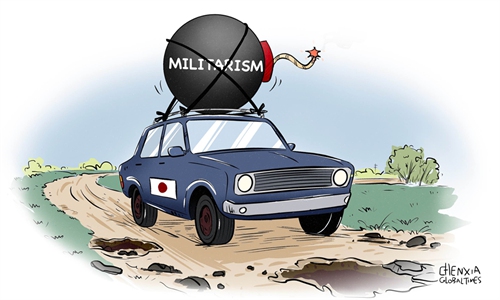
GT: Japan is not only making erroneous statements; its actual actions are also causing concern. For some time, we have seen attempts to reinterpret the pacifist constitution, lift the ban on collective self-defense, revise the "Three Non-Nuclear Principles," and deploy missiles on Yonaguni Island near the island of Taiwan. From the ASEAN perspective, do these developments risk fueling concerns about a revival of militaristic tendencies in Japan?
Yeo: For Singapore, there are still strong emotions about what the Japanese did during the occupation of Singapore. Many of us still remember relatives who were killed or tortured during that period, so the thought of Japan re-militarizing is viewed with great discomfort in many parts of Southeast Asia.
GT: How do you foresee the prospect of stability between China and the US?
Yeo: There is a kind of balance and stability between China and the US. I believe there will be stability for the rest of his term, as President Trump needs stability for the midterm elections and for Chinese transactions.
Beyond that, when there is a new US president and a new administration - whether Republican or Democratic - China will likely be stronger than it is today. While there could still be tension, there's no way for the Americans to get around rare earths, especially the heavy rare earths, for the next maybe eight to 10 years.
GT: Talking about the future, is it possible for the US to become a major power that does not see its security through the lens of global primacy?
Yeo: The greatest uncertainty in the world today is what's happening within the US itself. President Trump is pushing "Make America Great Again." Why "Make America Great Again"? Because America is no longer great; therefore, it must recover.
There are deep divisions in American society. Americans sometimes treat each other as enemies, not as one people. Can they recover? Can they find a way to reconcile, compromise and recover their original virtues and strength? We don't know.
This is American history in the making. If they succeed in reviving themselves through a new consensus, then the US can become strong and powerful again.
They went through a terrible civil war - it was a horrible war. They recovered. They became the strongest country on Earth. In the 1960s and 1970s, during the Vietnam War, there were riots on campuses. Young people were so angry. People thought it was the end of the US. Yet, they recovered.
I see one scenario where the US declines and another where it recovers. But recovery will not happen overnight. It will take at least 10, 15 or even 20 years. You've got to rebuild families, reintroduce a work ethic, solve the drug problem, get the public finances right, be more realistic in your foreign policy - to accept that others cannot be dominated in the same way the US was able to in the past.
Recovering manufacturing won't be easy. The US has a powerful navy, but how long can this be sustained when 80 percent of new shipping comes from China? They even have problems with maintenance. There are many things they need to address, and it will take time.
RELATED ARTICLES