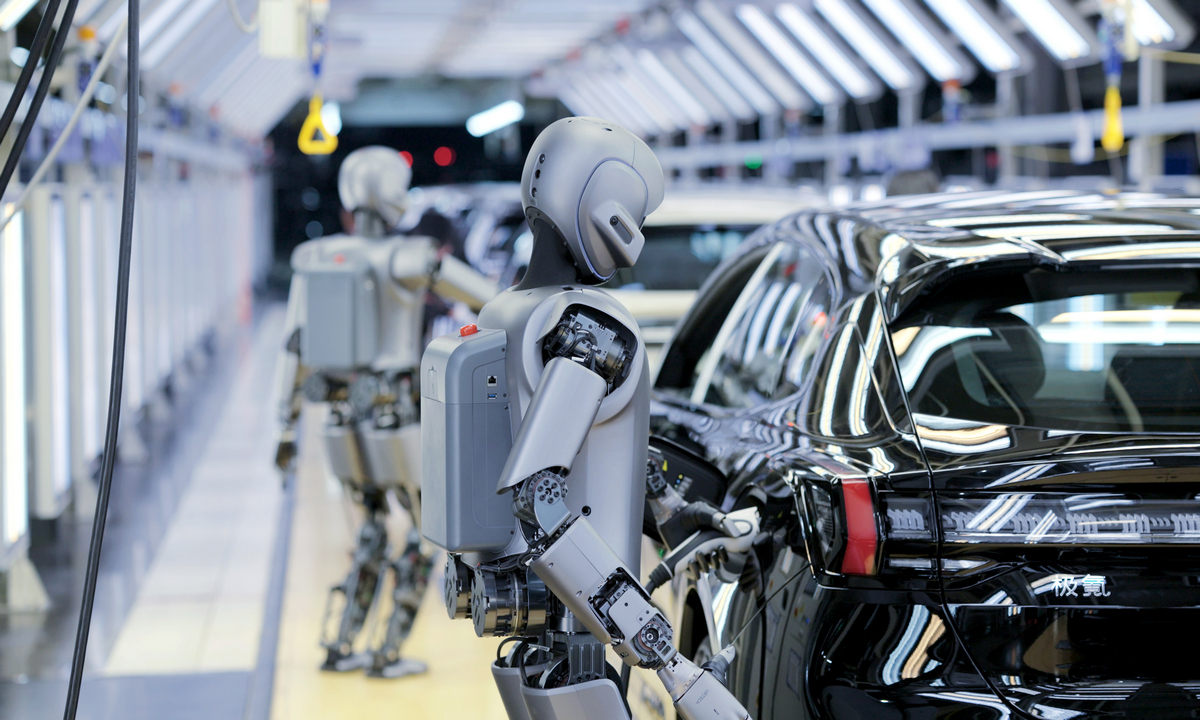
Dozens of UBTECH industrial humanoid robots carry out training tasks at a smart factory in the Qianwan New Area in Ningbo, East China's Zhejiang Province, on March 1, 2025. Photo: VCG
Multiple Chinese robotics firms have disclosed their financial results for 2025, showing strong revenue growth driven by demand for embodied intelligent humanoid robots, though some see continuous losses amid heavy investment in research and development (R&D). Industry analysts said on Thursday that enhanced intelligent level and industrial application will emerge as key breakthroughs for 2026.
In 2025, Shenzhen Dobot Corp recorded a revenue of 492 million yuan ($71.59 million), representing a year-on-year increase of 31.7 percent. The company reported a net loss of 84 million yuan, narrowing by 11.9 percent year-on-year, while its R&D investment surged by 59.7 percent year-on-year, according to the company's announcement, which was released on the official website of Hong Kong Exchanges and Clearing Limited (HKEX).
The company highlighted an important step from technology verification to commercialization in the field of embodied AI last year, reaching three major milestones of "building a full-scenario product matrix," "technological breakthroughs and mass production delivery" and "deepening ecological cooperation."
The year 2025 marks a pivotal turning point for the humanoid robot industry, transitioning from "technical showboating" to "value realization," and is widely regarded by the industry as the inaugural year for humanoid robots' entry into industrial manufacturing scenarios, humanoid robot developer UBTECH Robotics Corp said in the company's filing with the HKEX.
UBTECH announced that its revenue increased by 53.3 percent to exceed 2 billion yuan last year. Notably, its revenue from full-size embodied intelligent humanoid robot products and services grew rapidly by approximately 2,203.7 percent year-on-year to 820.6 million yuan.
"It is a notable characteristic of innovation enterprises in their early stage to post rapid revenue growth, with some witnessing losses along with high proportion of R&D investment. The industry is entering a period of testing self-sustaining capability," Liu Gang, chief economist at the Chinese Institute of New Generation Artificial Intelligence Development Strategies, told the Global Times on Thursday.
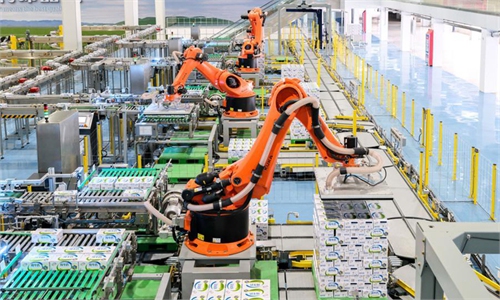
Estun Automation Co, a leading industrial robot maker based in Nanjing, capital of East China's Jiangsu Province, posted revenue of around 4.89 billion yuan in 2025, representing an increase of approximately 21.93 percent year-on-year. Notably, the company's profit attributable to equity shareholders amounted to 41.34 million yuan, representing a turnaround from loss to profit as compared with 2024, according to the company's financial report.
"Looking ahead, 2026 is widely regarded by the industry as the inaugural year of large-scale implementation, witnessing explosive growth in global shipment volume. However, the sector now faces the critical leap from 'usable' to 'user-friendly' - a transition essential for true commercial viability," Chen Jing, a vice president of the Technology and Strategy Research Institute, told the Global Times on Thursday.
During the annual meeting of Humanoid Robots and Embodied Intelligence Standardization held in Beijing in February, the country's first national standard system covering the entire industrial chain and life-cycle of humanoid robots and embodied artificial intelligence was released, showing that the industry is entering into a new phase of standard development, the Xinhua News Agency reported.
China has intensified efforts to foster future industries such as embodied AI, as outlined in recommendations for formulating the 15th Five-Year Plan (2026-2030). The goal is to cultivate new economic growth engines through technological innovation and market exploration, according to Xinhua.
Humanoid robots are now rapidly moving beyond eye-catching demonstrations toward real-world utility, Liu said, noting that enhanced intelligent level and industrial applications are expected to become new breakthrough points for the robotics industry this year.
Data backs up the momentum. In November 2025, the National Development and Reform Commission, the country's top economic planner, said that China is now home to more than 150 humanoid robot companies, and the sector is expanding at an annual rate of over 50 percent, with the market scale expected to reach 100 billion yuan by 2030.
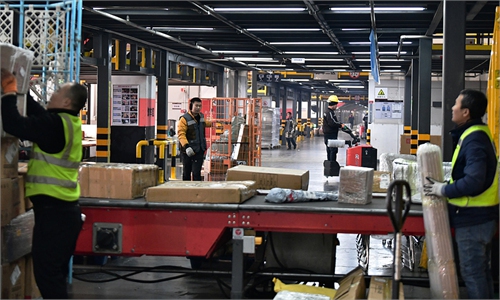
While the industry is at a critical stage of technological breakthroughs, the application scenarios are rapidly expanding, Chen said. Three types of application scenarios are expected to achieve 10,000-unit-scale application in 2026, including automotive manufacturing, logistics and warehousing, and 3C electronics/flexible manufacturing, the analyst said, noting that some challenges need to be overcome, such as bottlenecks in domestic replacements of core components.
RELATED ARTICLES