OPEC+ to hike oil output; move sends ‘positive’ signal, but impact might be ‘nominal’: Chinese analysts
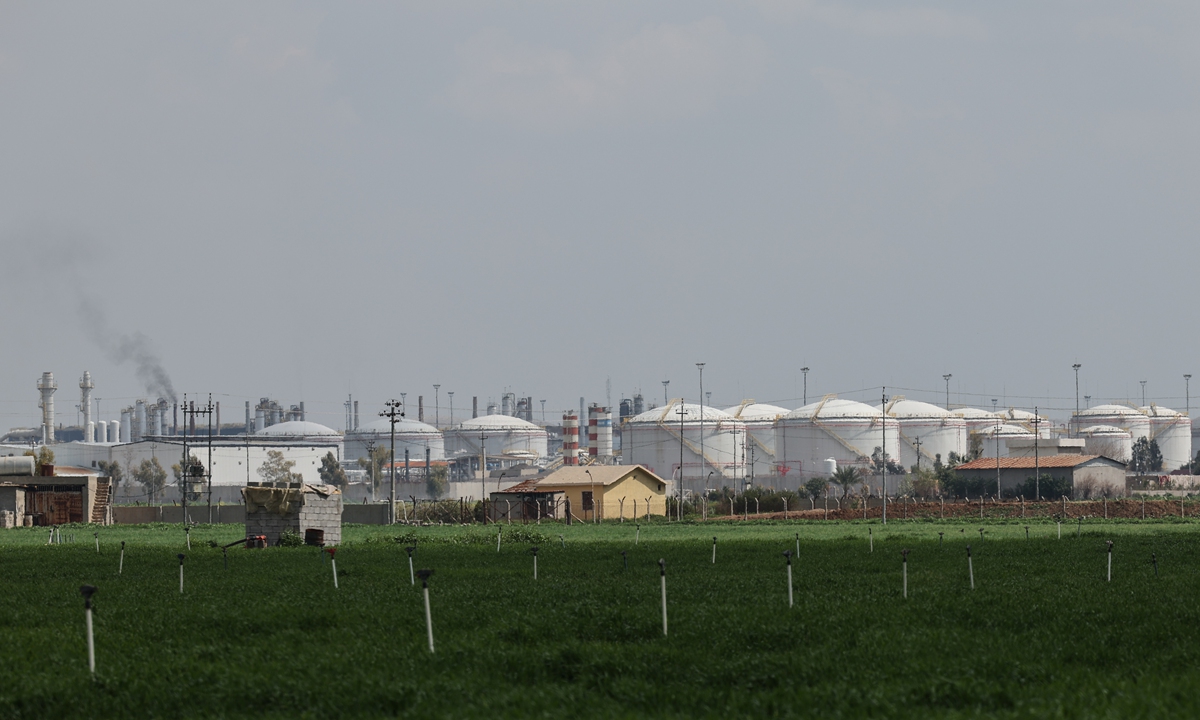
A view of the Lanaz Oil Refinery in Erbil, Iraq on March 17, 2026 Photo: VCG
Eight members of OPEC+ have agreed to increase their oil output quotas by 206,000 barrels per day (bpd) for May, in an apparent bid to help stabilize surging global oil prices due to the US-Israeli war with Iran. However, Chinese analysts said that despite its positive signal, the move's impact will likely remain nominal if the conflict continues to shut down the Strait of Hormuz.
According to a statement released on Sunday local time, eight members of OPEC+ - Saudi Arabia, Russia, Iraq, the United Arab Emirates (UAE), Kuwait, Kazakhstan, Algeria, and Oman - have decided to implement a production adjustment of 206,000 bpd. Saudi Arabia and Russia will increase output the most, both by 62,000 bpd, with Iraq following with 26,000 bpd.
The increase represents less than 2 percent of the supply disrupted by the Hormuz closure, but it signals readiness to raise output once the waterway reopens, Reuters reported, adding that the "modest" production hike "will largely exist on paper as its key members are unable to raise production" due to the US-Israeli war with Iran.
Chinese analysts also said that the move is more likely aimed at sending a positive signal for efforts to stabilize the global oil market amid growing concerns.
"The conflicts in the Middle East will continue to affect the global crude oil market. At the same time, US officials' inconsistent stance on the war has increased oil market uncertainty and directly led to ups and downs," Yang Delong, chief economist at Shenzhen-based First Seafront Fund, told the Global Times on Monday.
The announcement of the eight members of OPEC+ comes as the global oil market continues to see great turbulence. On Monday, Brent crude, the global benchmark, rose above $110 a barrel before those gains eased after a report of US-Iran talks over a potential ceasefire, according to BBC. Oil prices will remain volatile and swing with news headlines of the war's escalation and easing, Sushant Gupta from consultancy Wood Mackenzie was quoted by BBC as saying.
The production hike by the eight OPEC+ members will "only work when crude oil from the Middle East region can be shipped out. Otherwise, it is a 'paper increase' - there will be no significant impact on the supply of the international crude oil market," Lin Boqiang, director of the China Center for Energy Economics Research at Xiamen University, told the Global Times on Monday.
If crude oil from the Middle East cannot be shipped through the Strait of Hormuz, the regional OPEC+ members will be forced to reduce output due to the shortage of storage space, or they will have to find alternative shipping route, Lin said.
In the statement on Sunday, the eight OPEN+ countries also expressed concern regarding attacks on energy infrastructure, noting that restoring damaged energy assets to full capacity is both costly and takes a long time, thereby affecting overall supply availability.
The US-Israel-Iran war has blocked the Strait of Hormuz since the end of February, and thus cut exports from OPEC+ members such as Saudi Arabia, the UAE, Kuwait and Iraq. Before the war, about 20 percent of the world's crude oil, or 20 million bpd, passed through the route, according to the IEA.
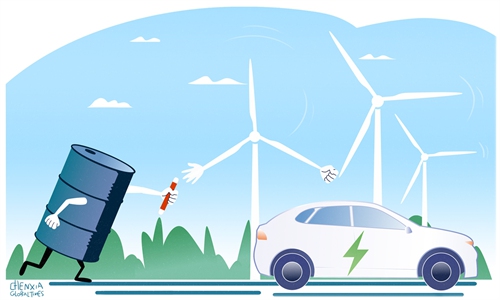
While surging oil prices could undermine the global economy, some countries, particularly China, have been diversifying energy supplies, including the rapid development of new energy, thus better prepared to deal with the current situation, analysts said.
"Many countries are not as dependent on oil as they used to be. Especially in China, the development of new energy has been rapid in recent years. The proportion of photovoltaic and wind power in China has been increasing, and sales of new-energy vehicles have exceeded those of traditional fuel vehicles. Therefore, the impact of oil price increases on China's economy is limited," Yang said.
While China remains a net oil importer, crude oil accounts for a relatively modest share of its overall energy consumption, Lin added.
During the 14th Five-Year Plan period, China's energy self-sufficiency rate remained above 80 percent at all times. Domestic energy production was significantly accelerated and strengthened, with more than 90 percent of the increase in energy consumption being secured independently by domestic sources, according to an article published by rmlt.com.cn under the People's Daily.
Asked about the Iran situation and global energy supplies at a regular press conference on Thursday, Mao Ning, a spokesperson for the Chinese Foreign Ministry, said that the Strait of Hormuz and its adjacent waters form an important international trade route for goods and energy. "All eyes are on whether stability can return to the Strait and whether traffic will resume soon. The key lies in the stop of military actions," Mao said.
RELATED ARTICLES