Is it feasible to reopen the Strait of Hormuz with ‘defensive measures’?: Global Times editorial
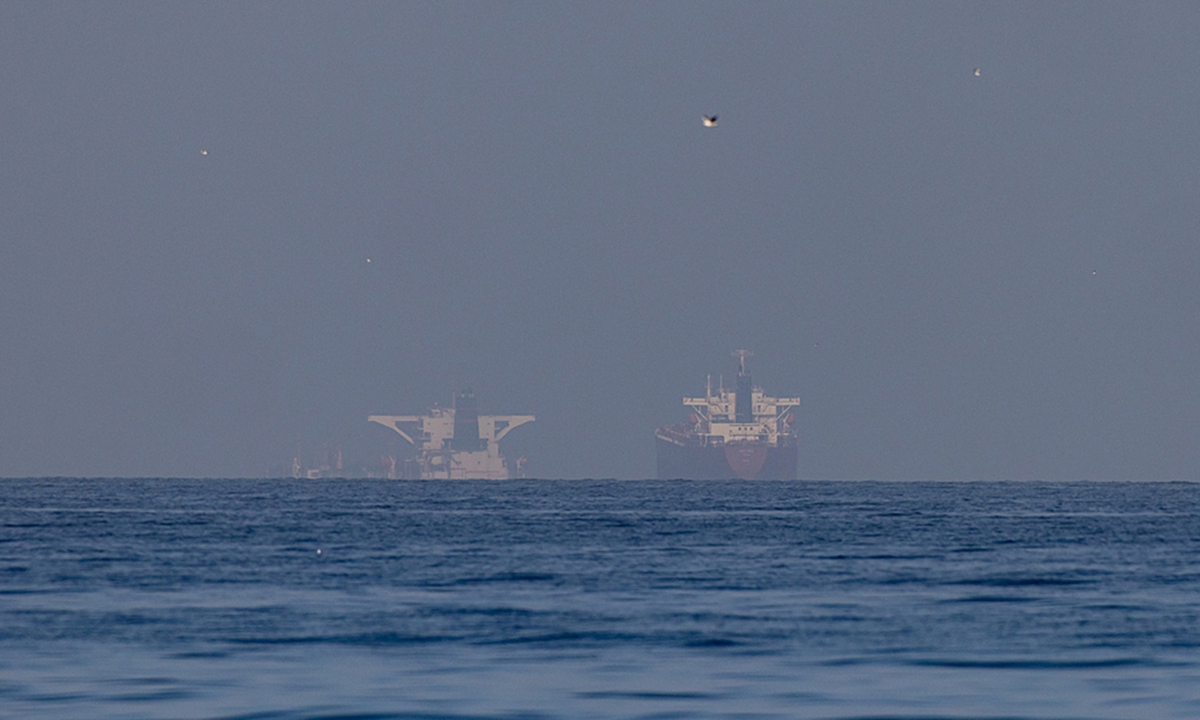
Commercial vessels are seen in the Gulf, near the Strait of Hormuz on March 22, 2026 in northern Ras al Khaimah, United Arab Emirates. Photo: VCG
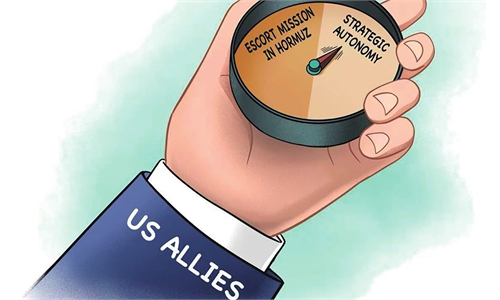
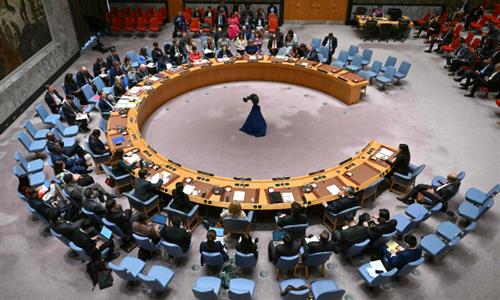
The United Nations Security Council recently held a discussion over tensions surrounding the Strait of Hormuz. According to multiple media reports, a draft resolution proposed by Bahrain initially called for the Security Council to authorize the use of "all necessary means" to ensure the smooth passage of shipping through the Strait of Hormuz. Reports indicate that, due to a lack of consensus, the draft underwent several revisions and eventually incorporated the wording "defensive measures," while the vote has been repeatedly postponed.
This debate raises a serious question: in the face of disruptions to navigation in the Strait of Hormuz, how should the international community respond, and what role should the Security Council play?
Since the US and Israel launched attacks on Iran in late February, the normal navigation and security of the Strait of Hormuz have been severely affected, with ship transit plunging by as much as 95 percent. Around one-fifth of global oil flows have been disrupted, causing oil prices to surge and placing immense strain on global supply chains. Infrastructure in the Gulf Cooperation Council (GCC) countries has come under frequent attacks, resulting in casualties and property damage.
Supporters of the draft resolution note that it aims to break the current deadlock in maritime passage and help safeguard the interests of regional countries. However, even "defensive measures" still involve the option of using force. Therefore, the crux of the issue remains: can the use of force truly reopen the Strait of Hormuz?
The Strait of Hormuz is a strategic chokepoint linking the Persian Gulf to the Indian Ocean. In such a highly sensitive conflict zone, authorizing the "use of all necessary means" is vaguely defined and difficult to control in scope. Once exploited by external forces, it could easily escalate into a large-scale military conflict.
In that scenario, the Strait of Hormuz would no longer merely face disrupted navigation - it could become a real battlefield, potentially severing a critical artery of global energy supply and completely contradicting the original goal of ensuring safe passage. In the end, regional countries will not only fail to obtain safe shipping lanes, but will actually be plunged into deeper conflict.
This is precisely the core position that China has repeatedly emphasized: The actions of the UN Security Council should help de-escalate the situation, stop the fighting and resume talks, rather than endorse illegal acts of war or fuel the flames.
China does not endorse attacks against GCC countries and supports international efforts to ensure navigation through the Strait of Hormuz. The key question, however, is how to achieve this. Under current circumstances, authorizing member states to use force is tantamount to legitimizing the unlawful abuse of force, which will inevitably lead to further escalation of the situation and cause serious consequences. Reports indicate that China, Russia, and France - three permanent members of the UN Security Council - have expressed differing views on the draft resolution, while differences of opinion also exist among non-permanent members. This indeed reflects the international community's shared concern over the risk of further escalation.
The issue of navigation through the Strait of Hormuz is a spillover effect of the US-Israeli war with Iran. The root cause lies in the unauthorized use of force against Iran by the US and Israel without UN Security Council approval. Failing to address this root cause - the conflict itself - while focusing only on restoring navigation is akin to treating symptoms rather than the underlying problem. Preventing further deterioration fundamentally requires the US and Israel to cease military operations. Only a genuine ceasefire and cessation of hostilities can dispel the shadow of war hanging over the Strait of Hormuz and fundamentally guarantee the safety of the waterway.
Some might ask: How hard is it to stop the fighting and end the war? But it is precisely because of the difficulties that the international community needs to build consensus and pool its efforts. As traditional mediators among the US, Israel, and Iran, GCC countries have unique advantages in understanding the root causes of regional conflicts. The UN Security Council, which bears primary responsibility for maintaining international peace and security, should uphold an objective, impartial, and fair stance, strengthen communication with GCC countries, and maximize political will for a peaceful resolution.
The use of force cannot reopen the shipping lanes, nor can it bring peace. Political settlement is the fundamental way forward. China is a long-term, reliable strategic partner of countries in the Middle East and has consistently worked to de-escalate tensions.
Recently, China and Pakistan jointly proposed a five-point initiative aimed at addressing the root causes of the issue, with the core being cessation of hostilities, an early start to peace talks, protection of non-military targets, security of maritime passages, and upholding the primacy of the UN Charter. This five-point initiative is open, and China calls on more countries and international organizations to respond positively and participate. Only by extinguishing the flames of war can the shipping lanes be illuminated; only by choosing peace can prosperity be ensured. This is a truth repeatedly proven by history and the only viable path to resolving the current predicament in the Strait of Hormuz.
RELATED ARTICLES