China tightens fire safety oversight, mandating high-level probes for major incidents
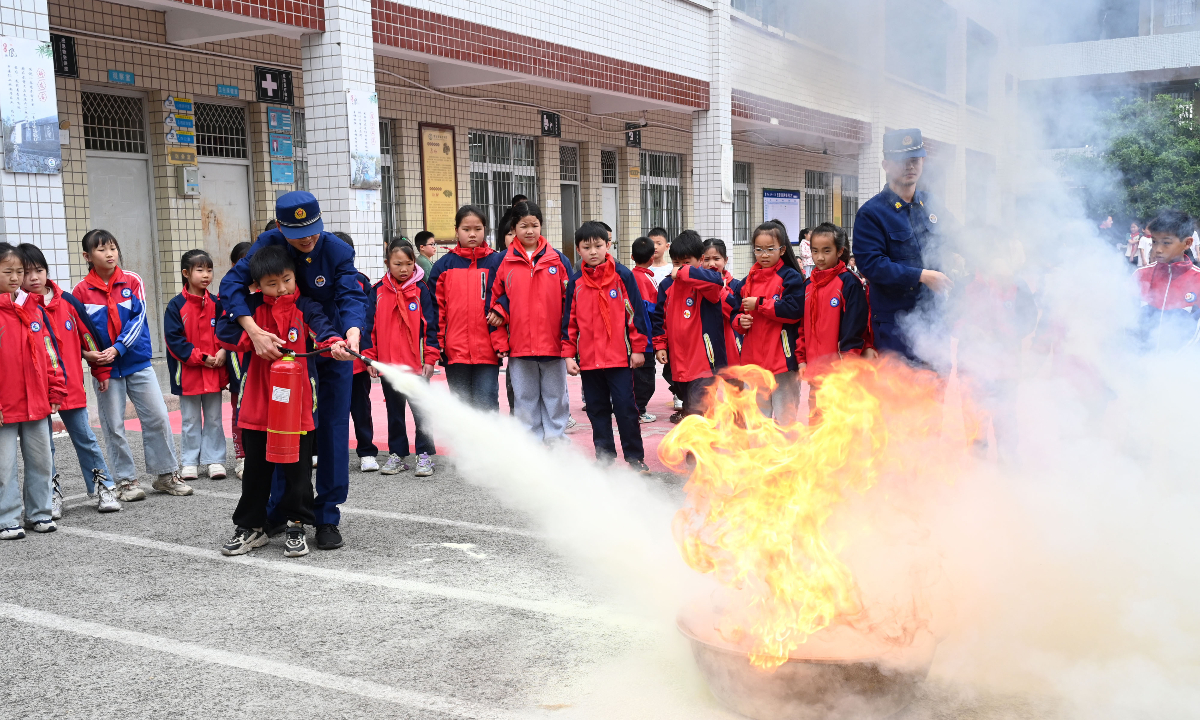
Firefighters from Neijiang, Southwest China's Sichuan Province, demonstrate firefighting skills to students at a local school on March 30, 2026. Photo: IC
The General Office of the State Council, China's cabinet, has issued new guidelines to strengthen basic-level firefighting work, mandating improved investigation mechanisms and promoting a shift in fire safety governance toward prevention, China Central Television (CCTV) reported on Wednesday.
The guidelines set out clear requirements for fire departments to conduct fire accident investigations and handling in accordance with the law, officials from the National Fire and Rescue Administration said during a press briefing on Wednesday.
For ordinary fires, the focus will be placed on "rectification." The guidelines require enhancing investigations into technical and managerial responsibilities, thoroughly examining underlying causes, and using the findings to improve production processes and refine standards, thereby achieving proactive and targeted prevention and control.
The guidelines also require improving the filing and review system for fires with multiple fatalities. Starting this year, the investigation report for such fire incidents must be submitted to the National Fire and Rescue Administration for review before approval, and national fire investigation experts will be dispatched to provide guidance, so as to prevent superficial investigations and perfunctory accountability.
For major fires, the incident will be listed for priority supervision and faces escalated investigations. The Work Safety Committee of the State Council will place each major fire under prioritized supervision, and the National Fire and Rescue Administration will establish on-site supervisory teams. For cases of a serious nature or with a significant social impact, investigations will be elevated to a higher level. After cases are concluded, the investigation results and full details of the fire will be made public.
In addition, China will grant liability exemptions or leniency to firefighters who have duly fulfilled their duties, aiming to encourage firefighting officials to take responsibility and act proactively, and to avoid situations where "those who conduct inspections are held accountable, while those who do not inspect bear no responsibility."
Global Times
RELATED ARTICLES